



Checklists to print and keep
One page each, in type big enough to read by torchlight. Print them once, or save the PDFs to your phone.
Emergency Danger to life
Danger-to-life warning in force
 Prep Britain
One page each, in type big enough to read by torchlight. Print them once, or save the PDFs to your phone.
GOV.UK Prepare and the British Red Cross recommend much the same kit, for an emergency lasting a few days, such as a power cut or a water outage. This page puts the two lists together.
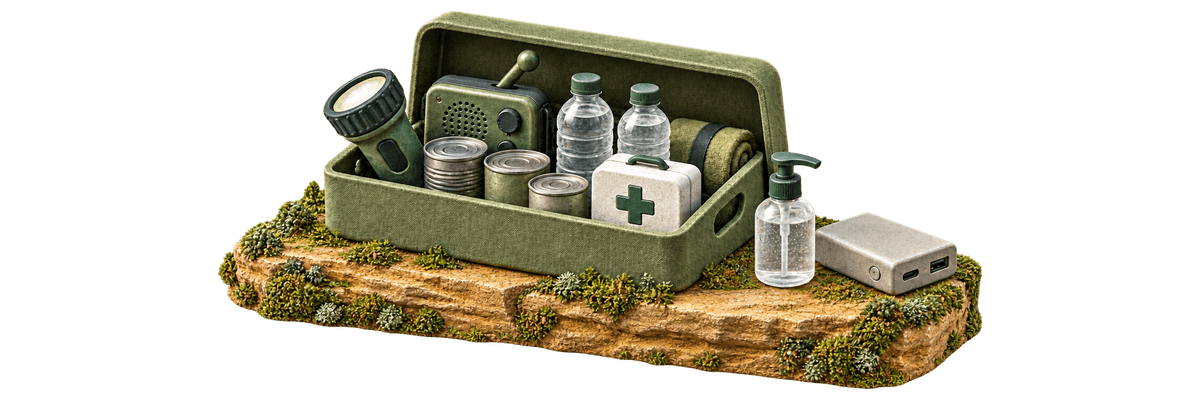
Emergency kit · nine things
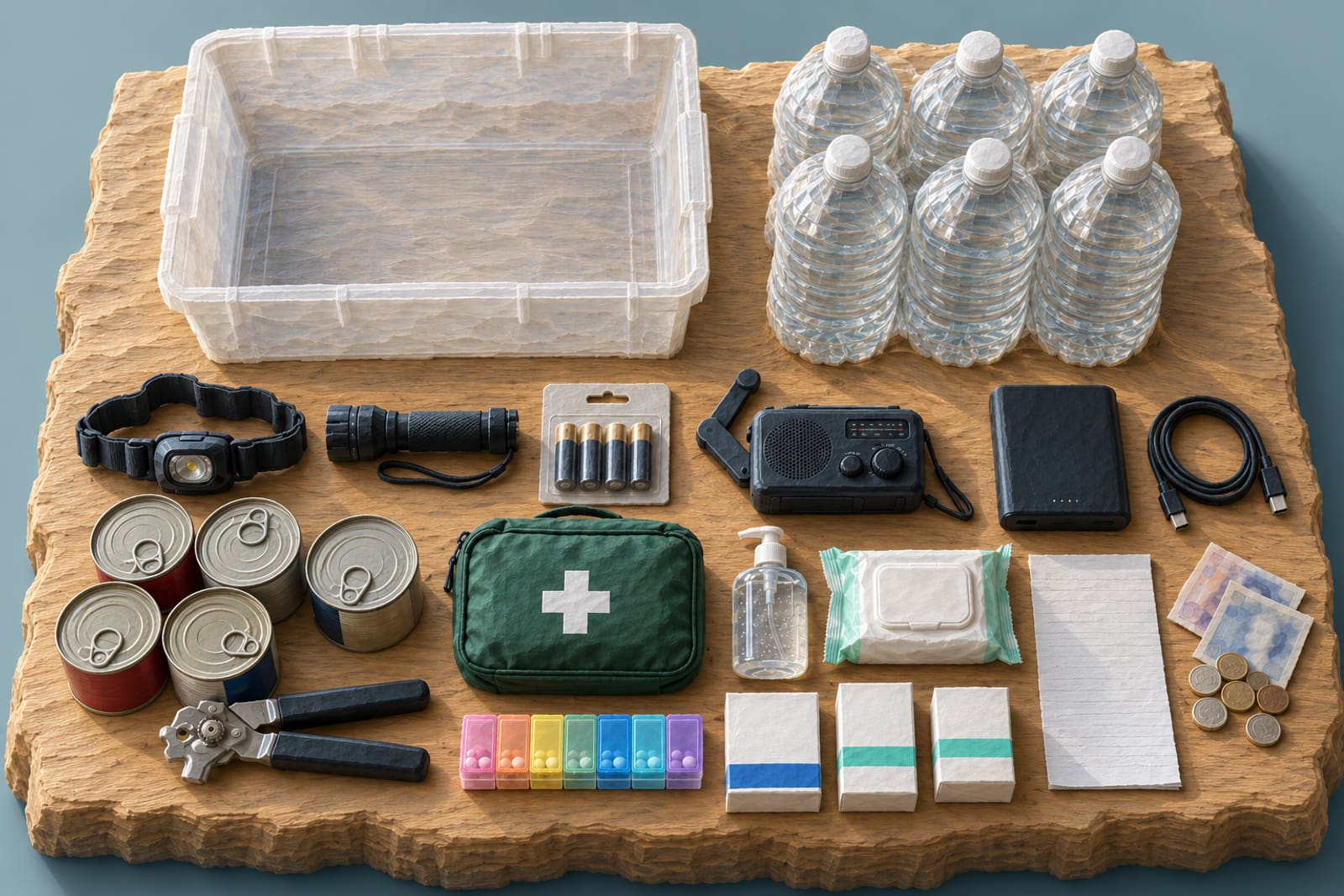
Where to keep it
In one box or bag, somewhere easy to find with the lights off.
Build it slowly
No need to buy it all at once. Add one item at a time, with the weekly shop.
Add if you need them
Nappies and ready-made baby formula. Pet food, a lead and a bowl. Spare glasses and spare keys.
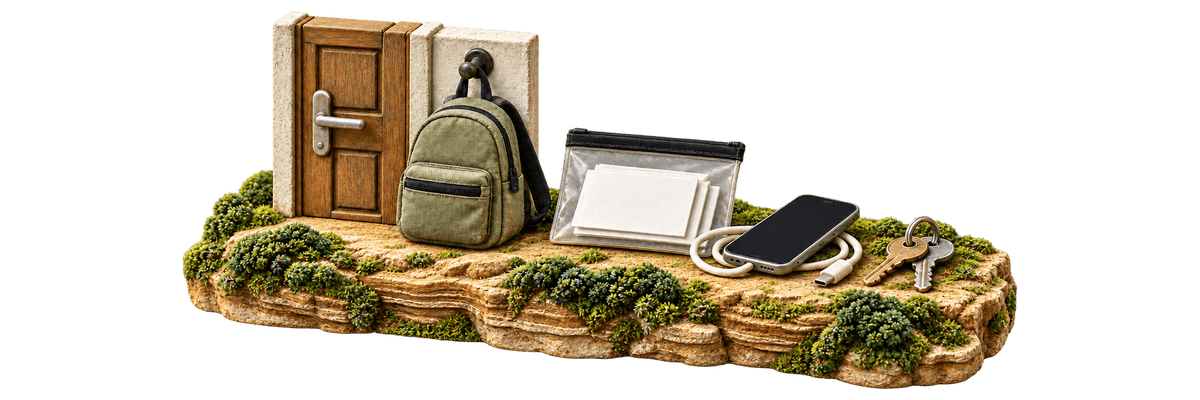
A grab bag, for leaving quickly. Keep what you'd need if asked to leave home in a spare bag: medication, a phone charger, cash, and copies of important documents in a waterproof bag. In a fire, take nothing at all. Get out, then call 999.
GOV.UK Prepare also has a free household emergency plan to fill in: contact numbers, medication, insurance details and where to go. Print it and keep it with the kit. What each line of the government list means, and what it leaves out: the government's list, explained.
Nine lines in order, from the moment it happens. Each one comes from its guide, which explains every step.
In the guide My medicine's running short
In the guide There's a wildfire near me
Nine lines for a flat, a family, a carer, a rural home or someone living alone. Each one comes from its household page.
On the page Families with young children
One email a month with any new checklist or guide, and one job to do before the season turns. No spam, and we never share your address.
We'll only use your email to send the Prep Britain newsletter. Unsubscribe any time. How we handle it
 Prep Britain
Household checklist
Emergency kit
Keep it all in one box or bag, somewhere easy to find in the dark. Tick each item as you add it.
In a fire, take nothing. Get everyone out, then call 999.