









Skip to content
Prep Britain
Checking warnings…

Carers: what changes in an emergency

When you care for someone, an emergency has two sides: keeping them safe, and what happens if you can't get to them. This page covers an emergency plan someone else could follow, and the free register that puts them first in a power or water cut. It also covers equipment and phones that need power, and who steps in for you.

Reviewed 26 Oct 2026 8 min read Free to read

Do these three first · 20 minutes

Join the Priority Services Register

Free, for anyone with a disability, a long-term condition or medical equipment that needs power. Sign up once, through the electricity network operator.

Name someone who can step in

A relative, friend or neighbour who could cover for a few hours if you were ill or stuck.

Write down the care

What they need, their medicines and where they are kept, and who to call. Keep it where your stand-in can find it.

Can't reach them? Call 999 If it's dangerous to visit, or you can't get in touch, tell the emergency services that someone who relies on you may be at risk. Power cut and their equipment needs power? Call 105, or NIE Networks on 03457 643 643 in Northern Ireland.

Write the care down, name your stand-in, and get on the register. Those three cover most of what can go wrong.

What's different when you care for someone

The person you care for may depend on power, on medicines, or on you arriving. Each of those needs a back-up.

What changes in an emergency when you care for someone
WhatWhy it mattersWhat to do
Equipment Powered wheelchairs, stairlifts, hoists and oxygen machines stop in a power cutMake a plan with the care provider or clinical team, and keep back-up batteries charged
Phones and alarms Digital landlines need mains power, and telecare alarms use the phone lineAsk the landline provider about battery back-up, and tell the telecare supplier before the line goes digital
Medicines A storm or a closed road can stop a collectionKeep enough for several days, in a waterproof container, in one place you both know
You If you're ill or stuck, nobody may know what the care involvesWrite an emergency plan, and agree who steps in

Our guides, when you care for someone

Each guide covers the whole situation. Here is what changes for you in each one.

Six steps, from the plan to the key safe

Steps one to three are the paperwork, and take an evening. Four to six are about power, phones and getting in.

Write an emergency plan

This week

A plan brings together the day-to-day care in one place, so someone else could take over. Put it somewhere easy to reach, and tell the people who might need it where it is. Carers UK has a guide to making one.

  • The care they need, through the day and night.
  • Each medicine, the dose and times, and where it is kept.
  • The GP, the pharmacy, any care agency, and family to call.
  • Where and how to switch off the gas, electricity and water.
Name someone who can step in

This week

Think about who you could contact if you could not reach the person you care for. Another relative, a friend or a neighbour could step in for a few hours while proper arrangements are made. Give them a copy of the plan.

Carer's card

Your local council may offer a carer's card. It tells people you have someone relying on you if something happens to you.

Can't get there?

If it's dangerous to visit or you can't get in touch, call the emergency services and tell them someone who relies on you may be at risk.

Join the Priority Services Register

This week

Sign them up with their electricity network operator. The details are shared with their energy supplier, gas network and water company, so you only register once. It's free.

You can be named as their nominee, so the supplier contacts you too. What the register gives you is below.

Plan for equipment that needs power

This month

If they use a powered wheelchair, a stairlift, a hoist or an oxygen machine, make a plan with their care provider or clinical team now. Understand how each one works, and what to do if the power goes.

  • Keep back-up batteries charged.
  • Find the manual release on a stairlift, and how to lower it.
  • Oxygen at home? Practise connecting the back-up cylinder, and save the supplier's 24-hour helpline.

Check the phone and the alarm

This month

Digital landlines need mains electricity and won't work in a power cut without a battery back-up. If they depend on the landline and have no working mobile signal, the provider must offer a free back-up that lasts at least an hour.

Telecare or a personal alarm

Tell the landline provider and the alarm supplier before the line changes to digital, so they can check it still works.

A second way to call

A charged mobile and a power bank by the bed cover the gap if the landline goes.

Agree how someone gets in

This month

Make arrangements with someone you trust to be able to get into the home in an emergency. A key safe by the door means a stand-in, a carer or a paramedic doesn't have to wait for a key.

Give the code only to people who need it, and change it if someone stops needing it.

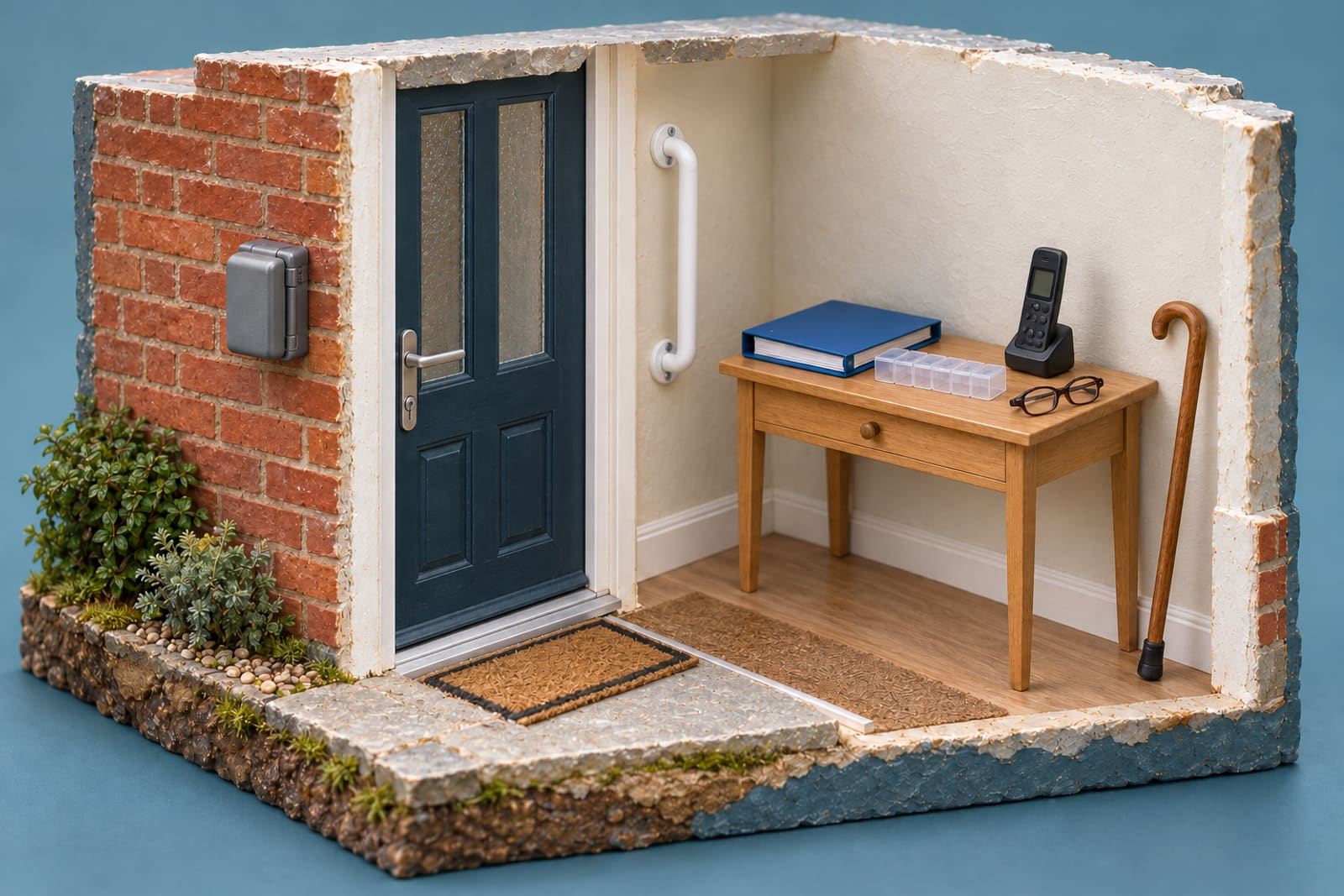
The front of a brick bungalow with a grey key safe on the wall beside the door, and a cut-away of the hall inside: a grab rail by the door, a table with a blue ring binder, a pill organiser, a cordless phone and reading glasses, and a walking stick leaning against the wall
A key safe by the door, a grab rail inside it, and the emergency plan in a binder on the hall table where a stand-in will find it.

What the Priority Services Register gives you

It's run by the energy and water companies. Sign up once, through the electricity network operator, and the details are shared.

Who can join the Priority Services Register and what it offers
WhatDetails
Who can join Anyone over state pension age, pregnant or with young children, disabled or with a long-term condition, using medical equipment that needs power, or recovering from an injury or a bereavement
In an outage Priority support in an emergency, help with medical equipment, and bottled water in a water outage
Before an outage Notice of planned power cuts, where possible
Every day A password for callers, a nominee such as a carer who also gets the letters, and bills in large print or braille

In Northern Ireland, ask NIE Networks and the gas and water suppliers about their own care registers.

Three things that help when you care for someone

Power for equipment, an organiser that shows what's been taken, and a pouch for the plan and the medicines list.

  • Power station

    A portable power station, for longer cuts

    A large rechargeable battery with mains sockets. Safe indoors, unlike a petrol generator, so it can run a router, lamps or medical equipment.

    • At least 250 Wh, or 500 Wh to run a fridge-freezer
    • A LiFePO4 battery, which lasts many more charges
    • Mains output rated above what you want to plug in
    Rough price£150–£300 for 250 Wh Browse on Amazon : power station, opens in a new tab
  • Pill organiser

    A weekly pill organiser

    Shows at a glance what has been taken today, and how many days are left before the next repeat is due.

    • Seven days, with separate morning and evening lids if you take doses twice a day
    • Lids that snap shut and stay shut in a bag
    • Ask your pharmacist first if a medicine has to stay in its blister
  • Document pouch

    A waterproof document pouch

    Passports, insurance papers and birth certificates in one sealed bag you can grab on the way upstairs.

    • A seal that zips or rolls shut, not just a press-stud
    • Big enough for A4 papers unfolded
    • Tough enough to carry, not freezer-bag thin

Carers, on one page

Nine lines, plus space for the people and numbers your stand-in would need. Keep a copy with the emergency plan.

Carers · this month

Download PDF

Other households

See every situation guide

Get the monthly brief: one job before each season turns

One email a month: new guides as they're published, and one job to do before the season turns, from lagging the pipes in autumn to checking the torch batteries before the storms.

We'll only use your email to send the Prep Britain newsletter. Unsubscribe any time. How we handle it