Skip to content
Prep Britain
Checking warnings…

Heatwave coming? Keep the house cool and everyone well

A few hot days are easy to get through when the house is kept cool and someone keeps an eye on the people most at risk. This page covers what the alerts and warnings mean, keeping the heat out, drinks and shade, spotting heat exhaustion before it turns into heatstroke, and swimming safely.

Reviewed 8 Oct 2026 7 min read Free to read

Do these three first · 5 minutes

Shut the curtains on the sunny side

Keep windows, curtains and blinds closed in the day. Open them at night, once it is cooler outside.

Put cold drinks within reach

Drink more than usual, little and often. Go easy on alcohol, caffeine and hot drinks.

Call someone older

A neighbour or relative over 65, or anyone with a heart or breathing condition. Ask how cool their home is.

Heatstroke? Call 999 Call if someone has hot skin and isn't sweating, is confused, has a fit or passes out. If someone with heat exhaustion isn't better within 30 minutes of cooling down, call 111.

Curtains shut by day, windows open at night, and a phone call to the neighbour. That's most of a heatwave plan.

Heat-health alerts and extreme heat warnings

Two systems warn about heat. In England, UKHSA sends heat-health alerts from 1 June to 30 September. Across the UK, the Met Office issues extreme heat warnings.

What yellow, amber and red heat-health alerts mean in England
AlertWhat it meansWhat to do
Yellow Heat unlikely to affect most people, but it could affect those who are particularly vulnerableCheck on anyone at higher risk, and get the house ready
Amber Impacts likely across the whole health service, with the whole population potentially at riskFollow every step below, every day the alert lasts
Red Significant risk to life, even for healthy peopleStay cool indoors, cancel hard activity, check on others twice a day

The alert levels are UKHSA's, and they apply to England. You can sign up to get them by email. The Met Office's extreme heat warnings cover the whole UK. Amber means an increased likelihood of impacts. Red means dangerous weather is expected, so act now to keep yourself and others safe.

Six steps, from the forecast to the cool evening

Steps one to three are for every hot day. Four and five are for looking after people. Six is for the trip to the river or the beach.

Keep the heat out by day, let it out at night

Every morning

Close windows, curtains and blinds during the day, and open them at night when the temperature outside has gone down. Electric fans can help while the temperature is below 35°C.

  • Start with the windows the sun hits first: east in the morning, south and west later.
  • Switch off lights and appliances you are not using. They all add heat.
  • Sleep in the coolest room, which is often downstairs.
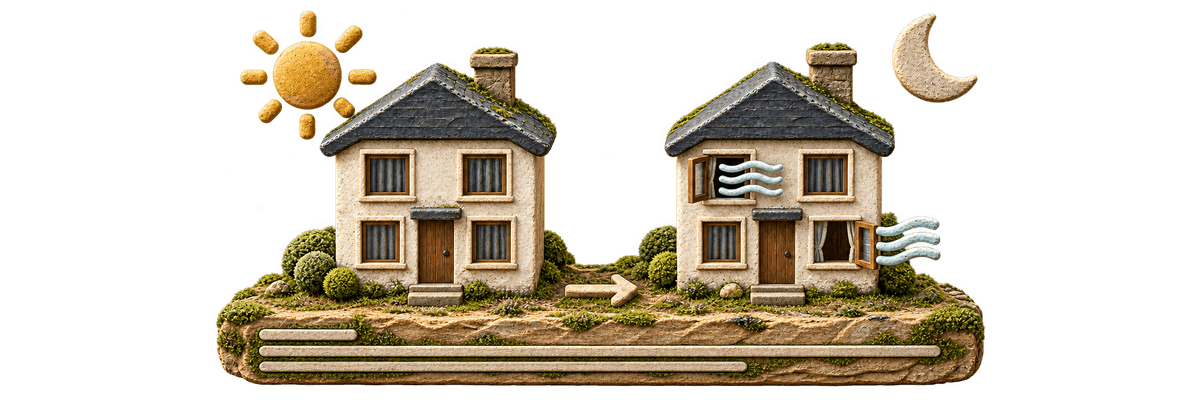
Two identical houses on a plinth: the left one under a sun with every curtain drawn, the right one under a crescent moon with two windows open and breeze lines flowing through
By day, curtains and windows shut against the sun. At night, once it's cooler outside, open up on two sides so the air can flow through.

Stay out of the sun in the hottest hours

11am to 3pm

Stay in the shade, especially between 11am and 3pm, and avoid exercise or activity that makes you hotter. Do the shopping, the dog walk and the garden early or late.

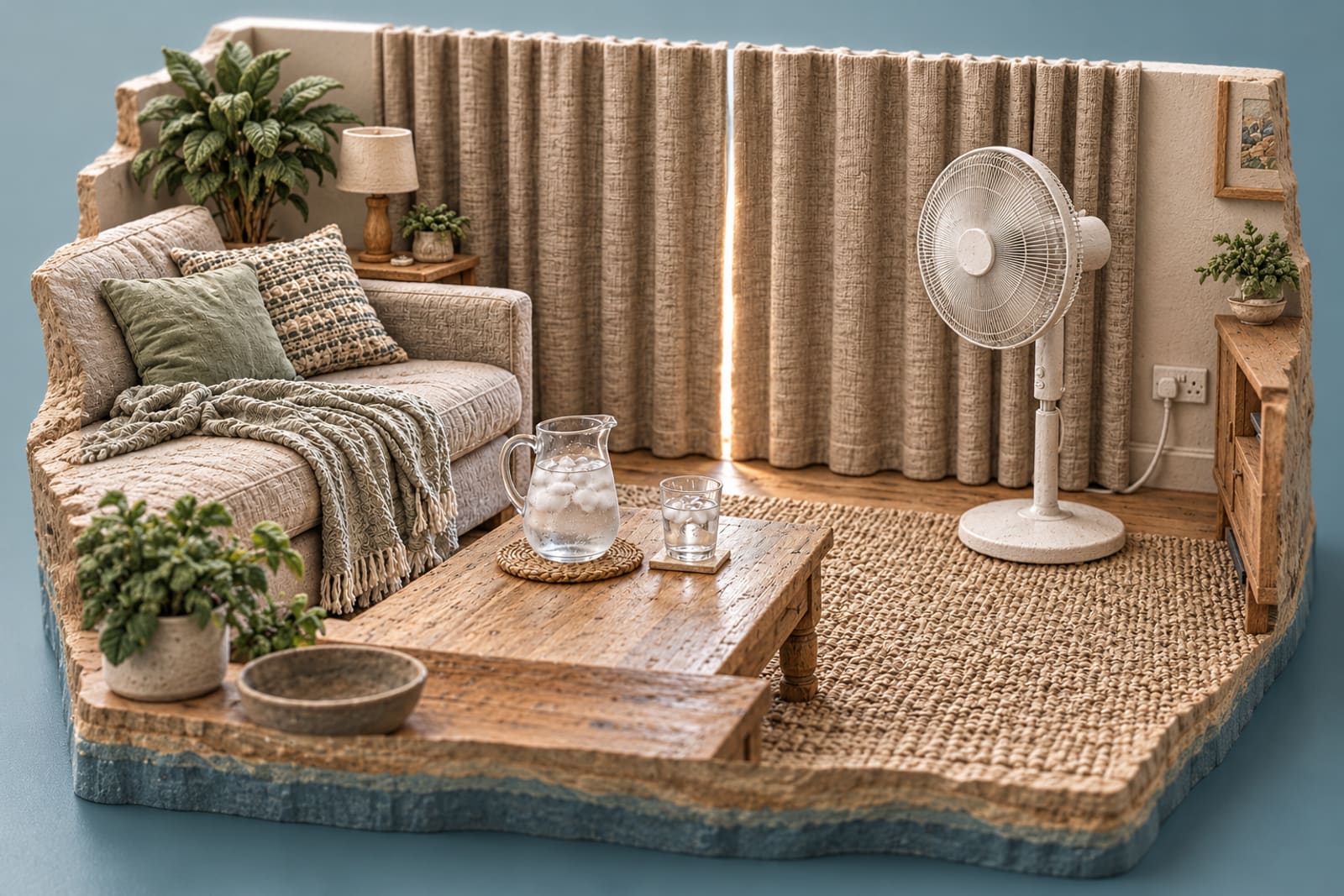
A dim living room on a sunny afternoon, curtains drawn with a thin line of light at the gap, a white pedestal fan plugged into a UK socket, and a jug of iced water with a glass on a coffee table
What a cool room looks like at 3pm: curtains drawn on the sunny side, a fan moving the air, and iced water where you can reach it.

Drink more, and eat cold food

All day

Drink extra fluids, but avoid alcohol, caffeine and hot drinks. Have cold food and regular cold drinks.

  • Put a jug of water in the fridge in the morning, and a glass by every bed at night.
  • Salads, fruit and cold leftovers mean the oven stays off.

Check on anyone at higher risk

Every day of the heat

Make sure to check on anyone who is at higher risk from the heat. See who that is.

What to ask

Is the house cool? Are they drinking? Are their medicines stored as the leaflet says?

What to bring

Cold water, a fan if they don't have one, and the shopping, so they don't go out at midday.

Cool down heat exhaustion fast

If someone feels ill

Signs include tiredness, dizziness, a headache, feeling sick, heavy sweating with pale clammy skin, cramps and being very thirsty.

  • Move them somewhere cool.
  • Take off unnecessary clothing, such as a jacket or socks.
  • Give them plenty of water, or a sports drink or rehydration powder.
  • Spray or sponge their skin with cool water, and fan them.

They should start to feel better within 30 minutes. If they don't, call 111. A very high temperature, hot skin without sweating, fast breathing, confusion, a fit or passing out mean heatstroke: call 999. If they pass out while you wait, put them in the recovery position.

Swim where it's supervised

At the water

The sea, rivers and lakes can stay cold enough to cause cold water shock, even on a hot day. It happens in water below 15°C, to strong swimmers too.

If you fall in

Lean back and float, with your head above the water. Spread your arms and legs, and get your breathing under control.

If someone's in trouble

Don't go in after them. Call 999, and ask for the Coastguard at the coast. Throw them something that floats.

The people the heat hits hardest

Most people cope with a few hot days. These are the people to call or knock for, every day of a heatwave.

  • Older people, especially those aged 65 and over
  • Babies and young children aged 5 and under
  • People with heart or breathing problems, dementia, diabetes, kidney disease or Parkinson's
  • People who are pregnant, or on several medicines
  • People who are homeless, or who work outside
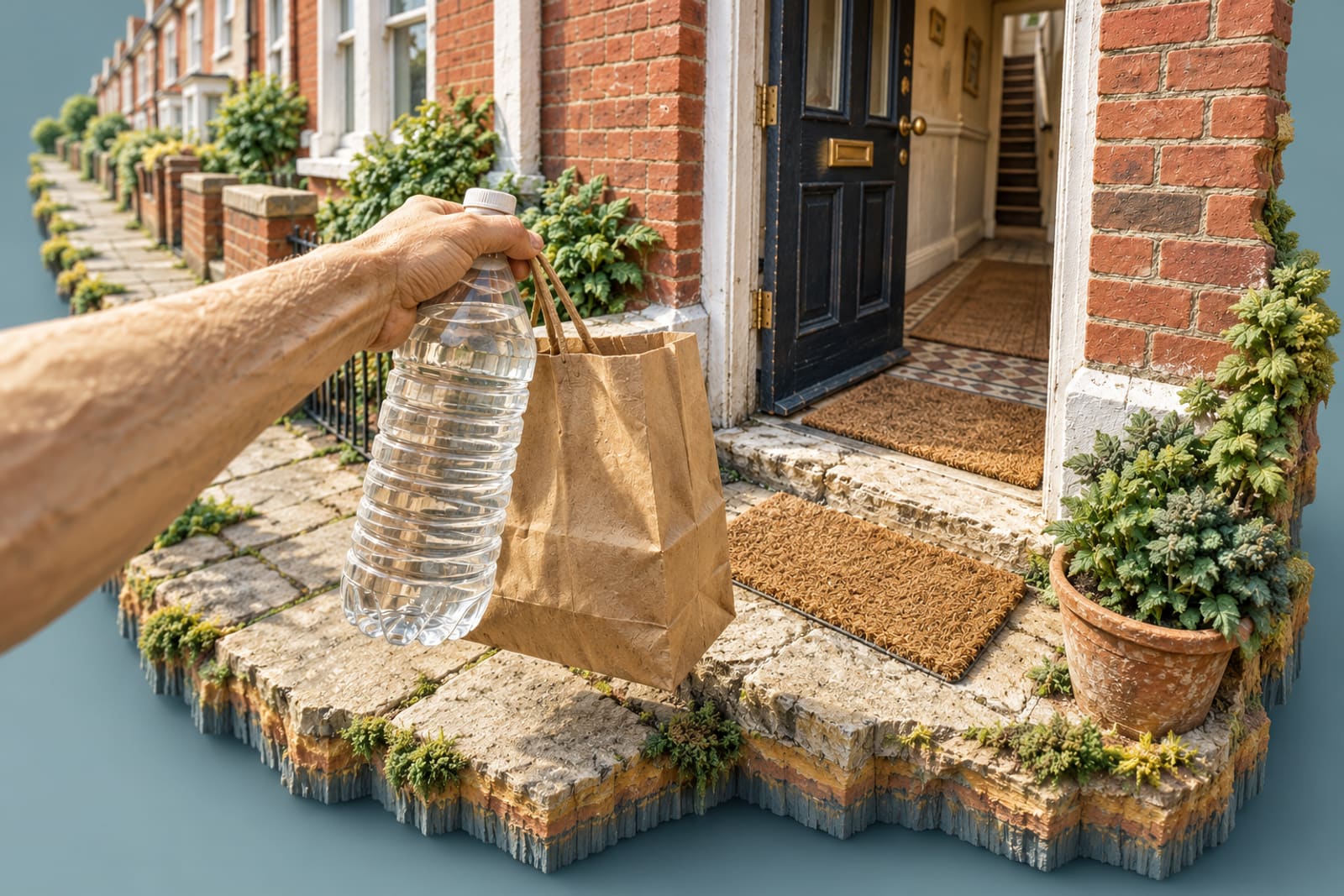
A hand holding out a large bottle of water and a paper bag towards the open front door of a red-brick terraced house on a sunny day
A knock at the door with cold water and the shopping saves an older neighbour a walk in the midday sun.

Three things that keep a house cooler

A fan for the bedroom, curtains that block the sun, and a thermometer that tells you when to open the windows.

  • Fan

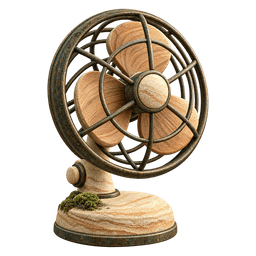
    A pedestal or desk fan

    Keeps air moving in the room you sleep in. The NHS says fans help while the temperature is below 35°C.

    • Oscillation, so it covers the room
    • A quiet night setting
    • A UK plug, and a stand that won't tip
  • Curtains

    Thermal blackout curtains for the sunny side

    Shut during the day on the windows the sun hits, they keep the room cooler. They help in winter too.

    • Light-coloured or white backing that faces the window
    • Wide enough to overlap at the middle and the sides
    • Sized to your window, or a blind behind them
  • Thermometer

    A room thermometer for the bedroom

    Tells you which room is coolest to sleep in, and when it is cooler outside than in, so you know when to open the windows.

    • A large display you can read from bed
    • An indoor and outdoor reading, if you can
    • Runs on AAA batteries

When a heatwave is coming, on one page

Nine lines, plus space for the people you'll check on. Stick it on the fridge when the forecast turns hot.

Heatwave · every hot day

Download PDF

If it's something else

See every situation guide

Get the monthly brief: one job before each season turns

One email a month: new guides as they're published, and one job to do before the season turns, from lagging the pipes in autumn to checking the torch batteries before the storms.

We'll only use your email to send the Prep Britain newsletter. Unsubscribe any time. How we handle it