



Skip to content
Prep Britain
Checking warnings…

Can't cook? Eat well for three days with the cooker off

An all-electric kitchen stops dead in a power cut, and a gas hob stops when the gas does. Most homes already hold three days of meals that need no cooking at all. This page covers what still works, the order to eat your food in, hot drinks without a kettle, and how to use a camping stove safely outdoors.

Reviewed 4 Oct 2026 8 min read Free to read

Do these three first · 10 minutes

Keep the fridge shut

Take tonight's food out in one trip. Kept shut, a fridge stays cold for up to 4 hours.

Fill a flask

If the kettle or hob still works, or the power is due to go off, fill a flask now. That is hot drinks for hours.

Eat from the fridge first

Then the freezer, then the cupboard. Tinned food is safe to eat cold, straight from the tin.

Smell gas? Call 0800 111 999 Free, day and night, in Great Britain. In Northern Ireland, call the Gas Emergency Service on 0800 002 001. Power cut? Call 105, or 03457 643 643 in Northern Ireland.

Fridge first, freezer next, tins last. Three days of meals, and nothing to light.

What still works in your kitchen

It depends on what's off. Find your kitchen below, then follow the six steps.

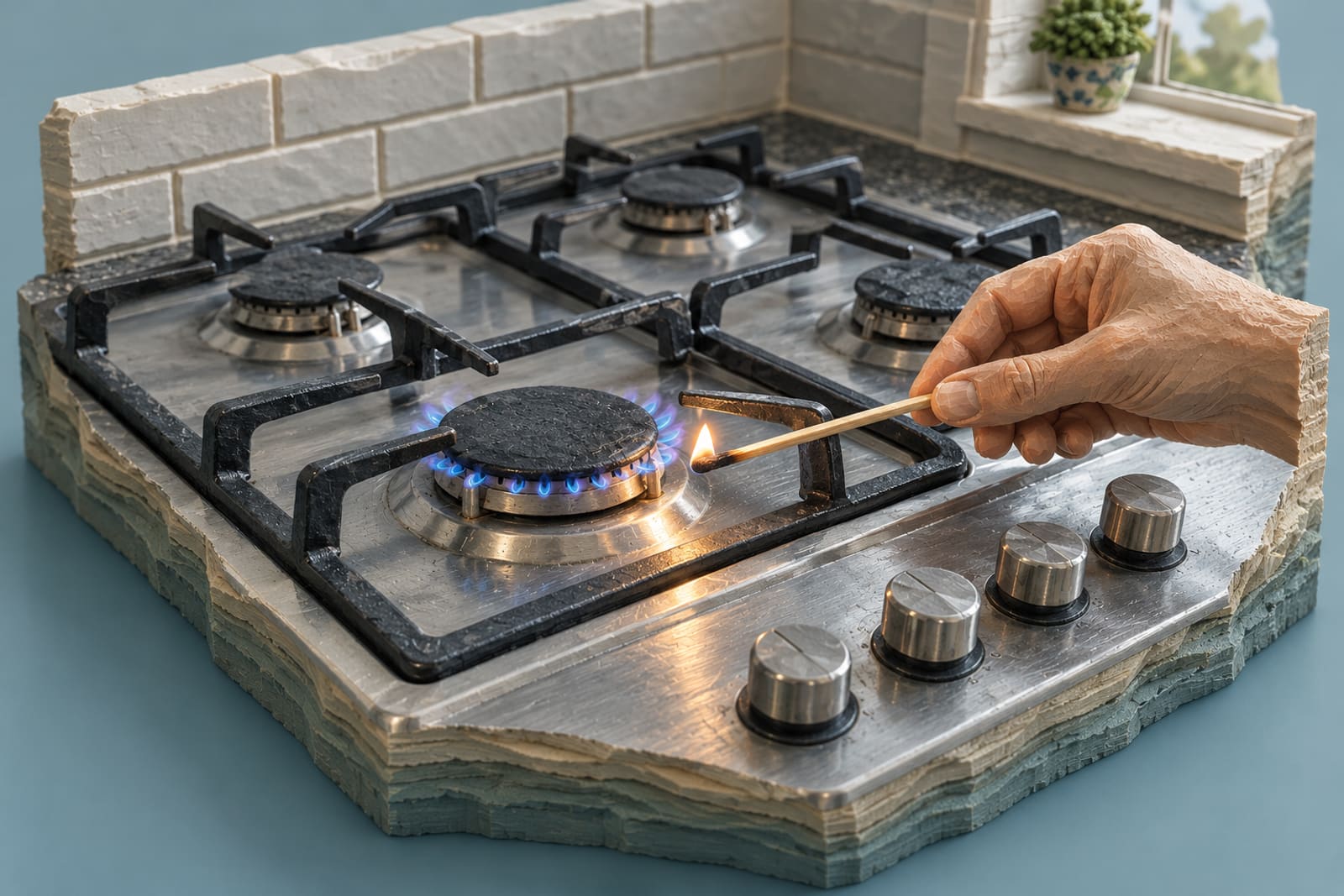
A hand lighting a gas hob burner with a long match in a dim kitchen, the blue flame just catching

Gas hob, power off

Gas cookers may keep working in a power cut, but a gas oven won't work without power. Many hobs light with a long match when the spark won't. Check your cooker's manual first.

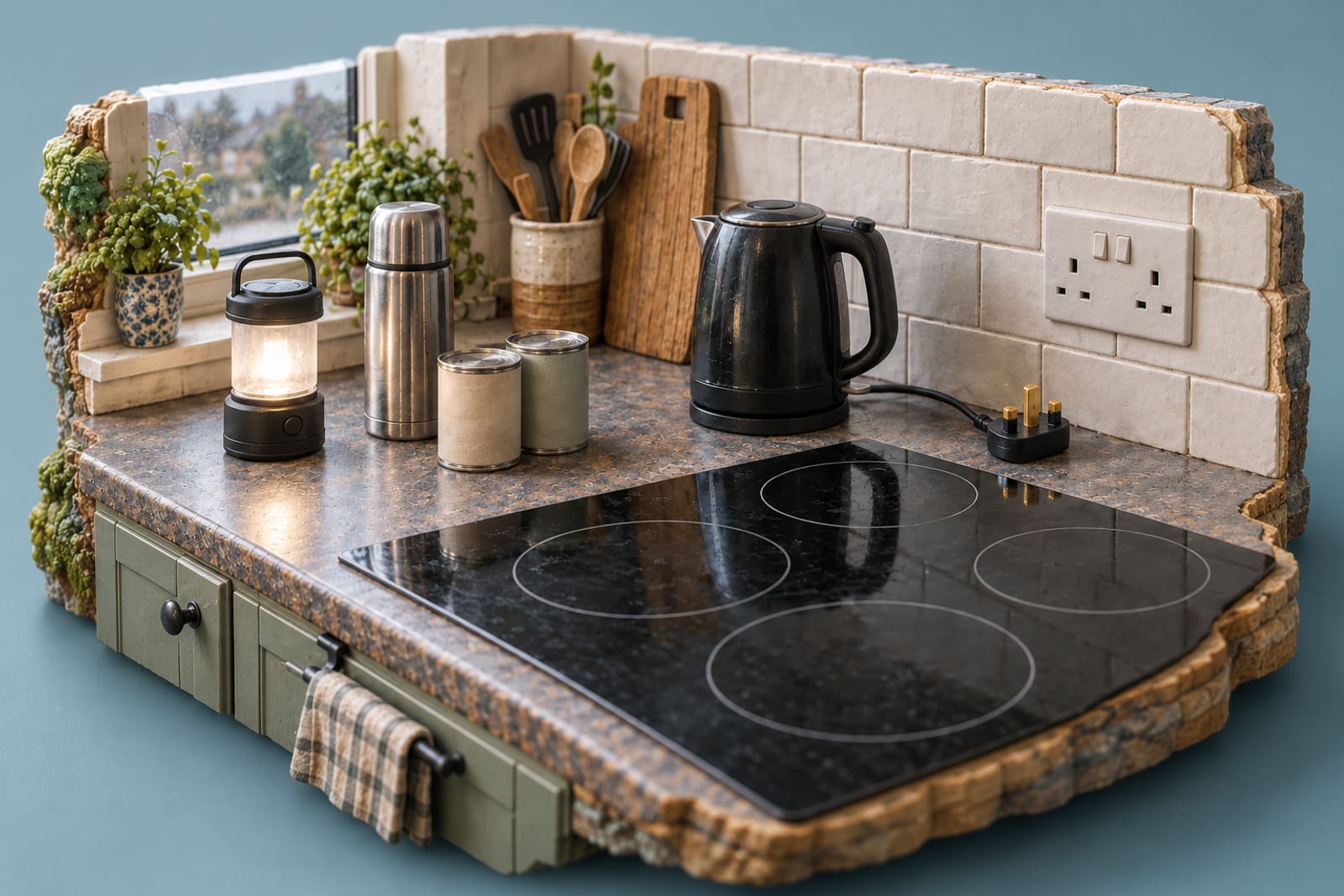
A dark kitchen with a black ceramic hob switched off, an unplugged kettle, and a battery lantern, steel flask and two tins on the worktop

All-electric, power off

Electric and induction cookers stop in a power cut. So do the kettle and microwave. Plan on food that needs no cooking, and a flask filled before the power went or at a neighbour's.

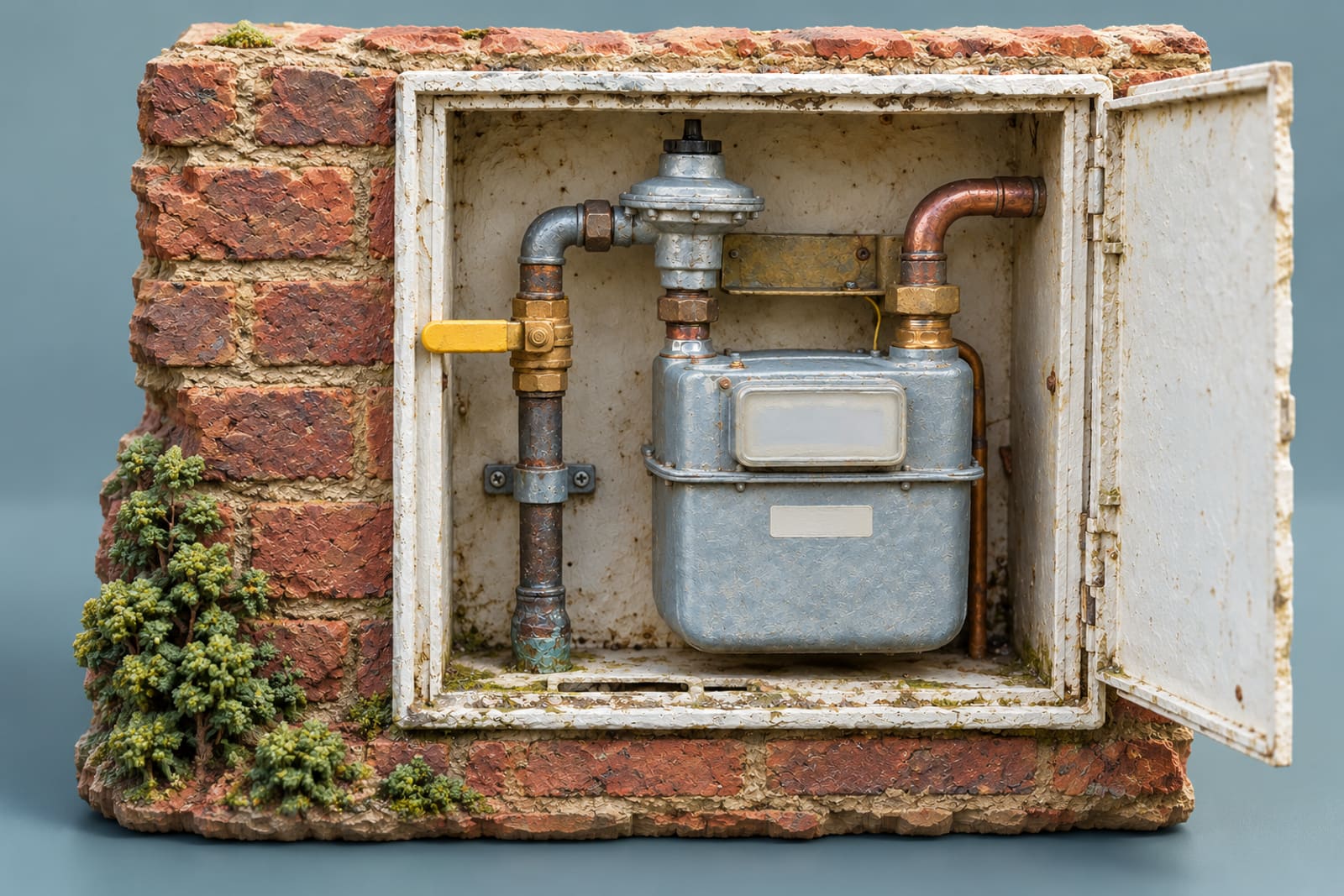
A gas meter in an open meter box on a brick wall, with the yellow lever of the emergency control valve turned across the pipe

Gas off, power on

The kettle, microwave and slow cooker still work. When the gas goes off across an area, engineers turn off each meter, then come back to turn each home on and check it. Don't try to restore the gas at your meter yourself.

Six steps, from the first hour to day three

Steps one to three get you through a day with no cooking at all. Four and five add hot drinks and hot food if it goes on. Six is for babies and anyone more at risk from food poisoning.

Keep the fridge and freezer shut

First 5 minutes

A fridge should stay cold for up to 4 hours. A full freezer keeps food frozen for up to 48 hours, a half-full one for 24. Every opening lets warm air in. Decide what the next meal is, take it out in one go, and close the door.

  • Below 8°C, chilled food is still fine in the fridge. Once it reaches 8°C, eat chilled food within 4 hours.
  • In cold weather, below 8°C outside, food can go outdoors in a sealed box, out of the sun and away from animals.

A fridge thermometer tells you where you stand.
Eat your food in the right order

Today

The Food Standards Agency sets out an order that keeps food safe and wastes the least. Cupboard food stays safe, so it waits until last.

  • First, food that needs the fridge: meat, fish, ready-to-eat salads and sandwiches, and leftovers.
  • Next, frozen food that has defrosted and doesn't need cooking, such as bread and fruit.
  • Then perishable food kept at room temperature.
  • Last, tinned, bottled and dried food.

Fridge food you can't finish could go to a neighbour, if it has been kept cold.

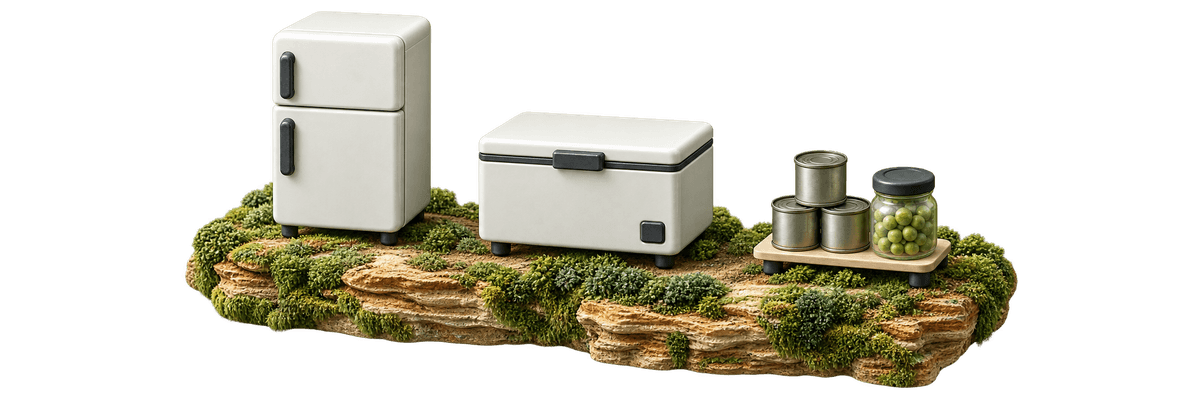
A fridge, a chest freezer and a shelf of tins and a jar standing in a row, with arrows pointing from the fridge to the freezer to the tins
Fridge, then freezer, then cupboard. The tins keep longest, so they come last.

Make meals that need no cooking

Today

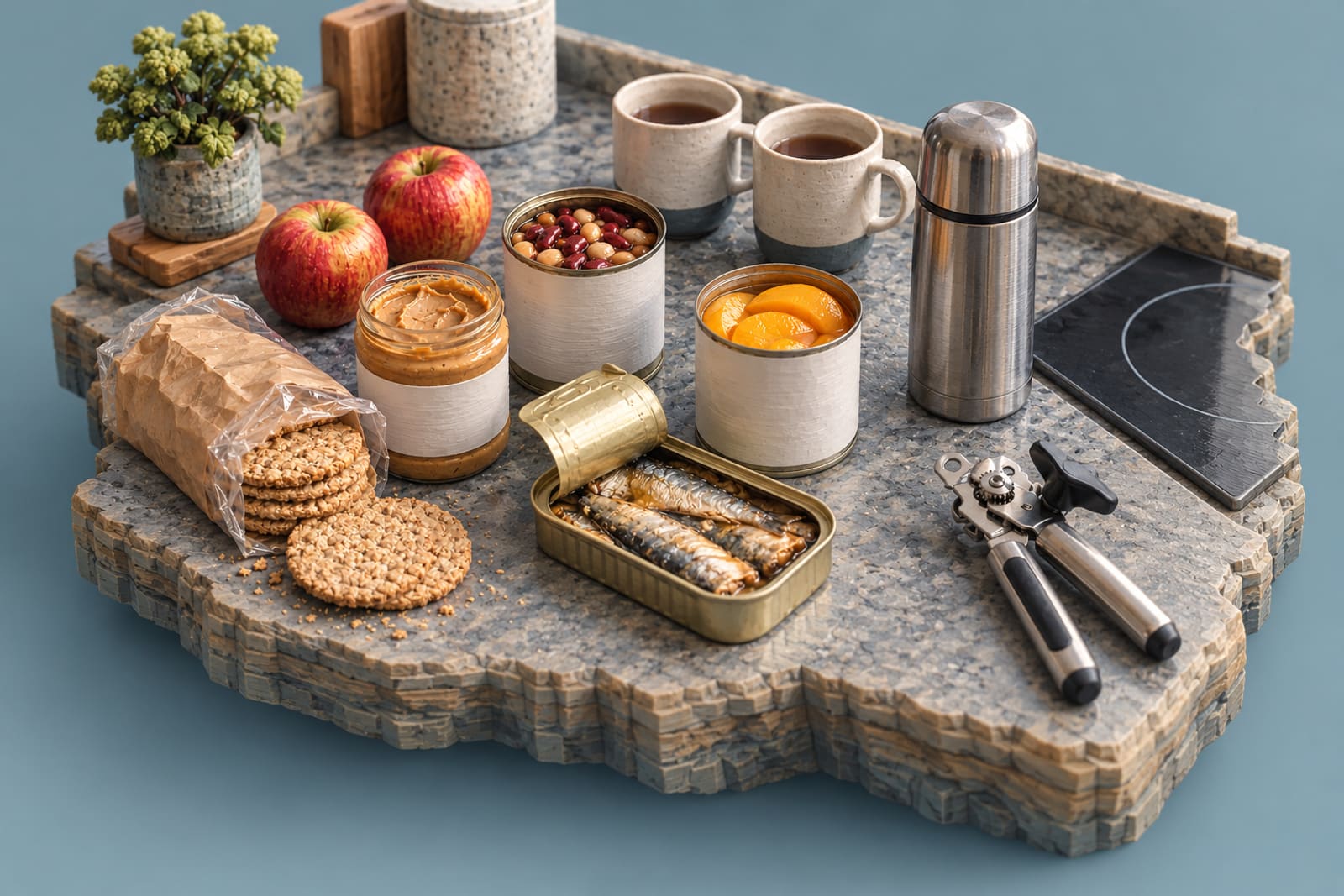
Tinned food is safe to eat without heating it through. The government's advice is to keep food that needs no cooking, such as ready-to-eat tinned meat, fruit and vegetables, and a tin opener. Add bread, crackers, peanut butter and fruit, and you have a proper meal.

Good cold

Tinned fish, beans and chickpeas, potatoes, sweetcorn, fruit and rice pudding are all cooked already.

Hard going cold

Tinned soup and stew are safe cold, but most people would rather wait for a flask or a stove.

A no-cook meal on a kitchen worktop: open tins of fish, beans and peaches, crackers, a jar of peanut butter, apples, a hand tin opener, a steel flask and two mugs
Fish, beans, fruit and crackers make a proper meal with no heat. Keep a hand tin opener with the tins, because ring pulls can snap.

Get hot water into a flask

Before it goes off

A full flask means hot drinks, instant porridge and a hot water bottle later in the day. If a power cut is planned, fill it before your time slot. In the rare event of rota cuts in a national shortage, each area goes off for around three hours at a time.

  • Fill the flask with boiling water for ten minutes first, then empty it and refill. It stays hot for longer.
  • No power at all? A neighbour on a different street, or with a gas hob, may have a kettle that works.
  • A portable power station can run a microwave or a low-wattage travel kettle, if its rated output is above the appliance's. Most can't run a normal kettle.

Cook outdoors, on a camping stove

If it goes on

The Food Standards Agency says you can cook and heat water on a camping stove, barbecue or bottled gas stove, but most are designed for outdoor use only. Food takes longer, so make sure it's steaming hot and cooked through. The NHS is clear: do not use a barbecue or camping stove indoors or inside a tent.

  • Set it up on a flat, steady surface in the open air, away from anything that burns.
  • Keep children and pets back, and never leave it burning on its own.
  • Turn it off and let it cool outside before you bring it, and the gas, back in.
  • In a flat with no balcony or garden, plan on no-cook food and a flask instead.

Carbon monoxide has no smell. A headache, dizziness, feeling sick, tiredness and confusion are signs of poisoning. Stop using the appliance and go outside. Call 111, or 999 if someone finds it hard to breathe, becomes confused or loses consciousness. Your carbon monoxide alarm needs a working battery to cover you in a power cut.

Take extra care with babies and anyone at risk

Throughout

Young children, pregnant women, older people and people with a health condition are more at risk from food poisoning. For them, make sure food is steaming hot, take care with deli meats and smoked fish, and check use-by dates.

Baby formula

Making up powdered formula safely needs boiled water. If you can't boil water, use ready-to-use formula. Keep a few cartons in the cupboard.

Clean hands

Wash hands before touching food. If the water is off too, hand sanitiser and antibacterial wipes will do.

The power's off as well? Our power cut guide covers the first hour. Shops empty? The empty shops guide picks up from here.

Three things that give you a hot drink and a safe kitchen

You can manage three days on tins alone. These add hot drinks, an outdoor stove and a safety net.

  • Vacuum flask

    A 1-litre steel vacuum flask

    Fill it while the kettle still works and you have hot drinks, instant porridge or a hot water bottle hours later.

    • Double-walled stainless steel
    • Around 1 litre, enough for four mugs
    • Rated to keep drinks hot for 12 hours or more
  • Camping stove

    A single-burner gas stove, for outdoors

    Boils a pan of water in minutes on the back step or the balcony. It stays outdoors, every time.

    • Takes a gas type sold near you, so you can buy refills
    • A wide base and a pan support that grips
    • Comes with a carry case to keep it with its gas
  • Carbon monoxide alarm

    A battery carbon monoxide alarm

    Carbon monoxide has no smell. A battery alarm keeps working in a power cut, when you are most likely to use a heater or stove.

    • Meets EN 50291
    • A sealed battery that lasts the life of the alarm
    • One for each room with a gas, oil, coal or wood appliance

When you can't cook, on one page

Nine lines, in order. Print it and keep it inside a kitchen cupboard door, beside the tin opener.

Can't cook · the first day

Download PDF

If it's something else

See every situation guide

Get the monthly brief: one job before each season turns

One email a month: new guides as they're published, and one job to do before the season turns, from lagging the pipes in autumn to checking the torch batteries before the storms.

We'll only use your email to send the Prep Britain newsletter. Unsubscribe any time. How we handle it