



Skip to content
Prep Britain
Checking warnings…

Medicine running short? Keep every dose on time

Most gaps in a prescription come from a repeat ordered too late, or a pharmacy waiting on a delivery. Both have a fix. This page covers ordering in time, what to do when your medicine is out of stock, getting an emergency supply if you run out, and keeping insulin, inhalers and devices going in a power cut or a heatwave.

Reviewed 8 Oct 2026 8 min read Free to read

Do these three first · 10 minutes

Count what you have left

Work out the date you'll take the last dose, and write it on the calendar.

Order the repeat now

Through the NHS App, online or at your GP surgery. Allow about 5 working days.

Ring your pharmacy

Ask if your medicine is in stock. If it is short, they can tell you what happens next.

Run out completely? Call 111 In England, NHS 111 online has an emergency prescription service, and a pharmacy can supply some medicines without a prescription. In Scotland and Wales, a pharmacist can often supply your medicine too. In Northern Ireland, start with your community pharmacist or your GP. Feeling very unwell? Call 999.

Order early, ask the pharmacist, and know the 111 route. Almost every gap closes with those three.

Which problem is it?

A repeat that's due, a pharmacy that's out of stock, and a box that's already empty each have their own fix.

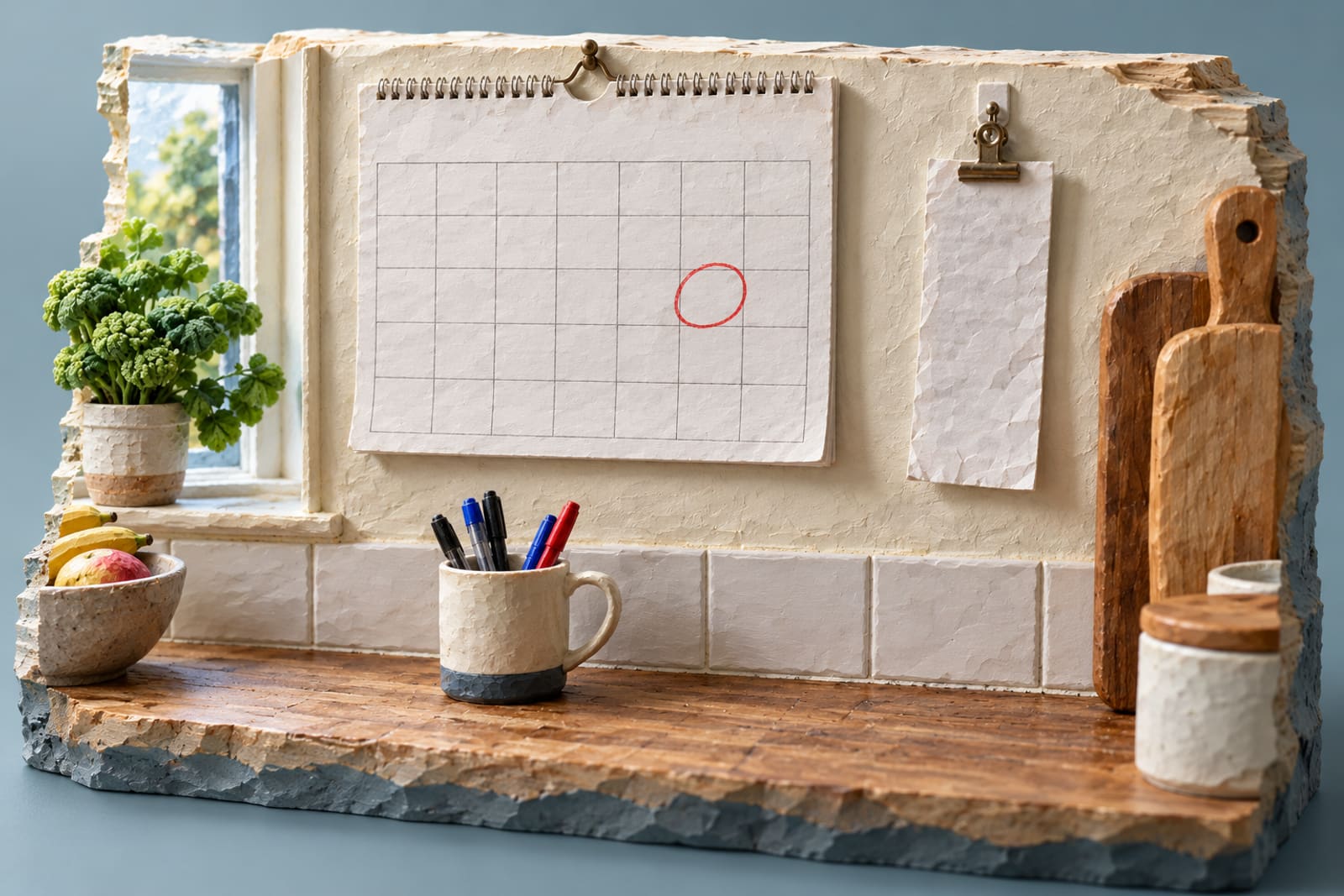
A blank wall calendar in a kitchen with one day ringed in red pen, a repeat prescription slip clipped beside it and a mug of pens on the worktop

A repeat is due

Order now, while you still have some left. Allow about 5 working days between ordering and collecting.

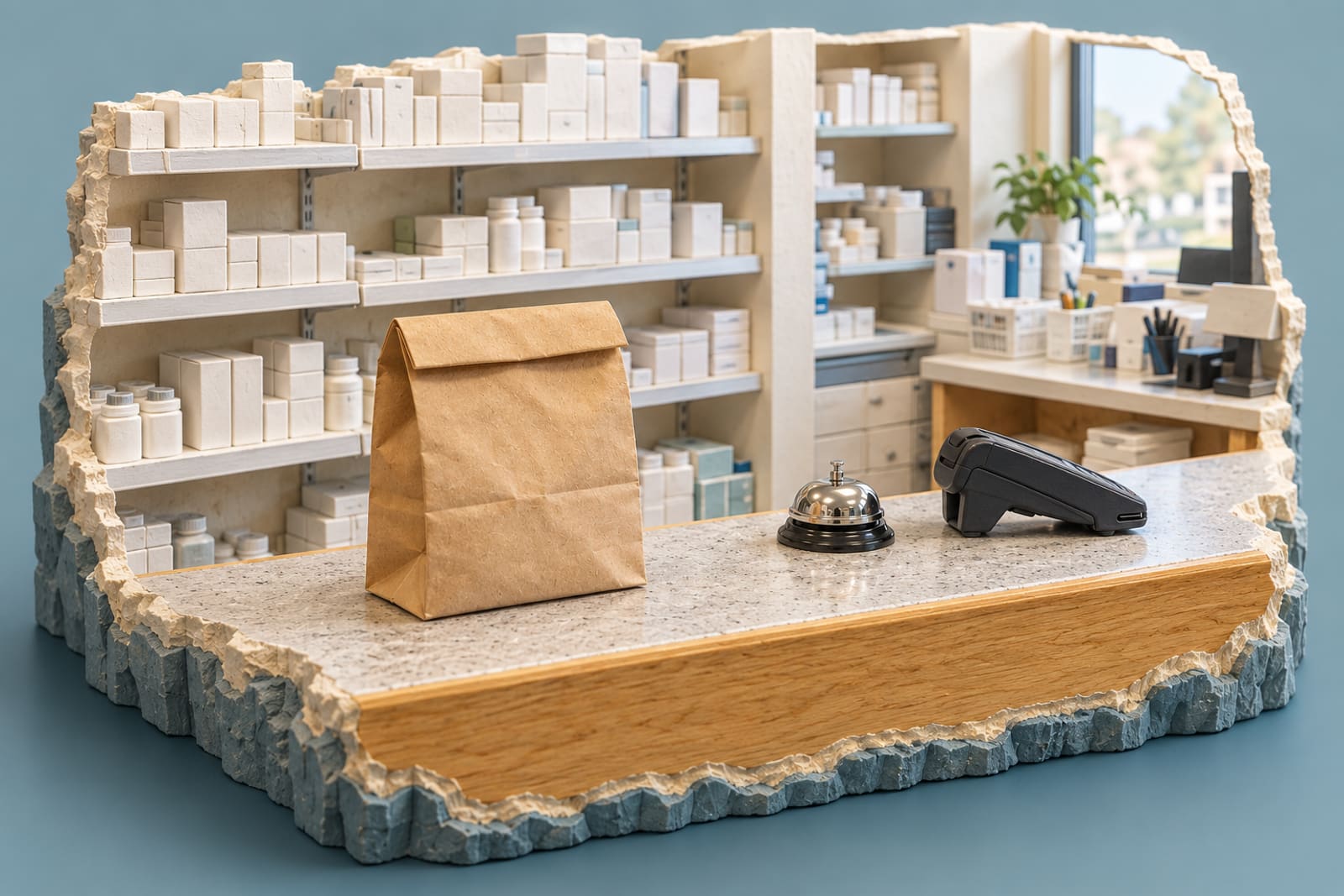
A pharmacy counter with a brown paper bag, a bell and a card machine, and shelves of plain white medicine boxes behind

The pharmacy is out of stock

Another pharmacy may have it, because pharmacies use different suppliers. Your pharmacist can check, and can talk to your prescriber about a swap.

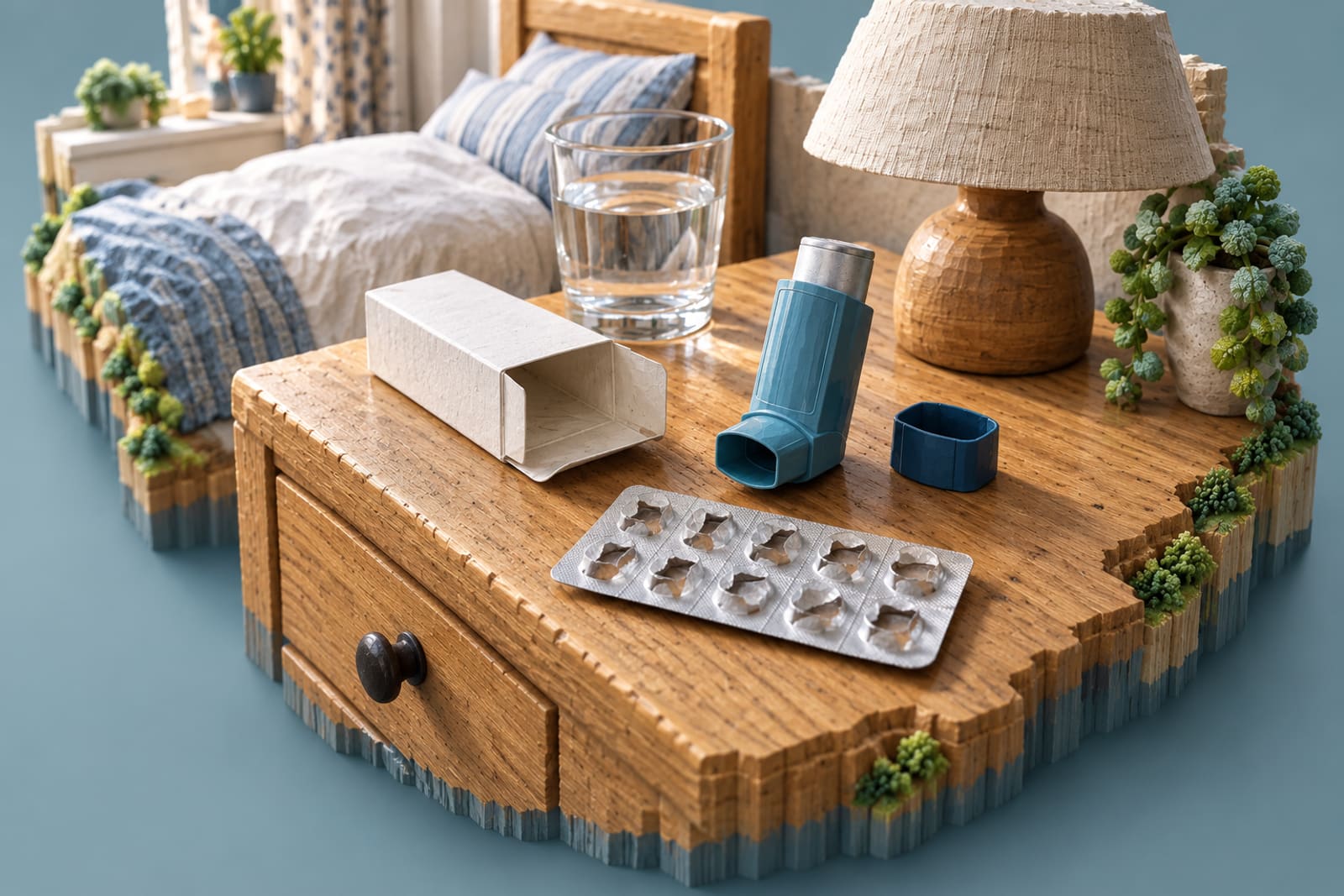
An empty blister strip, an open empty medicine box and a blue inhaler with its cap off on a bedside table beside a glass of water

You've run out

Use NHS 111, or go to a pharmacy. Many medicines can be supplied in an emergency without a prescription, though you may need to pay.

Six steps, from the repeat to the medicines bag

Steps one to three keep your supply steady, whatever is happening. Four is for the day you run out. Five and six are for a power cut, a heatwave or a trip away.

Order repeats in good time

Today

If you get your medicine on a repeat prescription, you should usually allow 5 working days to request it and collect it. Order through the NHS App, online or at your GP surgery. In Scotland, allow at least three working days.

  • Set a reminder on the calendar a week before each box runs out.
  • Order while you still have medicine left, in line with your GP practice's policy.
  • Before a bank holiday or a trip away, order a few days earlier still.
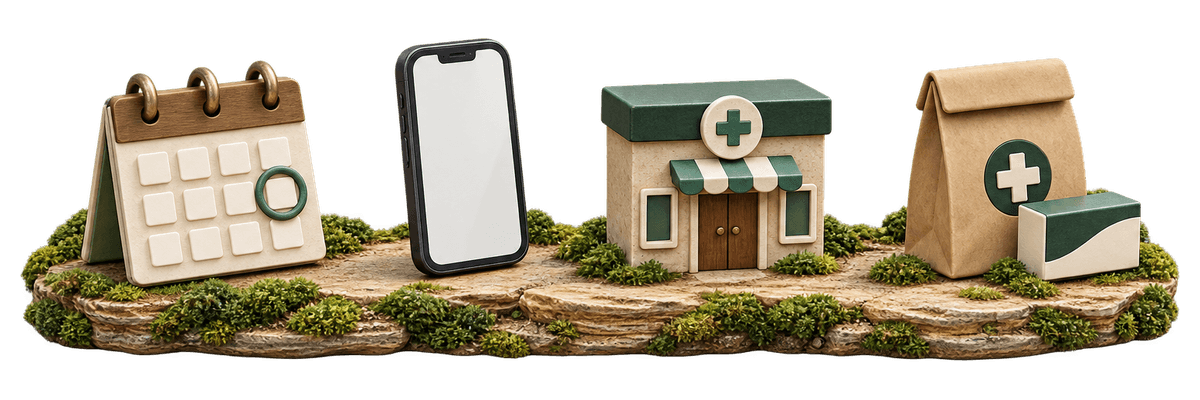
Four objects on a long plinth joined by arrows: a calendar with one day ringed, a phone, a small pharmacy with a cross on its sign, and a pharmacy bag beside a medicine box
Mark the date, order on the phone or the app, give the pharmacy time, then collect. About a week, start to finish.

Let the pharmacist find another way

If it's out of stock

Check whether your medicine is available from another pharmacy. If it's short everywhere, you might be given a different form, such as a tablet instead of a capsule, a smaller amount to collect more often, or asked to get a new prescription.

Ask early

Your pharmacist can see national shortages and what's available instead. A week's notice gives them time to find it.

If a swap isn't working

Go back to your doctor or talk to your pharmacist. Don't change how you take a medicine without asking first.

Order what you need, and keep taking it

Every month

Only order the medication you need, and avoid stockpiling or ordering more than you need until your next prescription. Keep taking your medicine as prescribed. When everyone orders extra, the shelves run short for the next person.

Worried about a shortage in the news? Speak to your doctor or pharmacist, or call NHS 111.

Get an emergency supply

If you've run out

In England, use the NHS 111 online emergency prescription service. It asks where you are and when your next dose is due, and may send you to a pharmacy. Pharmacies can supply certain medicines without a prescription, but you may need to pay.

Wales

A pharmacist may give you an emergency supply without a prescription, up to 30 days' treatment for most medicines.

Scotland

If you run out, a pharmacist can in certain circumstances supply one cycle of your medication without a prescription.

  • Take the empty box or your repeat slip, so the pharmacist can see the name and dose.
  • Out of hours, your GP surgery's answering machine has the out-of-hours number.

Keep fridge medicines cool, and kit running

Power cut or heatwave

Insulin you're using can be kept at room temperature for up to 28 days. Spare insulin should be kept below 25°C, ideally in the fridge, and never in the freezer. Check the leaflet, because some insulins differ.

Equipment that needs power

Join your supplier's Priority Services Register. It gives priority support in an emergency, and notice of planned power cuts where possible.

In a power cut

Keep the fridge door shut, and open it only when you need to. The power's off has the rest.

Pack a medicines bag

This week

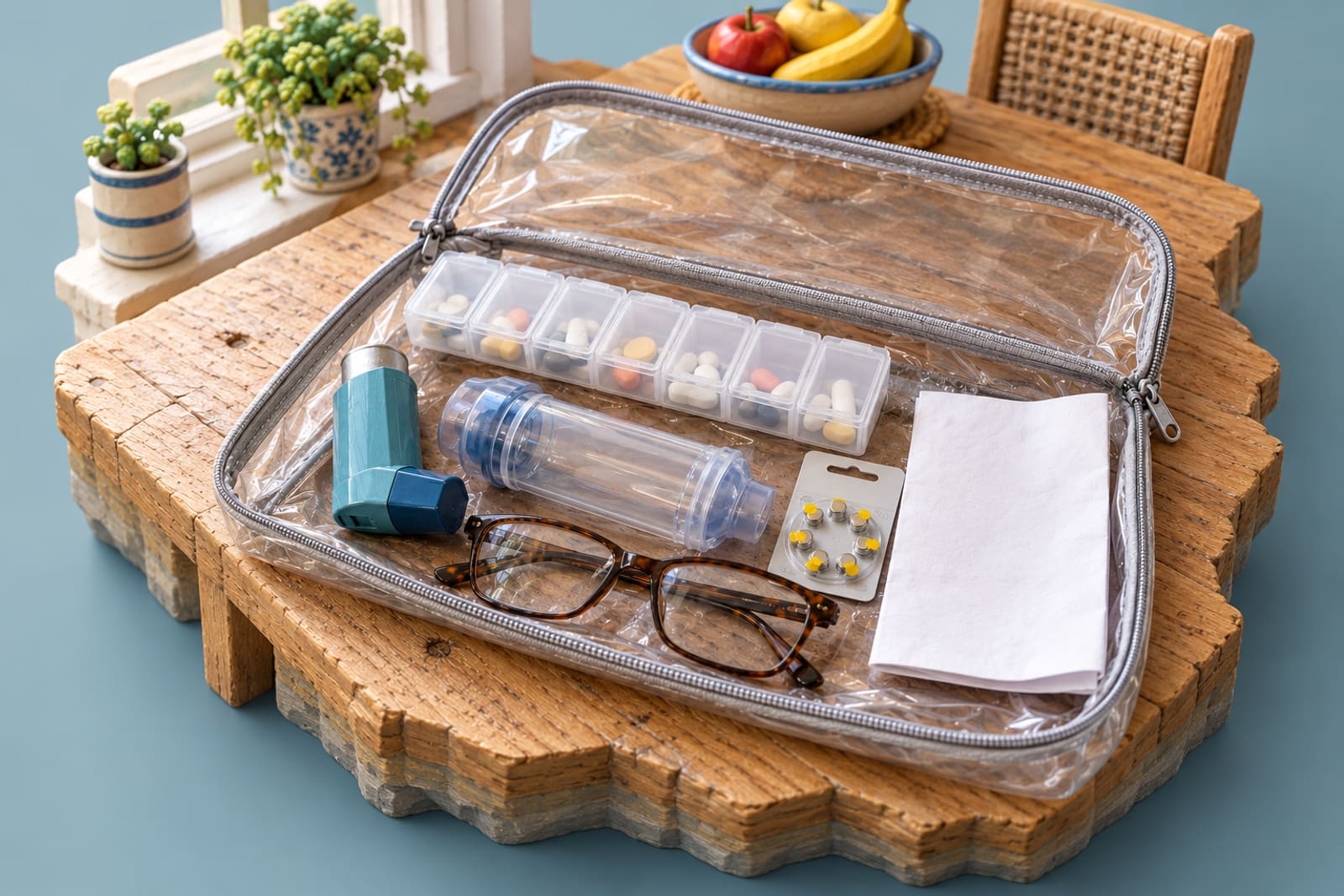
Keep the things you take every day in one bag you can pick up and go. If you use adrenaline auto-injectors, carry 2 in-date pens with you at all times. With an NHS hearing aid, you can get free batteries and repairs from the service that fitted it.

  • A week of each medicine, in its box or a pill organiser
  • Inhalers, a spacer, and a spare reliever
  • Spare hearing aid batteries and glasses
  • A written list: each medicine, the dose and times, allergies, your GP and pharmacy numbers
A clear zip pouch open on a kitchen table holding a filled weekly pill organiser, a blue inhaler with a plastic spacer, a card of hearing aid batteries, reading glasses and a folded handwritten list
A medicines bag that's ready to go: a week of tablets, the inhaler and its spacer, hearing aid batteries, glasses, and the list a pharmacist or paramedic would ask for.

Repeats and emergency supplies in each nation

The route is much the same everywhere: order early, ask the pharmacist, and use 111 when you've run out. The details differ.

Ordering repeats and getting an emergency supply in England, Wales, Scotland and Northern Ireland
NationOrder a repeatIf you've run out
England Allow about 5 working daysNHS 111 online emergency prescription service, a pharmacy, or an urgent treatment centre
Wales Ask your GP surgery how far aheadA pharmacist, up to 30 days for most medicines, or call 111
Scotland At least three working daysA pharmacist can supply one cycle, or call NHS 24 on 111
Northern Ireland In line with your GP practice's policyYour community pharmacist, or your GP or out-of-hours GP

England from the NHS. Wales from NHS 111 Wales, which also lists exceptions for inhalers, insulin, contraceptives and some antibiotics. Scotland from the Scottish Government. Northern Ireland from nidirect.

Three things that keep your medicines in order

An organiser that shows what's been taken, a way to keep insulin cool without a fridge, and a pouch for the list and the boxes.

  • Pill organiser

    A weekly pill organiser

    Shows at a glance what has been taken today, and how many days are left before the next repeat is due.

    • Seven days, with separate morning and evening lids if you take doses twice a day
    • Lids that snap shut and stay shut in a bag
    • Ask your pharmacist first if a medicine has to stay in its blister
  • Medicine cooler

    A cooling wallet for insulin

    Keeps insulin and other fridge medicines cool for a day out, a long journey or a power cut, without ice packs.

    • Sized for the pens or vials you use
    • Works by soaking in water, so it needs no fridge or freezer
    • Check your leaflet for your insulin's temperature range
  • Document pouch

    A waterproof document pouch

    Passports, insurance papers and birth certificates in one sealed bag you can grab on the way upstairs.

    • A seal that zips or rolls shut, not just a press-stud
    • Big enough for A4 papers unfolded
    • Tough enough to carry, not freezer-bag thin

When your medicine's running short, on one page

Nine lines, plus space for your pharmacy and your doses. Fill it in and keep it with your medicines.

Medicines · this week

Download PDF

If it's something else

See every situation guide

Get the monthly brief: one job before each season turns

One email a month: new guides as they're published, and one job to do before the season turns, from lagging the pipes in autumn to checking the torch batteries before the storms.

We'll only use your email to send the Prep Britain newsletter. Unsubscribe any time. How we handle it