Skip to content
Prep Britain
Checking warnings…

How much cash should you keep at home?

Keep about £50 for each adult and £25 for each child, in small notes and coins. That covers three days of food, fuel and getting about if the card machines and cash machines stop. This page shows how to work out your own amount, which notes to ask for and where to keep them.

Reviewed 10 Oct 2026 7 min read Free to read

Three things to do this week · 15 minutes

Take out the cash

Work out your amount below, then take it out in one go, or add a few pounds with each shop.

Ask for small notes

Fives and tens, plus £10–£20 in coins. A shop with no card machine may have no change.

Put it with your papers

In one place you can find in the dark, and tell one other adult where it is.

Keep enough cash in small notes to get through three days, and keep it where you can find it in the dark.

Work out your household's cash

Say who lives with you and whether you drive. It shows a total, and the notes and coins to ask for at the bank or the Post Office.

LINK runs the UK's cash machine network. In April 2026 it suggested "£50 per adult and £25 per child" to the House of Lords, to cover the first three to four days of a power or phone network failure. The car and the spare are our own figures.

1 Who's in the house?
  • Adults£50 each2
  • Children£25 each0
  • Cars£50 each, for fuel1
2 Any spare?

Keep about

£150

Enough for three days of food, medicines and getting about, plus fuel, if the card machines stop.

  • £20 in coins
  • 8 £5 notes
  • 5 £10 notes
  • 2 £20 notes

Ask for it in small notes. A shop with no card machine may have no change either, so the fives and tens let you pay the right amount.

£50 an adult and £25 a child is the figure LINK, the UK's cash machine network, put to the House of Lords in 2026. The car and the spare are our own figures.

What r/UKPreppers said they keep

Someone asked this on r/UKPreppers in October 2026. Most answers sat between £100 and £1,000 a household, with one at £3,000, and the reasons tell you more than the totals.

How much cash people on r/UKPreppers said they keep at home, for which household, and why
They keepForWhy
About £100 A two-person homeTwo weeks of food comes first, and paper money is only useful for a short time
£200 Any household, as a minimum£100 for diesel and £100 for food and drink, in mixed notes and coins
£200 Three to four days of services downIt can double as the window cleaner money in between
About £500 A family of four£100 a person plus £100 for fuel, which also covers a night or two in a hotel
About £500 A family, plus a change jarKept in a fire safe with the passports. It has paid for a taxi back from hospital, a tyre and a battery
£1,000 One householdHidden in different notes, to fill the car and buy what the family needs

Where we agree

Food and water come first. One reply put it plainly: with two weeks of food in, you need less cash. Small notes and coins beat big notes, because a shop running on cash won't have the change. Fuel is the biggest single cost, so keep the tank at least half full and you need less.

Where we differ

A few replies suggested gold, silver, US dollars or whisky to trade. None of those buys fuel at a UK forecourt in a three-day outage. Cash in pounds does. Spend any money beyond our figure on food, water and a radio first, then add to the cash if you want more.

The three things you'll pay for

The British Red Cross puts "cash for essentials (like food or fuel)" in its home emergency kit, and nidirect lists "cash and credit cards". Here's what that cash pays for.

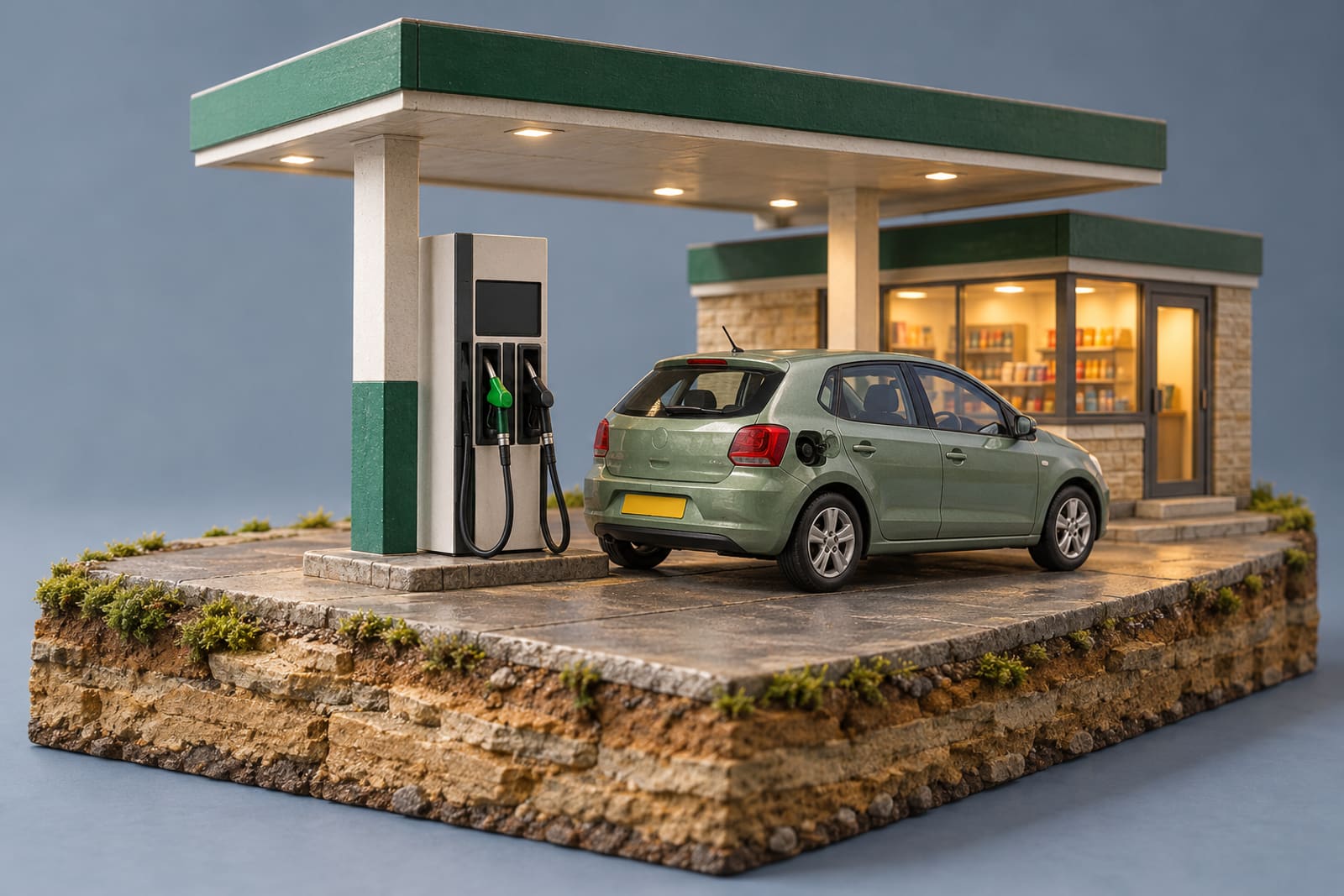
A miniature petrol forecourt: a fuel pump with a green and a black nozzle under a green-edged canopy, a sage-green hatchback beside it with its fuel flap open, and a small kiosk with lit shelves behind

Fuel

Fuel is the biggest single cost. One reply on r/UKPreppers sets aside £100 for diesel. A forecourt with power but no card network may still take cash. If you keep the tank at least half full, you'll only need a top-up.

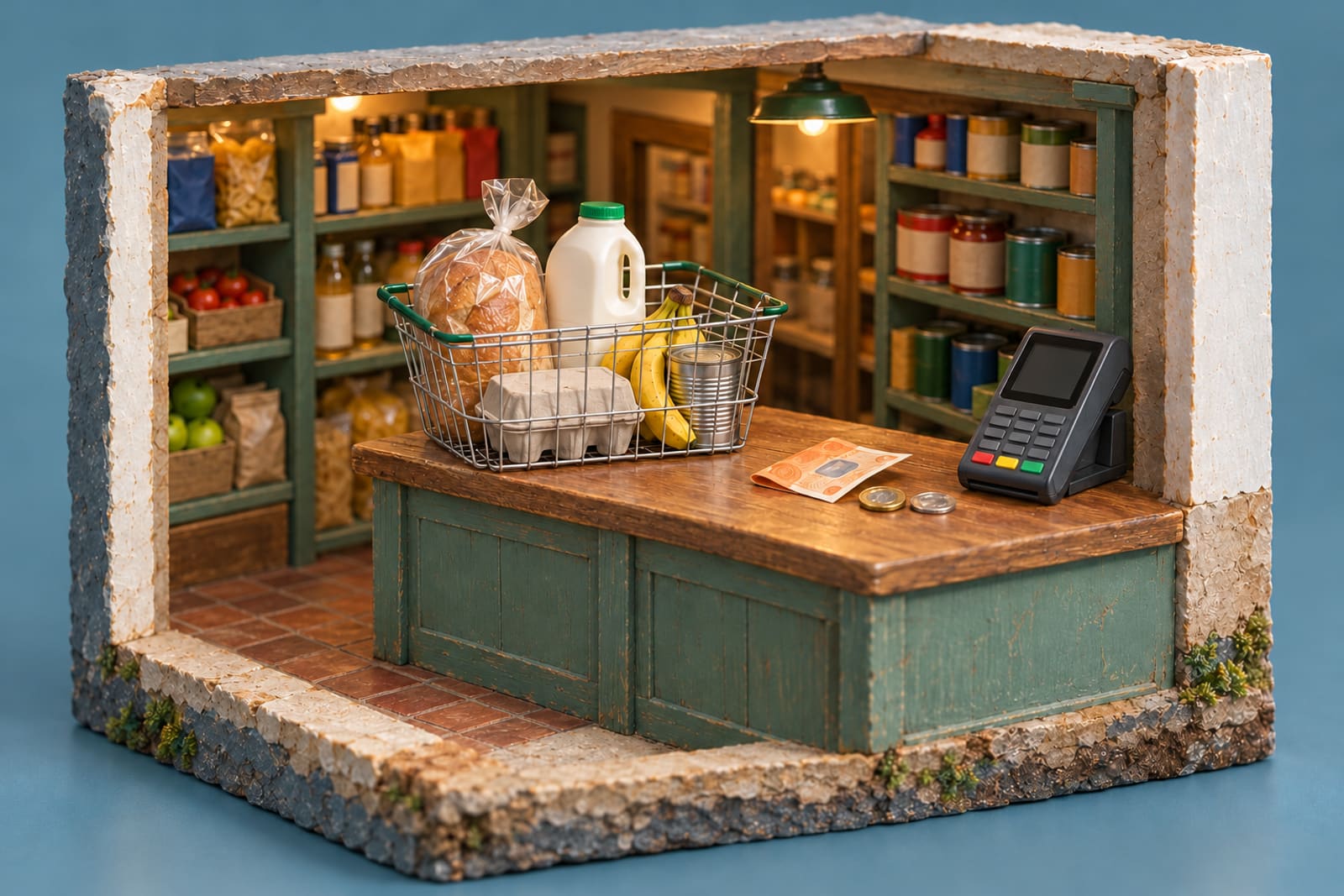
A miniature corner shop counter: a wire basket holding a bagged loaf, a milk bottle with a green cap, a box of eggs, bananas and a tin, with an orange £10 note and two coins on the counter beside a card machine with a blank screen, and shelves of tins behind

Food and medicines

Bread, milk, fresh food and anything from the chemist to top up your cupboard. A corner shop with the lights on may sell for cash and round the price to what it can change, so have fives and coins.

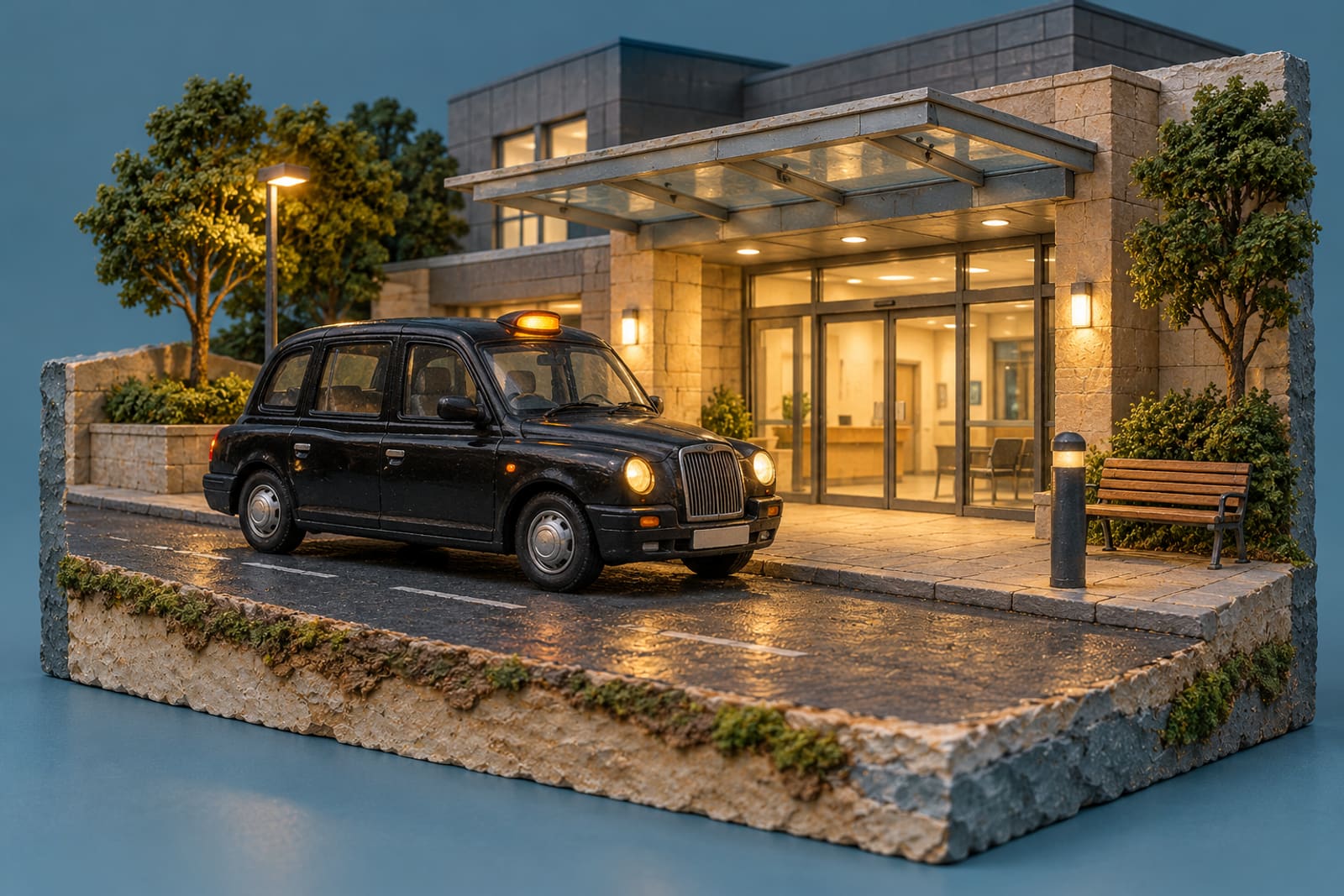
A miniature black cab with its amber roof light on, waiting at the kerb outside the lit glass entrance of a modern hospital at night, with a bench, a bollard and trees

Getting home

A taxi back from hospital, a bus fare, a new car battery or a night somewhere else if you have to leave. One reply on r/UKPreppers had paid for most of these at some point, which is why the calculator offers a spare £100.

In a power cut, the cash machines stop too. LINK says that "ATMs require power and telecommunications networks to function", and that UK cash machines have no battery backup. In the Iberian blackout of April 2025, people could only use "whatever cash they had on them or stored at home". Some shops that stayed open could only take round amounts. The cash has to be in the house before the power goes.

Small notes, some coins, all current

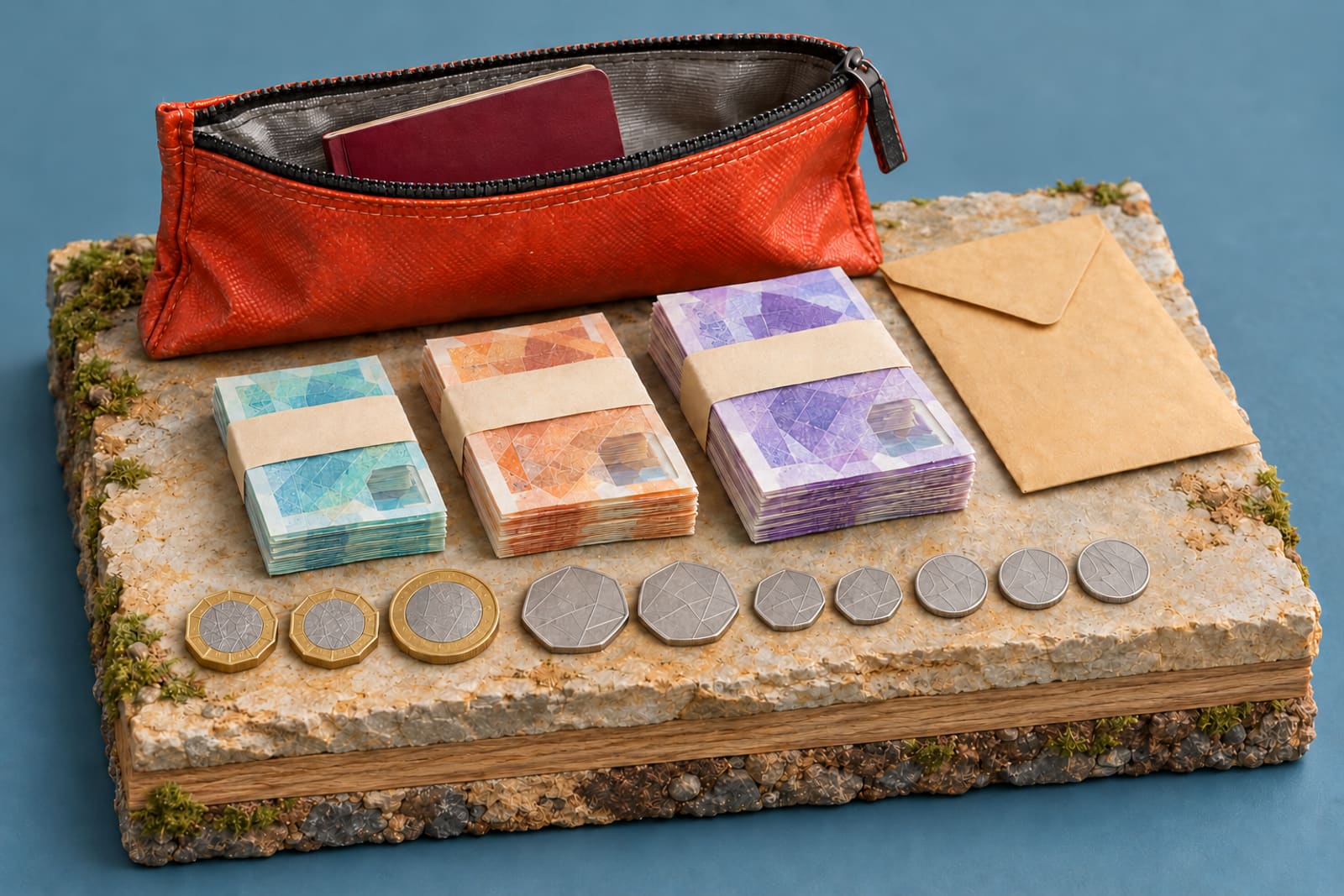
Ask mostly for fives and tens, with £10–£20 in coins. Leave out £50 notes, which many small shops won't change even on a normal day.

An orange-red zip pouch with a dark red passport inside, and in front of it three banded bundles of polymer notes in turquoise, orange and purple, a plain brown envelope, and a row of coins: two 12-sided £1 coins, a £2 coin, two 50p, two 20p and four 10p coins
What to ask for: mostly £5 and £10 notes, a few £20s and a handful of coins, kept with your passports in a fire-resistant pouch.

Fives and tens do most of the work

With a card machine down and the till still working, a shop can give change. With the till down too, it may only take round amounts. Small notes let you pay close to the right price either way. The Dutch central bank gives the same advice: "different low-value banknotes" and about "50 in total" coins.

Check for old paper notes

Paper £20 and £50 notes stopped being legal tender on 30 September 2022. If an old stash has any, pay them into your bank or exchange them. Polymer notes with the late Queen's portrait are still legal tender, alongside the King Charles notes.

Keep a change jar

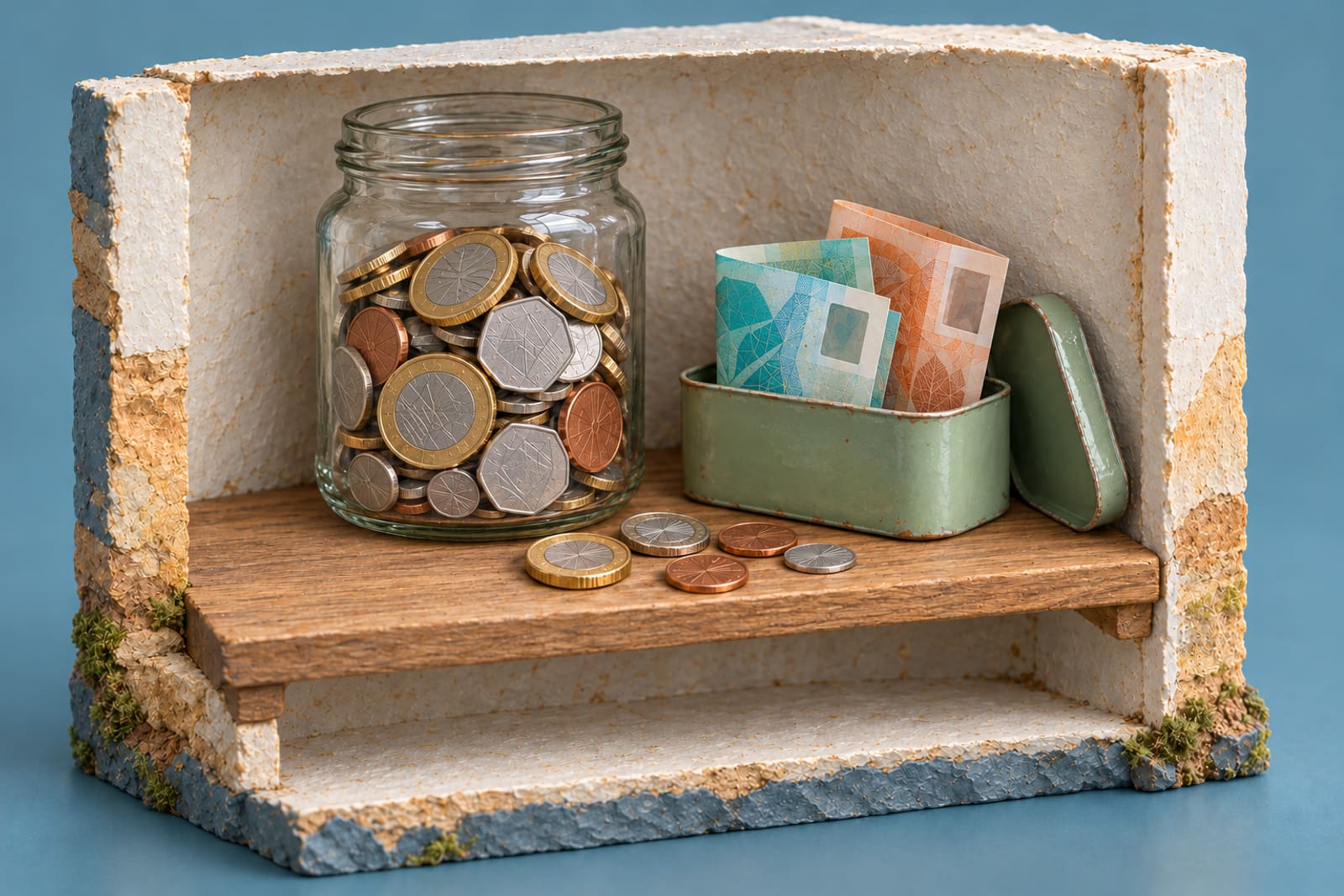
One reply keeps a jar for the coins from their pocket, and dips into it for parking meters. It's an easy way to keep £10–£20 in coins without a trip to the bank.


A glass jar of mixed UK coins on a wooden shelf, with a few coins spilled in front, beside a green enamel tin holding folded turquoise £5 and orange £10 polymer notes
A change jar for the coins, and a tin of fives and tens beside it. Together they let you pay without asking for change.

Somewhere safe that you can find in the dark

Keep the cash with your other emergency papers, so there's one place to go. These tips are ours.

  • With your passports and insurance papers A fire-resistant pouch or a small safe keeps them together. If you have to leave quickly, you pick up one thing.
  • Split it in two Keep most of it at home, and a smaller amount in a coat or bag you'd take if you left. One reply on r/UKPreppers spreads theirs around the house.
  • Tell one other adult Someone else in the house should know where it is, in case you're the one who's out or unwell.
  • Leave it out of the car Cash left in a car is easy to forget and easy to lose, and whoever is at home may need it.
  • Check your home insurance Most policies cover only a set amount of cash, so check yours before you keep more than our figure.
  • Put back what you spend If you borrow from it for the window cleaner, replace it with the next shop. Check it twice a year, when you check the torch batteries.

The questions people ask about emergency cash

Do shops have to take cash?

No. The Bank of England says "a shop owner can choose what to accept". Legal tender has a narrow legal meaning about paying off debts, rather than what a shop must take. In practice, smaller shops are the most likely to sell for cash when the card machines stop. LINK found that in the Iberian blackout "local bars and some smaller stores" stayed open for cash.

Will Scottish and Northern Irish notes work?

They're accepted widely, though the Bank of England notes that in Scotland and Northern Ireland "it is only Royal Mint coins and not banknotes" that count as legal tender. If you live in England, keep Bank of England notes. If you live in Scotland or Northern Ireland, your local notes are what local shops are used to, and coins work anywhere.

Isn't gold or silver better than cash?

Not for the outages most likely to happen in the UK, which last hours or a few days. A forecourt or a corner shop will take a £10 note, but won't take a gold coin. Spend the money on food and water first, and keep the cash for the three days.

How much do other countries suggest?

The Netherlands suggests "70 euro per adult and 30 euro per a child" for "the first 72 hours". The UK government's GOV.UK Prepare list doesn't mention cash. LINK's £50 and £25 is the closest UK figure, and it asked for cash to be added to any future government guidance.

Should I take it all out at once?

You don't need to. LINK warns against a rush for cash once a crisis is close, and suggests building it up over weeks and months. Adding £10 or £20 each week gets most households there in a month or two.

Three things that keep the cash safe and ready

A pouch that keeps the cash with your papers, a tin that sorts the notes from the coins, and a purse for the change.

  • Fire-resistant pouch

    A fire-resistant pouch for cash and papers

    Keeps the emergency cash with the passports and insurance papers, in one bag that survives a small fire and a leak.

    • Silicone-coated fibreglass, rated to around 500°C or more
    • A zip, with a flap that folds over it
    • Big enough for A4 papers unfolded
  • Cash tin

    A small lockable cash tin

    Keeps the notes flat and in one place, with a tray that sorts the coins, so you can count out the right amount by torchlight.

    • A coin tray that lifts out, with the notes underneath
    • A key lock, so it needs no battery or code
    • Small enough to sit at the back of a drawer
  • Coin purse

    A zip purse for the coins

    Car parks, buses and a corner shop with no change all want coins. A separate purse keeps £10–£20 of them ready to grab.

    • A zip rather than a clasp, so nothing spills
    • Fits in a coat pocket
    • Room for about 30 coins

If it's something else

See every situation guide

Get the monthly brief: one job before each season turns

One email a month: new guides as they're published, and one job to do before the season turns, from lagging the pipes in autumn to checking the torch batteries before the storms.

We'll only use your email to send the Prep Britain newsletter. Unsubscribe any time. How we handle it