




Government advice explained
This page sets out what GOV.UK Prepare actually tells households to keep, what it leaves for you to decide, and where the advice in Scotland and Northern Ireland differs.
Emergency Danger to life
Danger-to-life warning in force
 Prep Britain
This page sets out what GOV.UK Prepare actually tells households to keep, what it leaves for you to decide, and where the advice in Scotland and Northern Ireland differs.
If anyone at home relies on power, water or medical equipment, sign up with your energy and water suppliers.
105 for a power cut in Great Britain, 03457 643643 in Northern Ireland, and the people you would call.
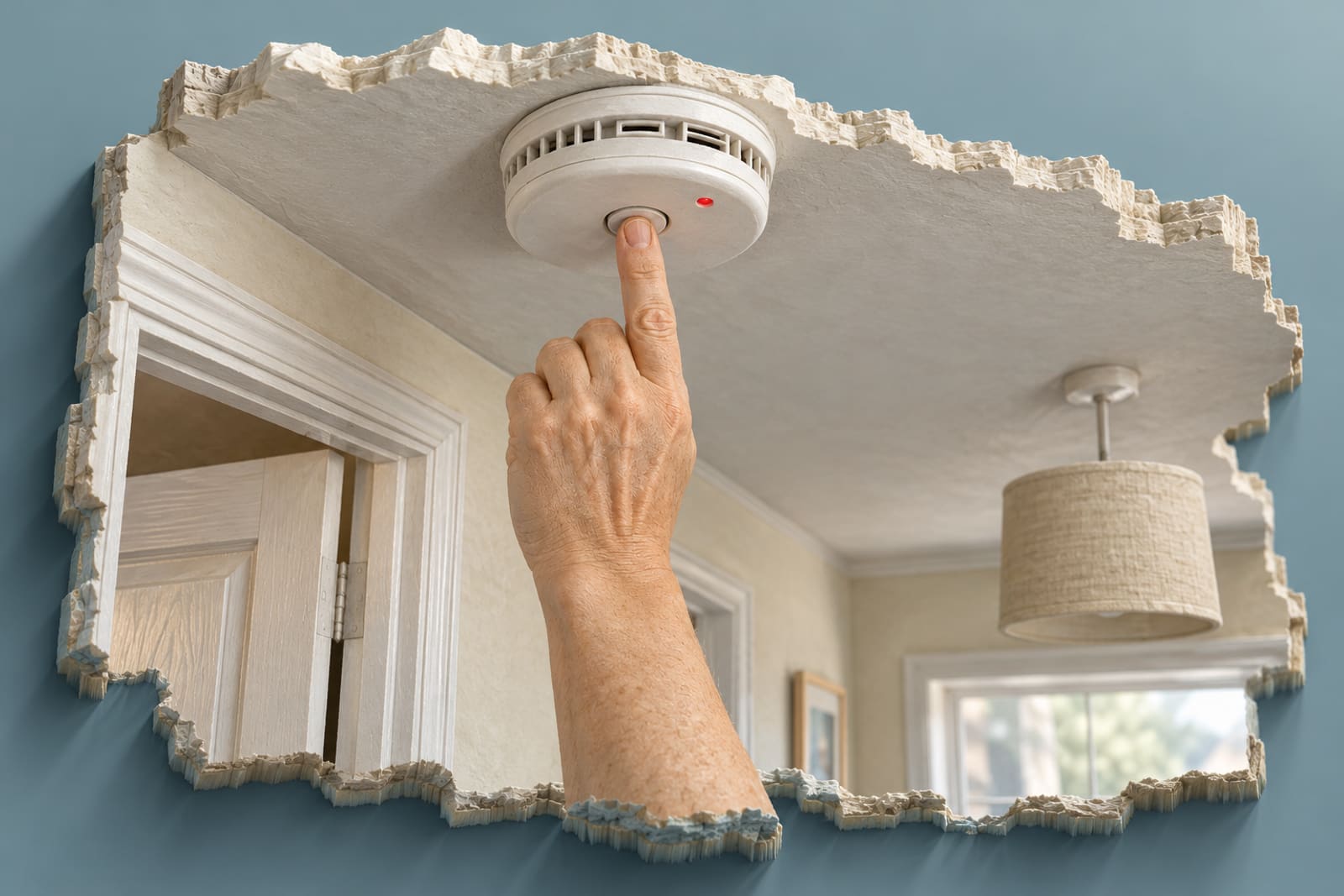
Press the button and hold it until it sounds. Then put a monthly reminder in your phone.
All three are on GOV.UK Prepare's list of steps to take. None of them involves buying anything.
The list is short because most emergencies are short. It's a few days of normal life, kept in one cupboard.
The headlines came in late August. Stock up on tins. Store bottled water. Plenty of people read one in a supermarket queue, looked at the water on the bottom shelf and wondered whether this was the week to buy some.
What the government has actually published is calmer than the coverage. Its emergency advice lives on a site called GOV.UK Prepare. One page on it, "Get prepared for emergencies", lists nine things to keep at home. It also suggests you build the kit gradually: "Rather than buying all the items at once, you could just add to your emergency kit when you are able and build it up over time."
The campaign the papers described hasn't started yet. On 2 October the Cabinet Office said its national campaign would launch "later this autumn", to cover "simple steps households can take in case of everyday emergencies, like severe storms". It will include "simple, low cost and free actions, such as preparing basic household items or joining the Priority Services Register".
Note the word "everyday". The same announcement points to a strong El Niño that "could make wetter and stormier conditions more likely during late autumn and early winter". A winter of storms and power cuts is what the advice is written for.
No. GOV.UK Prepare talks about an emergency kit for "an emergency lasting a few days, such as a power cut or water outage", built up over time. Nothing on it asks you to buy a lot at once. Our empty shops guide explains why buying extra in one go is what empties the shelves.
The advice covers every kind of emergency. GOV.UK Prepare says they "can be caused by severe weather or other natural hazards, by deliberate actions, or as a result of accidents or infrastructure failure". The Cabinet Office says the campaign "will bring the UK into line with almost every other European country, which run similar campaigns already". The kit is the same whatever the cause.
No. The site says it "will not be updated with live information during an emergency". For that you need the radio, your phone's emergency alerts, and the warnings from the Met Office and the flood agencies. Our warnings page has all of them in one place.
These are the nine items GOV.UK Prepare suggests for a kit at home, in its order. The middle column is the government's wording. The right-hand column is our practical note.
| Item | What GOV.UK Prepare says | Our note |
|---|---|---|
| Torch | Battery or wind-up. "Torches are safer than candles." | One per person, kept where you can find it in the dark. |
| Power bank | For charging your mobile phone. | Charge it when you put it away, and again every few months. |
| Radio | Battery or wind-up, "to get updates during a power cut". | Find your local BBC station on it now and write the frequency down. |
| Spare batteries | For the torch and radio, plus a backup for any medical equipment you rely on. | Check the sizes match what your torch and radio take. |
| First aid kit | Or some first aid items: plasters, bandages, a thermometer, antiseptic, gloves, tweezers. | A shop-bought kit plus your own painkillers covers most of it. |
| Hand sanitiser and wet wipes | For hygiene "when the water is off". | A pack of each in the kit, apart from the everyday ones. |
| Bottled water | No standard figure. 2.5–3 litres a person a day to survive, 10 to be comfortable. | Buy it sealed, and drink and replace the oldest first. |
| Food that needs no cooking | Ready-to-eat tinned meat, fruit or vegetables, and a tin opener. Food for pets too. | Tins you already eat, and a manual tin opener that works. |
| Baby supplies | Nappies and formula. Ready-to-feed formula is best, as you may not be able to boil water. | Only if you need them. Check the dates on ready-to-feed cartons. |
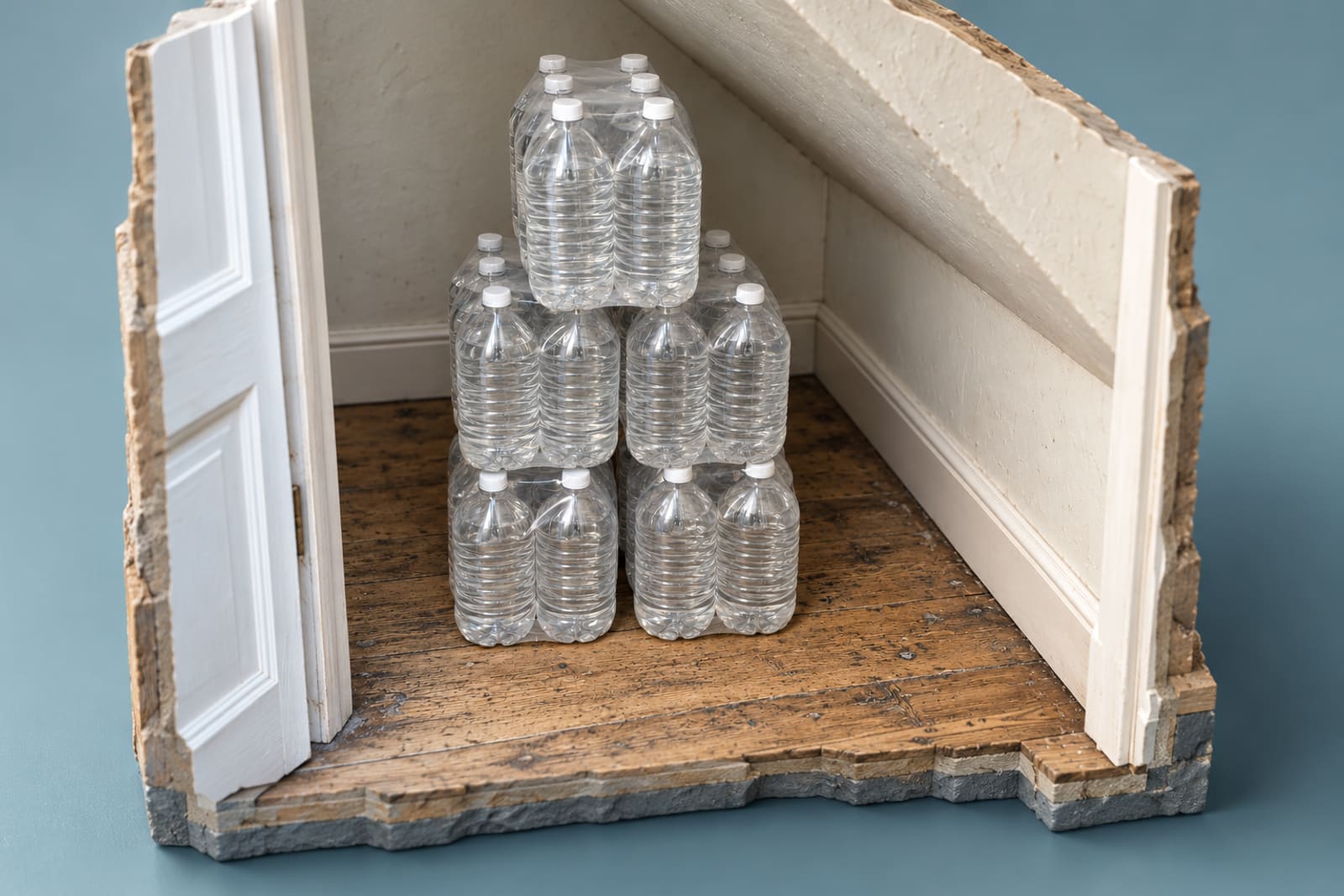
Water is the one line with a number, and the number is honest about its limits. "There is no standard figure for this as emergencies can vary in duration and people use different amounts." The World Health Organisation's minimum is 2.5–3 litres a person a day "for survival". Ten litres "will make you more comfortable by also providing for basic cooking and hygiene needs".
Take a couple in a two-bedroom flat who want three comfortable days. That's 60 litres: five six-packs of 2-litre bottles. It weighs about 60 kg, so it goes in at the bottom of the shop over a few weeks rather than in one trip.
GOV.UK Prepare recommends buying sealed bottled water "rather than filling up your own containers with tap water". Our water calculator works out the figure for your household.
The lines around the list matter too. Keep "enough of the medication you need to keep you going for several days", and a paper copy of the instructions for any medical device. If you leave because of a fire, "you should not take anything with you at all".
The list is deliberately short. That leaves a few questions people ask straight away. Here's where the other official lists fill them in.
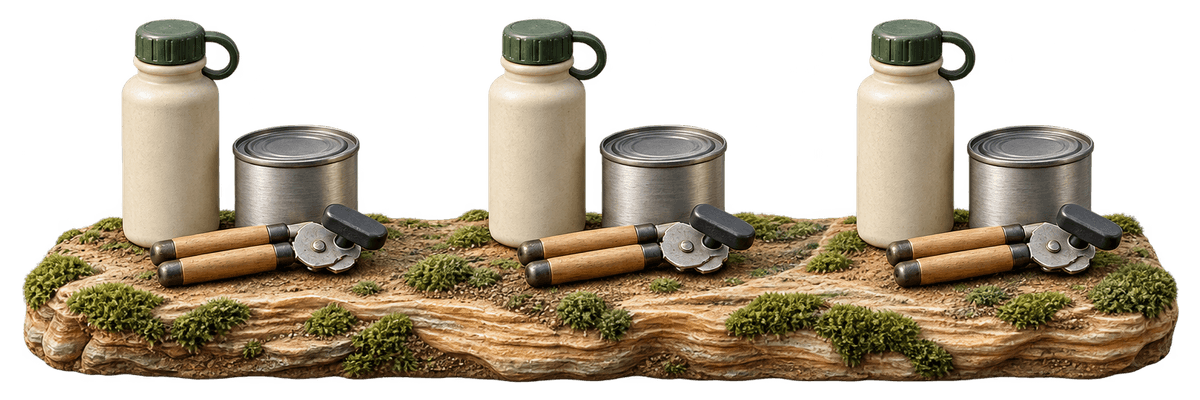
GOV.UK Prepare doesn't give a number. It describes "an emergency lasting a few days, such as a power cut or water outage". The British Red Cross and Ready Scotland both say "3 days' supply" of bottled water and food. Three days is a sensible place to start. Add more later if you live somewhere that gets cut off.
No list gives an amount. GOV.UK Prepare says "how much you need will vary based on your own circumstances". Count it in meals rather than tins. Three days for one person is nine meals, plus a few snacks.
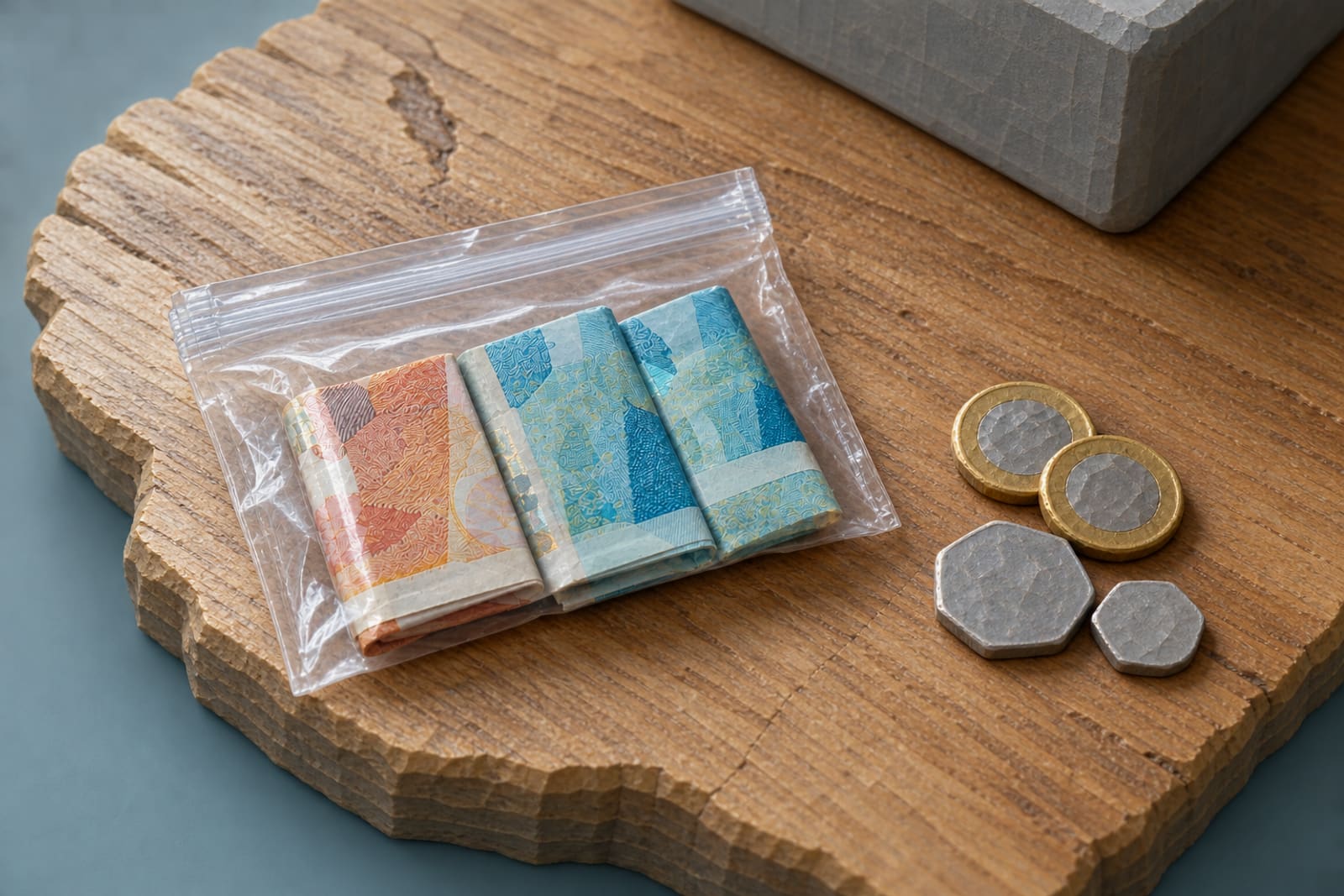
Not on the GOV.UK list. The British Red Cross includes "cash for essentials (like food or fuel)". Card machines need power, so keep a few notes and coins. How much cash to keep works out an amount for your household.
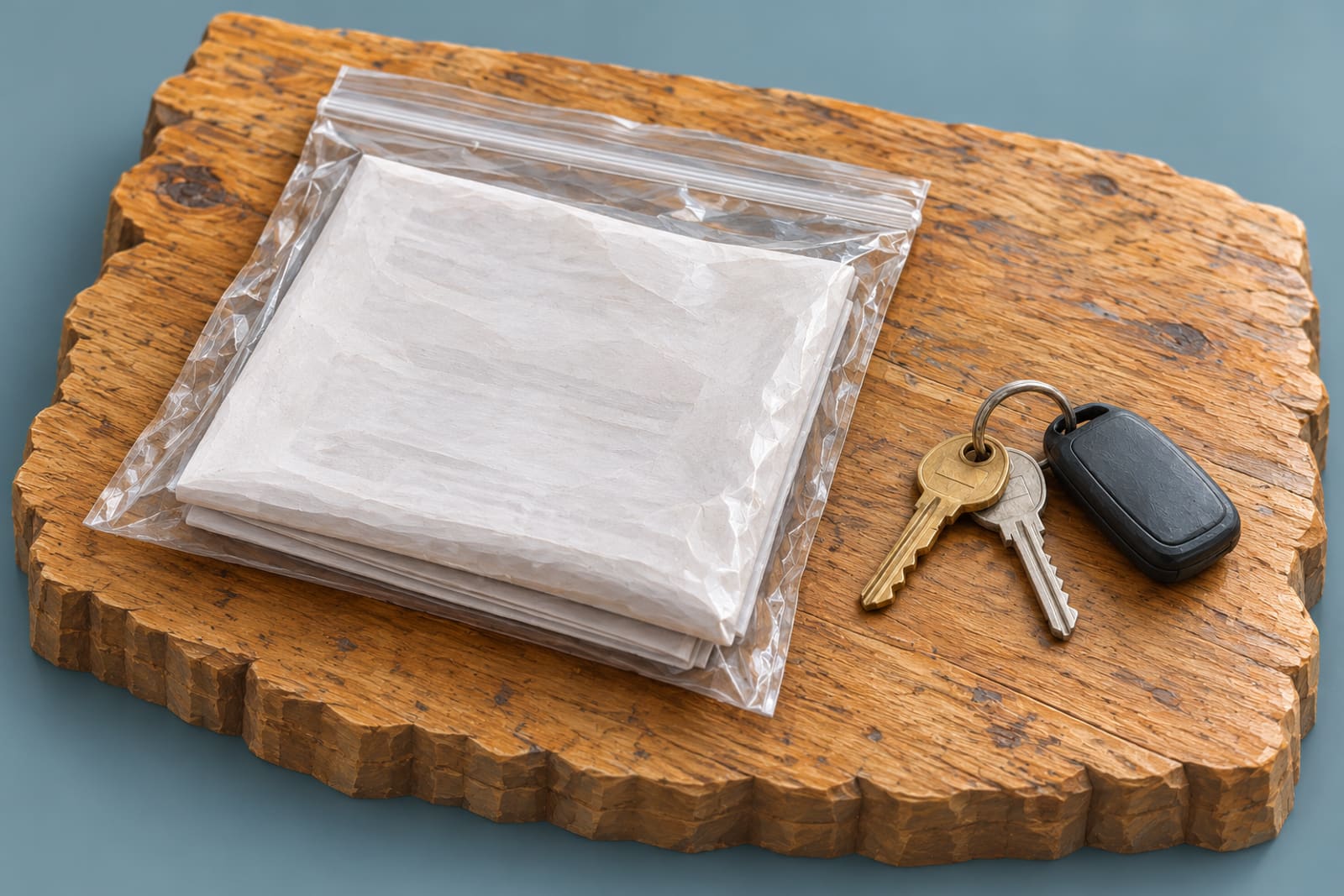
GOV.UK Prepare puts these in its household plan rather than the kit. The Red Cross list adds copies of documents in a waterproof bag and spare house and car keys.
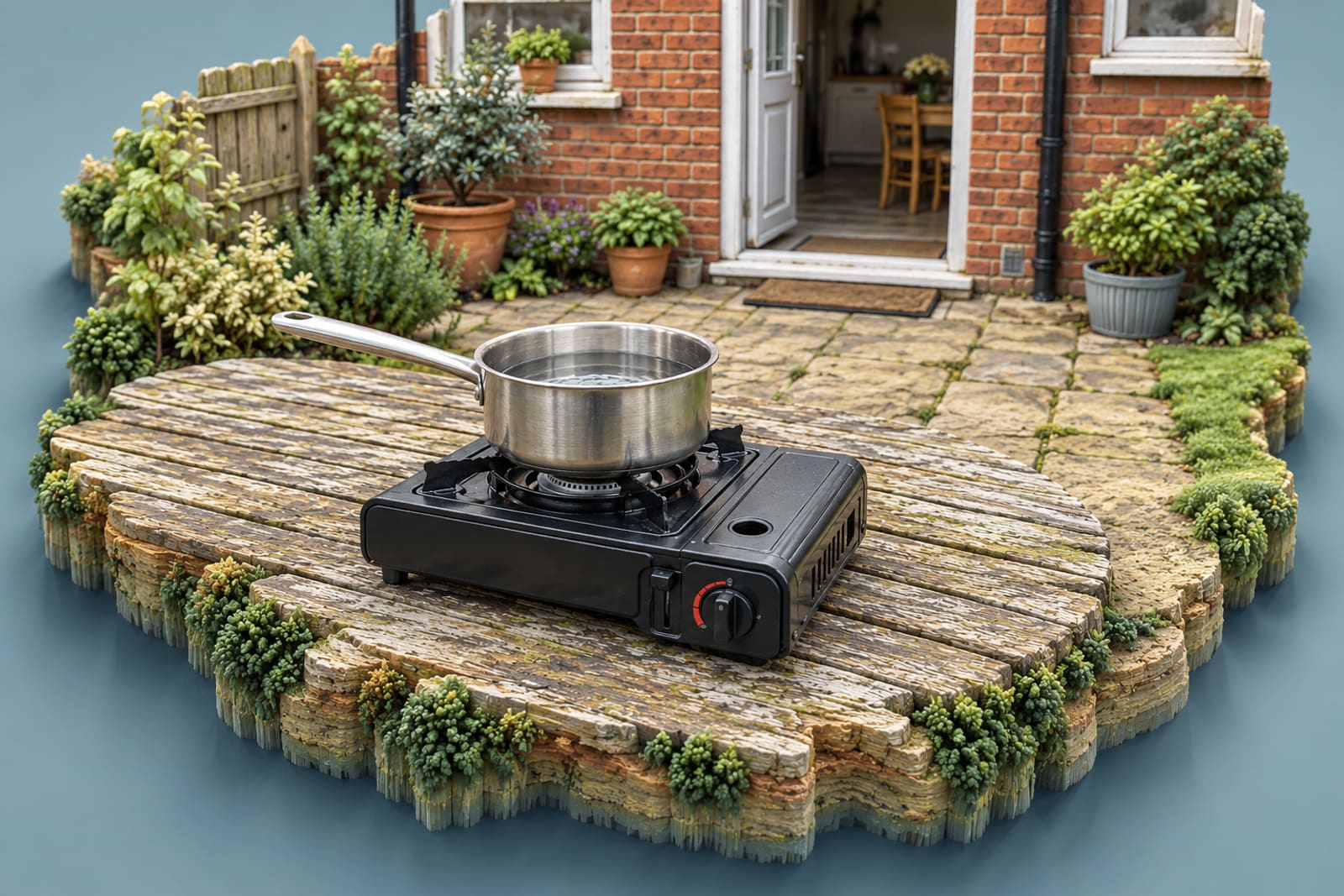
The government list sticks to food that needs no cooking, which suits an all-electric flat. The Red Cross lists a camping stove only as an optional extra. If you have one, it stays outdoors: camping stoves give off carbon monoxide, even with a window open. Our power cut guide explains why.
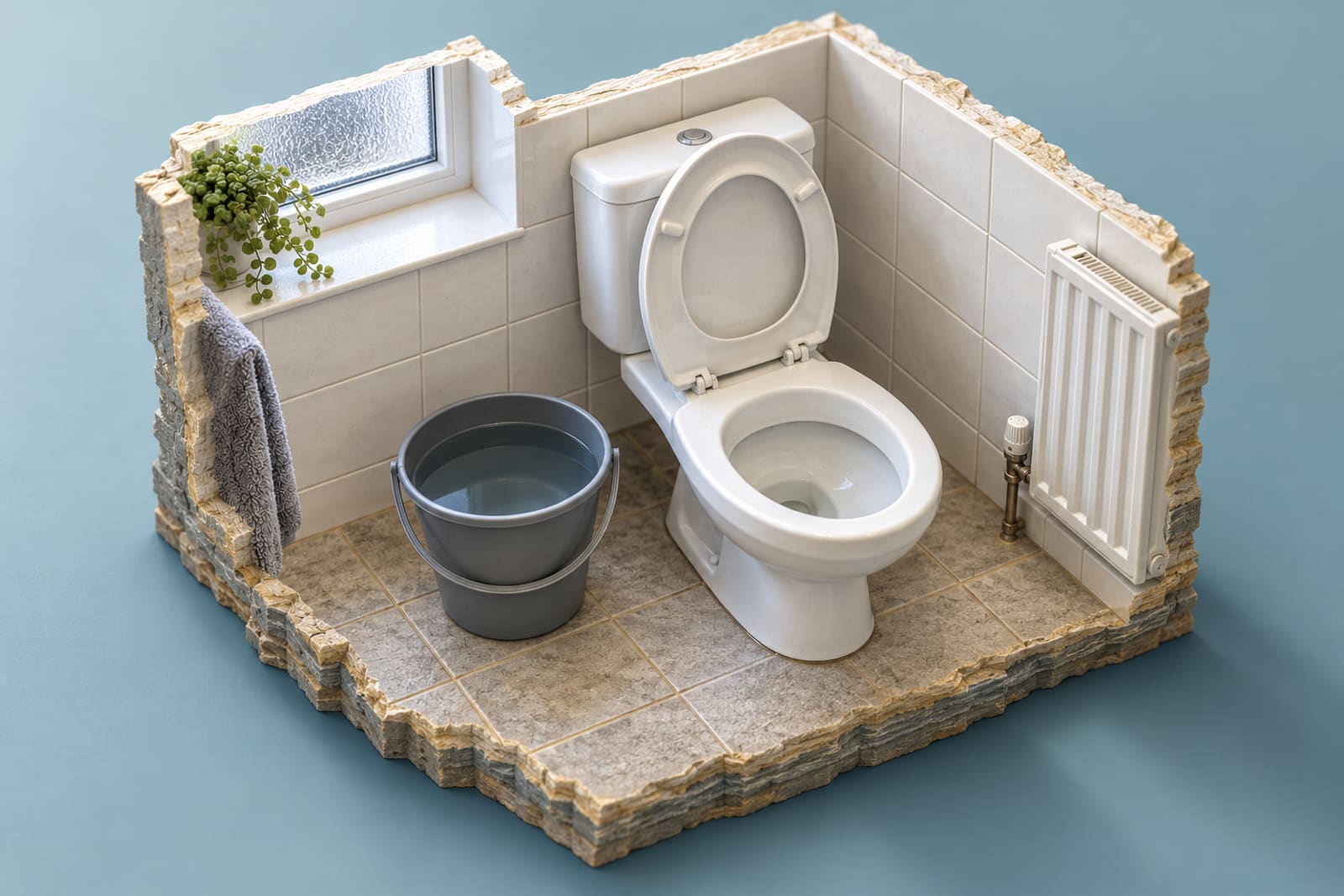
Wet wipes are as far as the list goes. Keep a bucket for flushing the bowl. Our no-water guide covers the rest.
GOV.UK Prepare is the UK government's site. It sends people in Scotland and Northern Ireland to Ready Scotland and nidirect too, and their lists are a little different.
Ready Scotland's list goes furthest on access needs. It adds "a whistle", "spare hearing aids with batteries", a spare walking stick, and "pre-printed cards, tactile or large print information you need". It's also the most direct about who decides: "you are the best person to make decisions for your household".
Its plan page tells you to "try both digital and FM stations" on the radio, and lists Scottish Water on 0800 077 8778 and SEPA Floodline on 0345 988 1188.
nidirect adds photographic ID, "cash and credit cards" and spare glasses. The Priority Services Register has a different name here: GOV.UK Prepare calls them Customer Care Registers. Report a power cut on 03457 643643 rather than 105.
One line differs from the rest. nidirect lists "candles and matches". GOV.UK Prepare says "torches are safer than candles". Reach for the torch first.
GOV.UK Prepare is the main source, and the British Red Cross page is published in Welsh as well as English. Report a power cut on 105 anywhere in Great Britain.
The Priority Services Register covers customers in England, Scotland and Wales. Check whether you're eligible at thepsr.co.uk.
Much of GOV.UK Prepare's advice involves no shopping at all. These five steps are on its home page, and they make more difference than another tin.
Write the radio down too
The plan asks for the "frequencies of any local and national radio stations that you use for news updates". Tune the radio in the kit to your local BBC station and note the number.
And the phone
Add an emergency contact to your phone's ICE or Medical ID, so emergency services can see it "without having to unlock your phone".
The numbers for the paper. 999 if someone is in immediate danger. 105 for a power cut in England, Scotland and Wales, 03457 643643 in Northern Ireland. Ready Scotland also lists 0800 111 999 for gas emergencies.
Want the nine items on one sheet? Our emergency kit checklist puts the GOV.UK and Red Cross lists together on one printable page.
Print the kit checklistA torch you can wear, a radio that doesn't need the mains, and a power bank that will charge a phone more than once.
Head torch
Leaves both hands free for stairs, the consumer unit and the kettle. One per person beats one lamp per house.
Radio
Local radio carries updates when the mobile network is busy or down.
Power bank
Keeps phones charged for a couple of days, so you can call 105, check the live map and reach family.
 The power's off
Keep the food cold and one room warm
 No water from the tap
Find the fault, make the water last
 Flooding near me
Read the warning, get people and valuables up
 A storm is coming
Ready the day before, safe the morning after
 The shops are empty
Food, medicines and baby feeds for the first fortnight
 I can't cook
Eat well for three days with the cooker off
 The heating's off
Keep one room warm and everyone in it safe
 There's no fuel
Make the tank last and store petrol legally
 The phones are down
Get the news and reach your people
 My medicine's running short
Repeats, shortages and running out
 It's a heatwave
Keep the house cool and everyone in it well
 There's a wildfire near me
Report it, keep the smoke out, be ready to go
One email a month: new guides as they're published, and one job to do before the season turns, from lagging the pipes in autumn to checking the torch batteries before the storms.
We'll only use your email to send the Prep Britain newsletter. Unsubscribe any time. How we handle it
