




Skip to content
Prep Britain
Checking warnings…

Fuel running short? Make every tank go further

When fuel runs short or gets expensive, the households that cope best are the ones that need less of it. This page covers what the government does in a real shortage, cutting journeys, driving to use less fuel, the law on storing petrol at home, and the winter kit to keep in the car.

Reviewed 4 Oct 2026 8 min read Free to read

Do these three first · 10 minutes

Fill up as normal

Buy what you'd usually buy, when you'd usually buy it. If everyone fills every can at once, the pumps run dry for the rest of us.

Cut one journey a day

Combine errands into one trip, share lifts, and walk or cycle the short ones.

Check the tyres

Under-inflated tyres make the engine work harder, so it uses more fuel. The right pressure is in the handbook.

Diesel: 197.58p a litre The UK average on 28 September 2026, the highest since July 2022, when it peaked at 199.22p. Petrol was 173.46p. The government publishes the figures every week.

Fewer journeys, a gentler right foot and a car that's ready for winter. That's what gets a household through a fuel shortage.

What kind of shortage is it?

Queues, high prices and a real national shortage each need a different response. Most of the time, it's one of the first two.

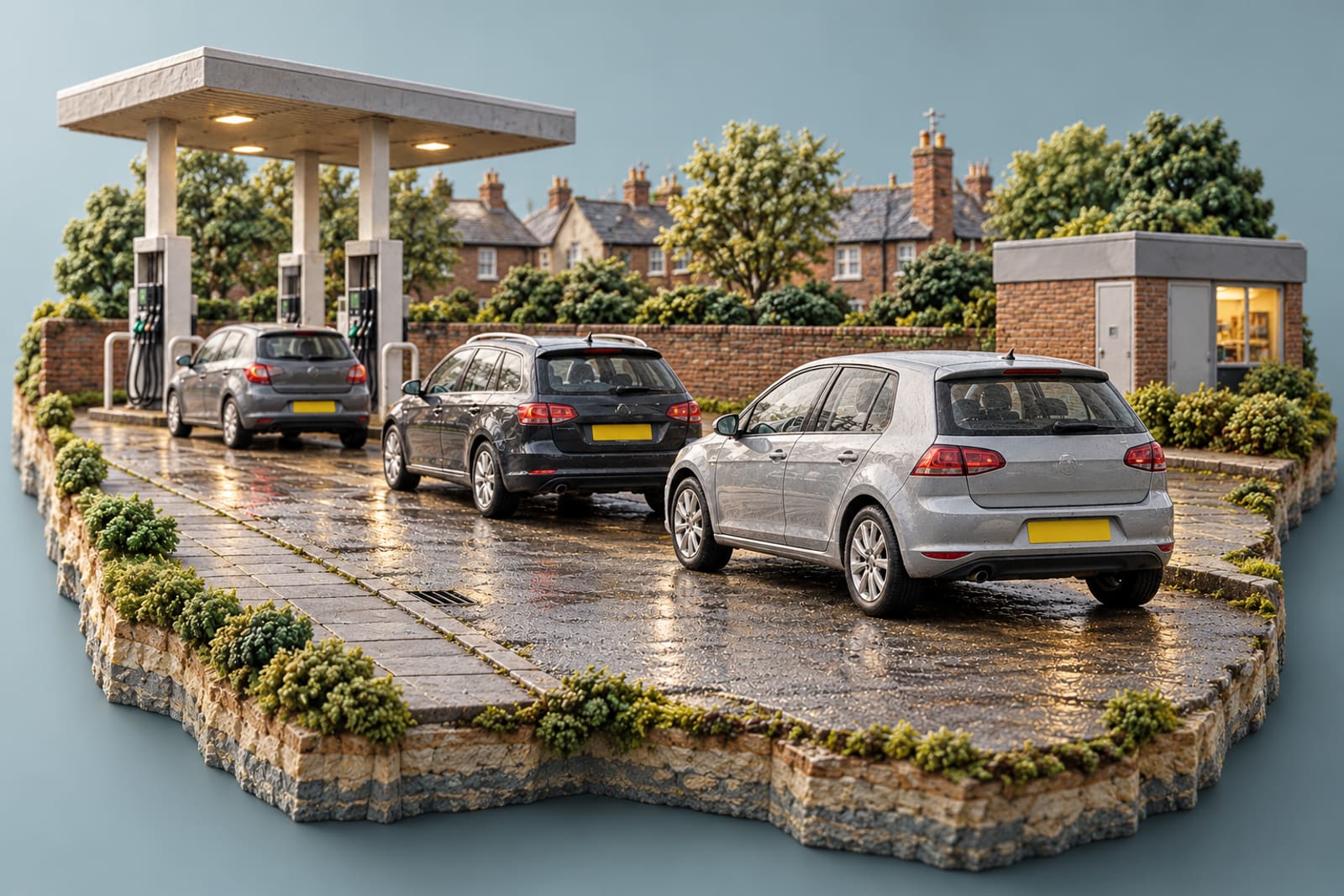
A short line of ordinary cars waiting to fill up at a petrol station forecourt on a grey day

Queues at the pumps

Fuel is still arriving, but too many people are filling up at once. Fill up as you normally would and leave the cans at home. The queues clear faster that way.

A laptop open on a kitchen table beside a mug of tea, with car keys in a bowl and a parked car outside the window

Prices are high

Every journey you skip is fuel you don't have to buy. Ask about working from home, combine trips, and use the steps below to get more miles from each litre.

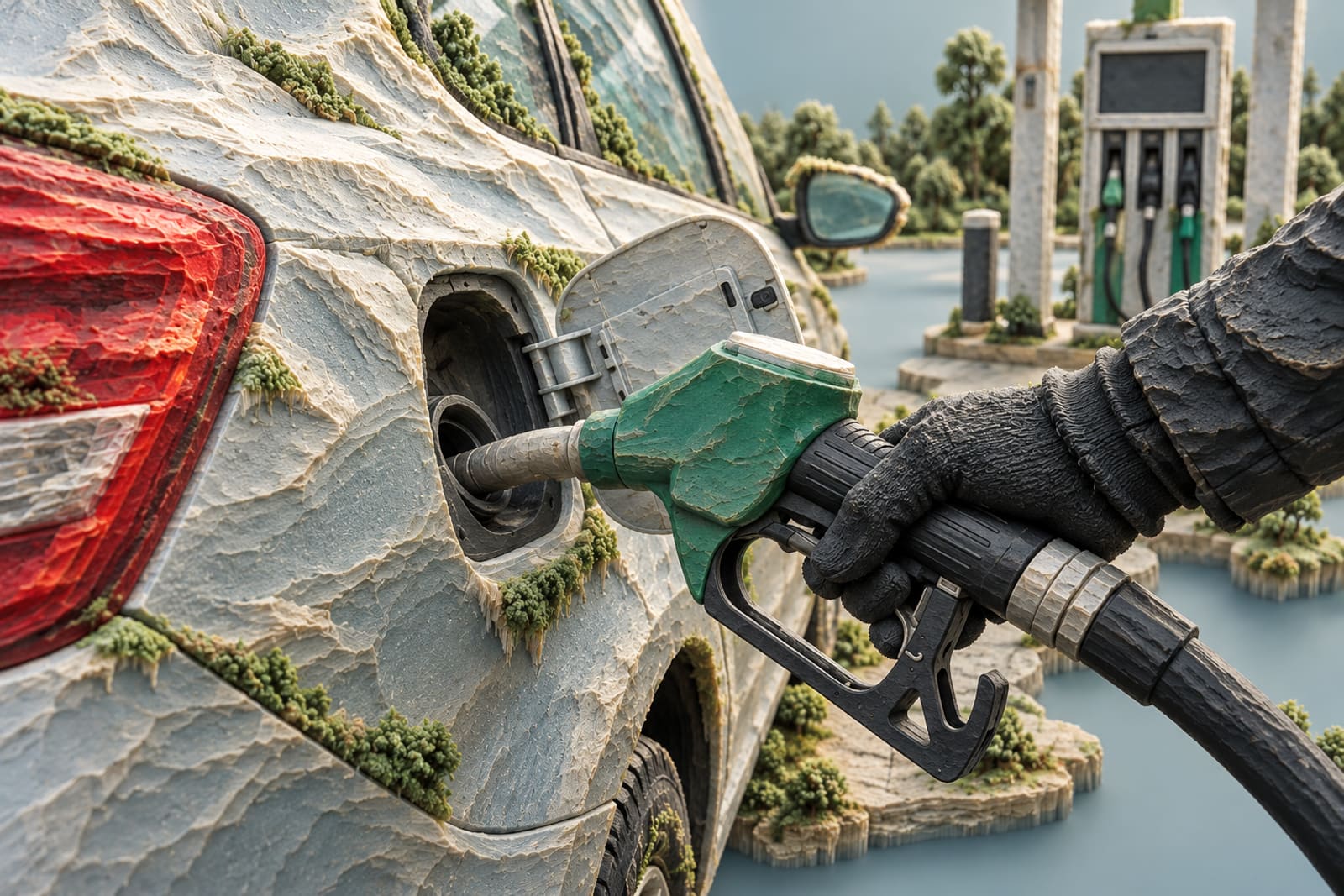
A fuel nozzle in the filler of a silver hatchback, held by a gloved hand, with an out-of-focus pump behind

A national shortage

Only then does the government use its emergency plan. That can include a cap on how much each driver buys per visit, and shorter opening hours at filling stations.

Six steps, from the first queue to the winter roads

Steps one to three save fuel from today, whatever the cause. Four and five are for a shortage that drags on. Six is for the drive you can't avoid.

Fill up as normal, and leave the cans

Today

A forecourt holds enough for its normal trade. If every driver brims the tank and fills spare cans as well, it runs dry for the next driver, who might be a carer or a nurse. Buy what you'd usually buy, when you'd usually buy it.

  • Don't queue with half a tank. Come back when the queue has gone.
  • If a station has a limit per visit, stick to it. It keeps some fuel for everyone.
Cut the journeys you don't need

This week

Ask yourself whether each journey is really necessary, and walk or cycle where you can. If you have several places to go, combine them into one trip, because a cold engine is less efficient than a warm one.

Work

Ask your employer about working from home for a few days a week, or shifting your hours to miss the traffic.

School and shopping

Share the school run with another family, and do one big shop rather than three small ones.

Drive to use less fuel

Every journey

Drive smoothly. Accelerate gently, look further ahead and ease off early rather than braking hard. Use the highest gear the car is happy in, and cruise control where you can.

  • Check the tyre pressures. Under-inflated tyres use more fuel.
  • Take the roof rack off when you are not using it.
  • Check the traffic before you go, because sitting in a queue burns fuel.
  • If you are stopped for more than a couple of minutes, switch the engine off.

The Highway Code lets you keep the engine running in traffic.

Store petrol within the law

If you keep petrol

In Great Britain you can keep up to 30 litres of petrol at home without telling anyone. Use plastic containers of up to 10 litres or metal ones of up to 20, and never keep it in your living space. Northern Ireland's limit is lower: see the table.

  • Keep the cans in a garage or shed with a door to the open air and some ventilation.
  • Keep anything that could light the vapour well away: boilers, heaters, tools and switches.
  • Use it in the mower or the car, and buy more when you've used it. A garage full of petrol is a fire risk rather than a reserve.
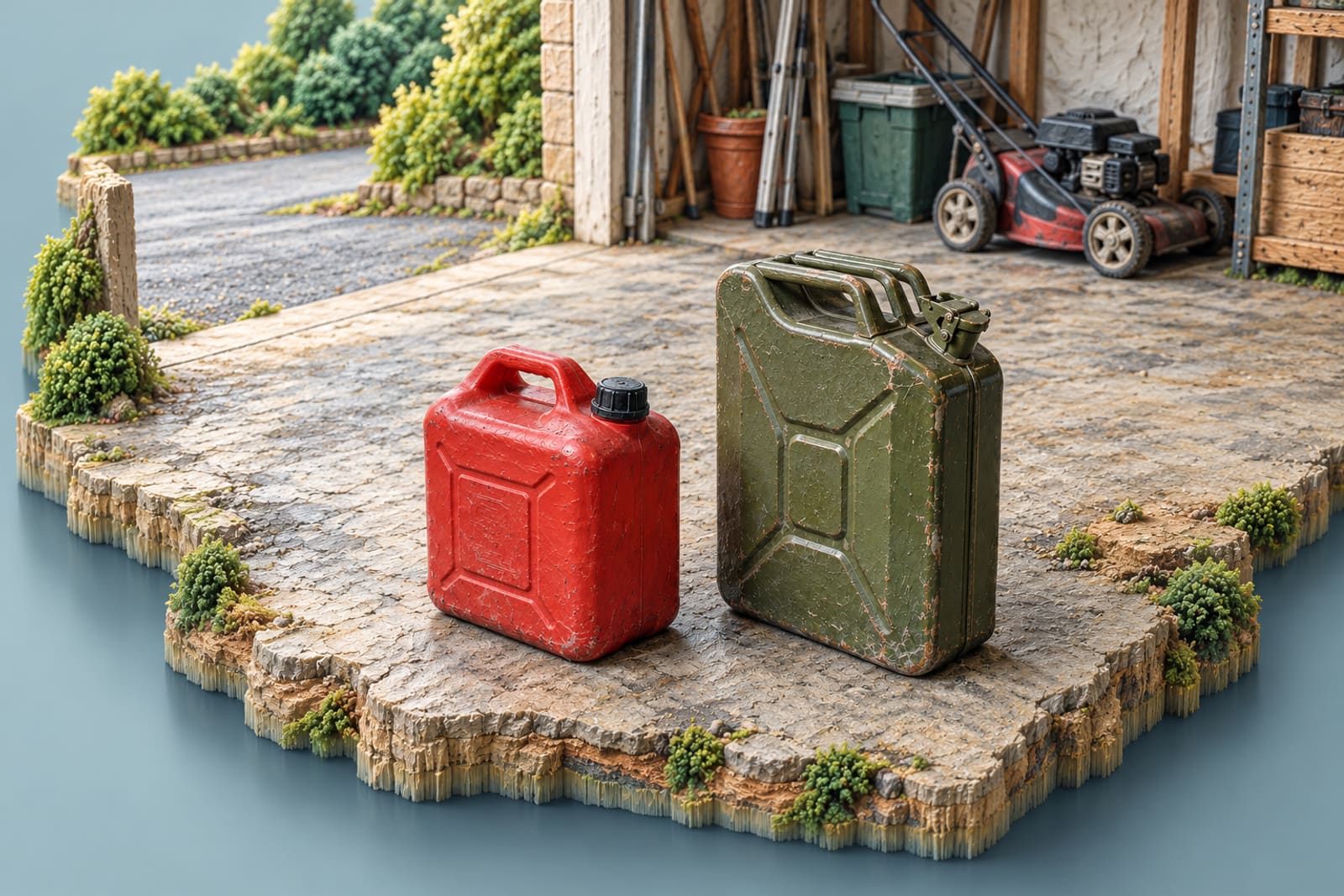
A red plastic petrol can and a metal jerrycan, both closed, standing upright on a garage floor near the open door, away from a lawnmower
A 10-litre plastic can and a 20-litre metal one: the 30-litre limit in Great Britain, in the containers the law allows, in the garage rather than the house.

Know what the government will do

In a real shortage

The National Emergency Plan for Fuel starts with the least invasive measures. It can release emergency oil stocks, send out a reserve fleet of tankers, and call on armed forces drivers to make deliveries.

Priority fuel

Emergency and critical service vehicles get priority at designated filling stations. Deliveries can be directed first to emergency services, utilities and public transport.

For drivers

A Maximum Purchase Scheme caps what each driver can buy per visit, "to ensure that all motorists have access to some fuel", and can limit opening hours.

Keep a winter kit in the car

Before winter

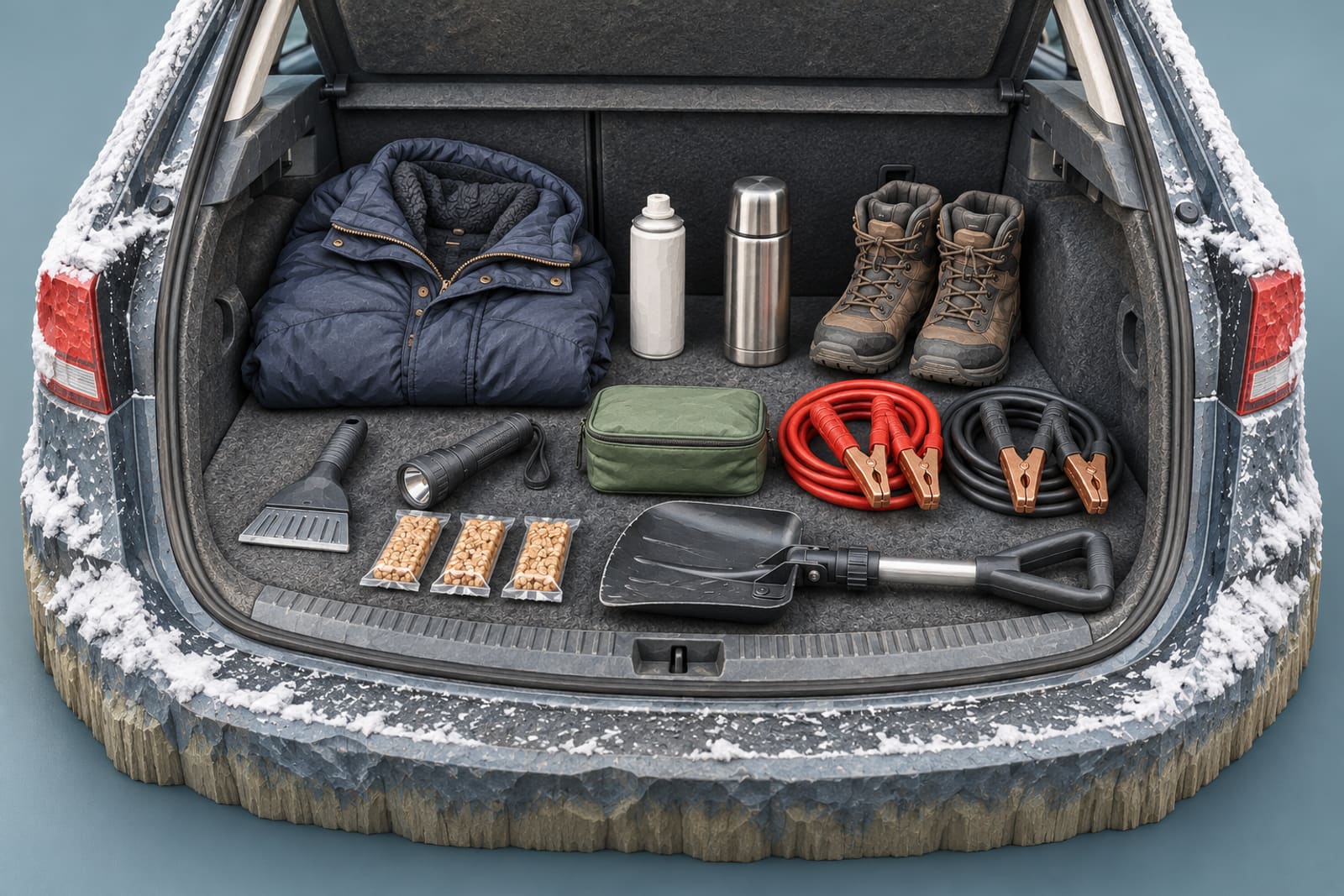
The Highway Code says not to drive in icy or snowy weather unless your journey is essential. If you must, carry de-icer and an ice scraper, a torch, warm clothing and boots, a first aid kit, jump leads and a shovel, with a warm drink and emergency food.

In winter, try not to let the tank fall below a quarter. If you're stuck in a queue in the snow, that keeps the heater running.

A winter car kit in an open hatchback boot: an ice scraper, de-icer, a torch, a folded coat and boots, a first aid pouch, jump leads, a folding shovel, a steel flask and cereal bars
The Highway Code's winter list in one boot: scraper and de-icer, torch, coat and boots, first aid kit, jump leads, shovel, a flask and food.

How much petrol you can keep at home

The rules differ between Great Britain and Northern Ireland. The petrol in your car's own tank doesn't count in either.

The legal limits on storing petrol at home in Great Britain and Northern Ireland
RuleGreat BritainNorthern Ireland
Without telling anyone Up to 30 litresTwo containers, kept in a garage or within 6 metres of a building
Containers Plastic up to 10 litres, metal up to 20 litresMetal up to 10 litres, or approved plastic up to 5 litres
More than that Up to 275 litres: tell your Petroleum Enforcement Authority in writingTell your Petroleum Licensing Authority
Over 275 litres Needs a licenceNeeds a licence
Where Never in your living spaceNever in the home itself

Great Britain from the HSE. Northern Ireland from the HSENI. In a car in Great Britain, you can carry up to 30 litres in at most two containers, and that counts towards the home total.

Three things that keep you moving this winter

A legal can for the garage, a way to start a flat battery, and a hot drink if you're stuck.

  • Fuel can

    An approved metal petrol can, for the garage

    Only for a mower, a generator kept outdoors, or the last few miles home. Keep it within the legal limit and out of the house.

    • UN-approved, marked for petrol
    • Metal up to 20 litres, or plastic up to 10, in Great Britain
    • A spout that locks and a cap that seals
  • Jump starter

    A jump starter pack for the boot

    Starts a flat battery on a cold morning without a second car. Most also charge a phone.

    • Rated for your engine size, petrol or diesel
    • Clamps with reverse-polarity protection
    • A USB port, and a charge level you can read
  • Vacuum flask

    A 1-litre steel vacuum flask

    Fill it while the kettle still works and you have hot drinks, instant porridge or a hot water bottle hours later.

    • Double-walled stainless steel
    • Around 1 litre, enough for four mugs
    • Rated to keep drinks hot for 12 hours or more

When fuel runs short, on one page

Nine lines, in order. Print it, and keep a copy in the glovebox with the car's handbook.

No fuel · the first week

Download PDF

If it's something else

See every situation guide

Get the monthly brief: one job before each season turns

One email a month: new guides as they're published, and one job to do before the season turns, from lagging the pipes in autumn to checking the torch batteries before the storms.

We'll only use your email to send the Prep Britain newsletter. Unsubscribe any time. How we handle it