



Skip to content
Prep Britain
Checking warnings…

Wildfire near you? Report it, shut out the smoke

Most UK wildfires start by accident on dry grass, heath and moorland, and most homes never see one close up. This page covers reporting a fire, getting away from one, keeping smoke out of the house, clearing a safety zone round a rural home, and the habits that stop fires starting.

Reviewed 8 Oct 2026 7 min read Free to read

Do these three first · 2 minutes

See a fire? Get clear, then call 999

Move away from the fire and the smoke, then ask for the fire service. Never try to put it out yourself.

Smoke outside? Go in and shut up

Stay indoors with the windows and doors closed. It cuts the smoke you breathe more than anything else.

Don't light anything outdoors

No barbecues, campfires or bonfires on dry ground until the weather breaks.

Fire? Call 999 and ask for the fire service Report it straight away, however small. See someone starting a fire on purpose? Call the police on 101, or Crimestoppers anonymously on 0800 555 111. In Northern Ireland, report it to the PSNI.

Report it, stay clear of it, and keep the smoke on the other side of a shut window.

Most wildfires start by accident

A dry summer turns grass, heather and gorse into fuel. One spark from a barbecue, a campfire or a garden bonfire is enough.

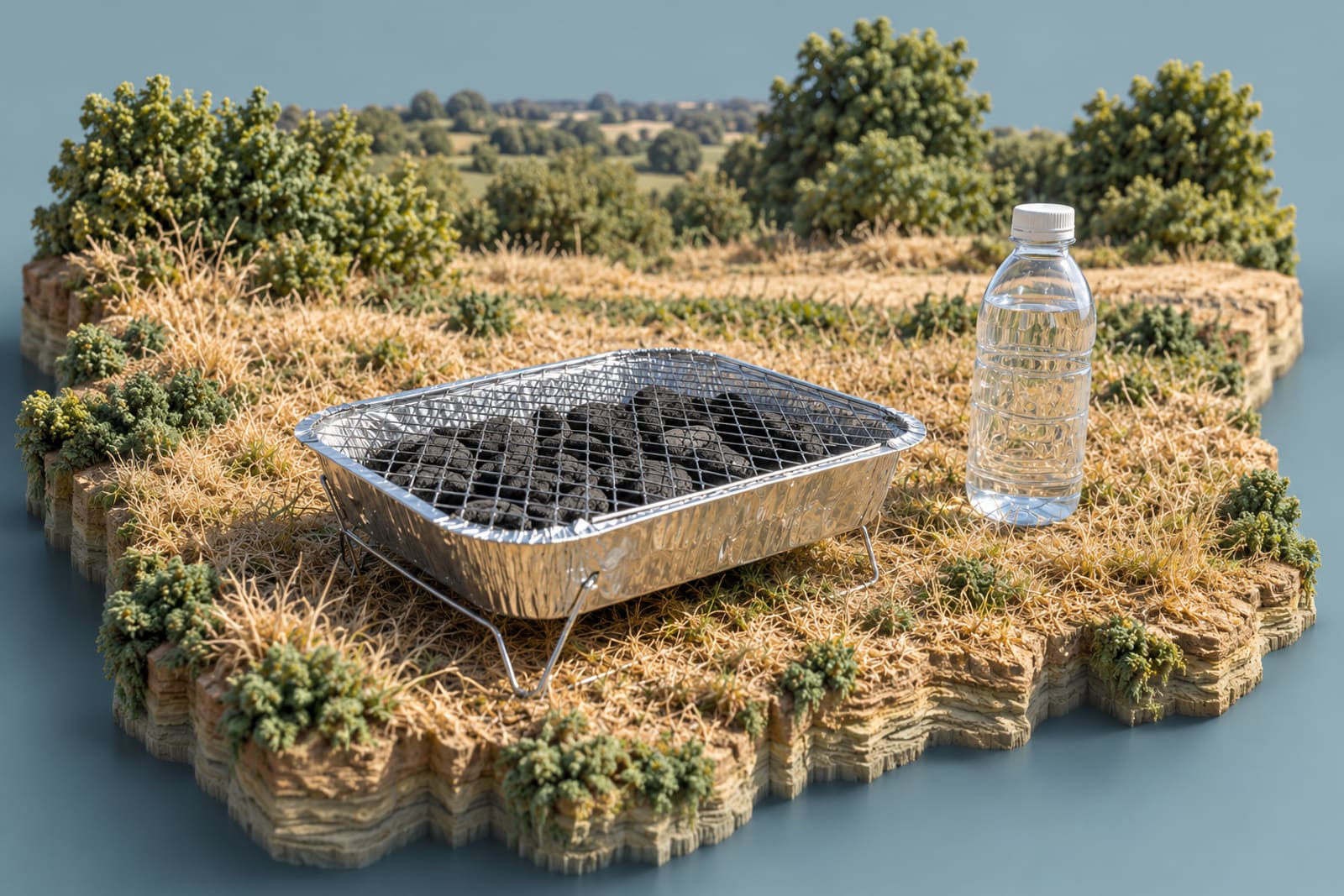
An unlit disposable foil-tray barbecue with charcoal under a wire grill, sitting on dry yellow grass beside a bottle of water

Disposable barbecues

Don't use them in open countryside, parks or on moorland. In August 2026 the government brought in a temporary ban on selling them across England and Wales.

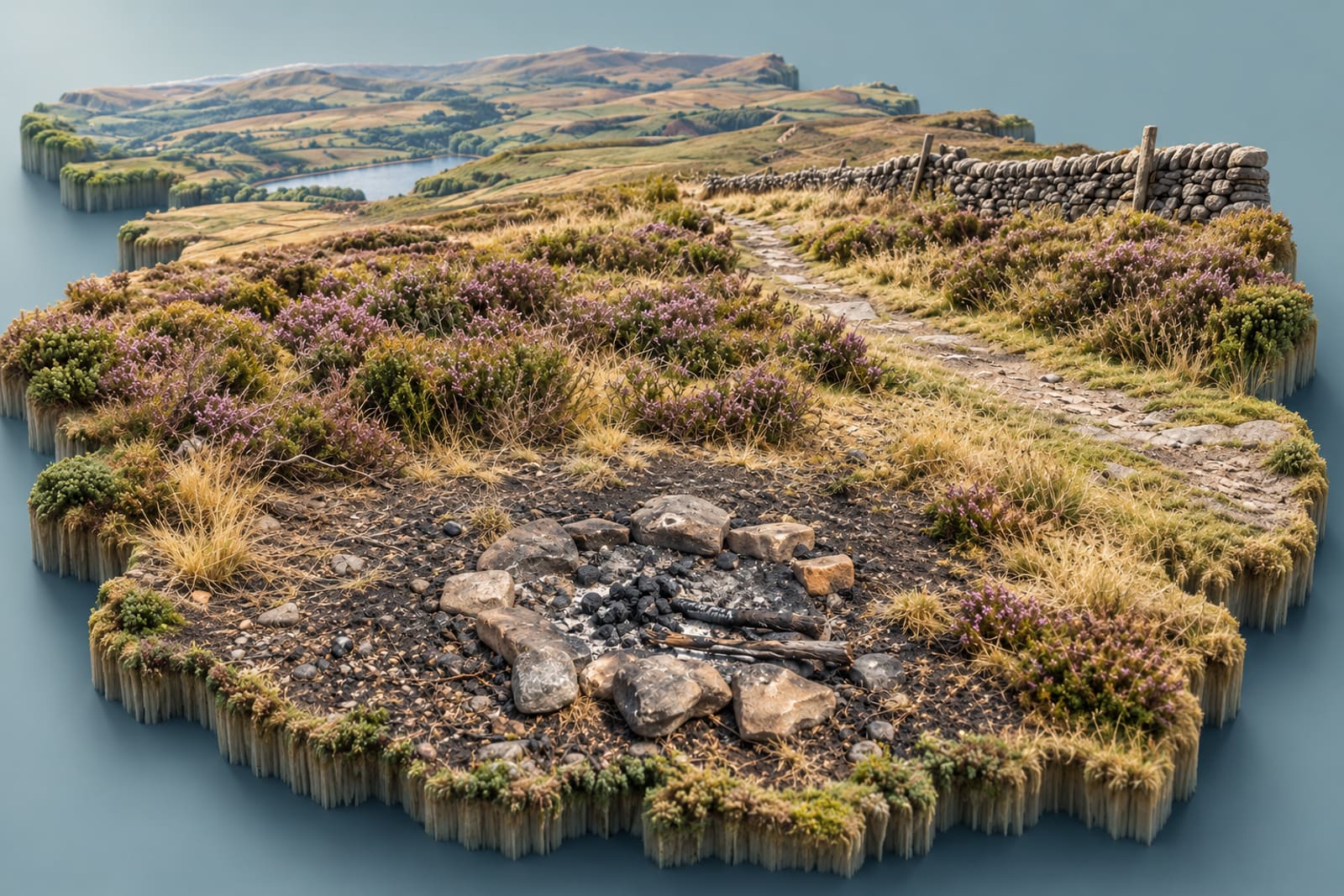
The cold, blackened remains of a small campfire in a ring of stones on dry heather moorland beside a footpath and a drystone wall

Campfires

Be careful with naked flames, and only use a barbecue where signs say you can. Put it out, and make sure the ashes are cold before you get rid of them. A campfire left to smoulder can catch the heather hours later.

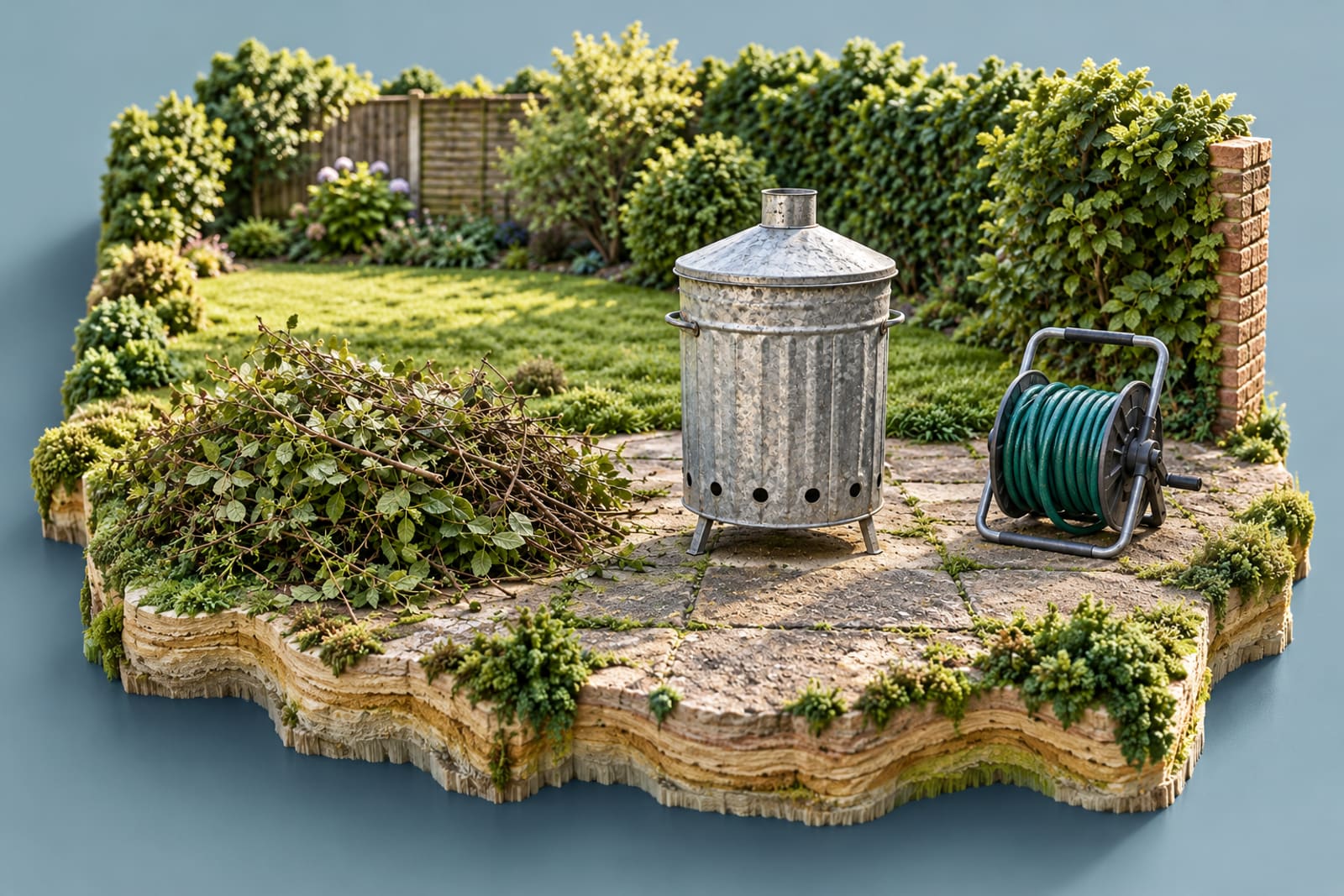
A galvanised metal garden incinerator with a lid and chimney on a patio, beside a pile of hedge cuttings and a coiled green hose on a reel

Garden bonfires

Check for wildfire danger warnings first, and don't light outdoor fires in high winds, high temperatures or low humidity. In a dry spell, compost the cuttings or take them to the tip.

Six steps, from the first sight of smoke

Steps one to three are for when a fire is burning near you. Four is for a fire close to home. Five and six are for the dry weeks before one starts.

Get clear, then report it

Straight away

Call 999 immediately and ask for the fire service. Give your location, using road names, landmarks or a locator app like what3words, and describe the fire's size and which way it's spreading. Don't assume someone else has already called.

Don't fight it

Wildfires are unpredictable and dangerous. A fire can smoulder or spread underground, so keep your distance.

What else helps

The nearest road or access point for the fire engines, and any landmarks they can head for.
Move away from the fire and the smoke

If you're out walking

Move to a safe place away from the fire, the smoke and the vegetation. If you're in a car, close all the windows and vents.

  • Head downhill and upwind if you can, onto a track, a road or bare ground.
  • Leave by the way you came if the fire is ahead of you.

Shut the smoke out

If smoke reaches home

Staying inside with the windows and doors shut is the single most effective thing you can do. Turn off any air conditioning that draws in air from outside.

If it's hot as well

Draw the curtains, use a fan to move the air, keep drinking, and sleep in the coolest room.

Asthma, heart or lung conditions

Smoke can make them worse. Keep your inhalers and your action plan to hand, and get health advice if symptoms persist or get worse.

Driving through smoke? Windows up, vents shut, and the air on recirculate. Never leave children or pets in a closed car.

Close up, call, and be ready to leave

If it's near your home

Put your own safety first and don't fight the fire. Shut the doors and windows, but don't lock them. Call 999 and give your exact location. If the fire services tell you to go, go.

  • Pick up the grab bag: documents, medicines, phone, charger and torch.
  • Take pets with you, and tell a neighbour you are leaving.
  • Check on anyone nearby who lives alone or would struggle to leave quickly.

Clear a safety zone round the house

In a dry spell

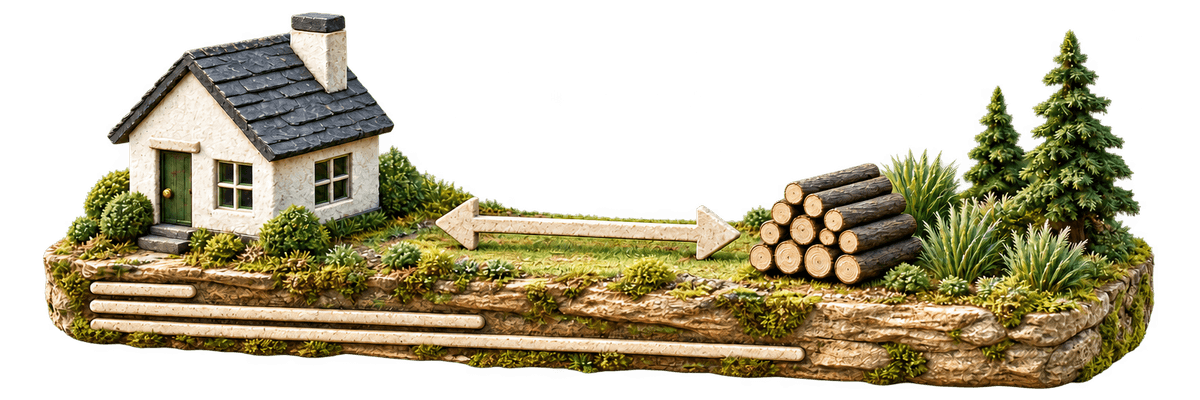
If you live next to grass, heath or forest, clear a 10-metre area round all sides of your home. Remove flammable material such as trees, shrubs, woodpiles, dead leaves and fallen branches.

  • Keep the grass next to the house short, and water it if you can.
  • Move the log pile, garden furniture cushions and spare fuel away from the walls.
  • Clear dead leaves out of the gutters.
A cottage on a long plinth with a strip of short grass beside it marked by a double-headed arrow, then a pile of logs set well away, then tall grass and two conifer trees
House, a clear strip, then everything that burns. Ten metres between the walls and the log pile, the hedge and the long grass.
The side of a stone cottage in summer with a gravel path along the wall and a wide mown lawn, a log pile stacked against a shed well away from the house, and a field of tall dry grass beyond a fence
What a safety zone looks like: gravel against the wall, short grass beyond it, and the log pile out by the shed rather than against the house.

Don't be the spark

Every dry day

Don't drop cigarettes, matches or glass bottles, because they can set dry grass and crops alight. Follow local guidance on fire risks and restrictions.

  • Take every bit of litter home, glass especially.
  • Barbecue at home, on a patio, with a bucket of water beside it.
  • Never set off sky lanterns.

How you'll hear about wildfire risk

There's no colour-coded wildfire warning for households. The signs come from the Met Office's fire index, local fire services, and in an extreme summer, an alert on your phone.

Fire Severity Index

The Met Office's index shows how severe a wildfire could become if one started, for England and Wales. It doesn't predict where fires will start. When conditions are exceptional, it can be used to close open access land.

Emergency Alerts

On 14 August 2026, phones in England and Wales got an alert telling people not to light anything that could spark a fire, and to report any fire by calling 999.

How often

In 2025, fire services in England and Wales responded to nearly 1,000 wildfire incidents, more than in the record year of 2022.

Three things for the grab bag

A pouch for the papers, a torch for a night-time move, and a radio for local updates if the phones are busy.

  • Document pouch

    A waterproof document pouch

    Passports, insurance papers and birth certificates in one sealed bag you can grab on the way upstairs.

    • A seal that zips or rolls shut, not just a press-stud
    • Big enough for A4 papers unfolded
    • Tough enough to carry, not freezer-bag thin
  • Head torch

    A head torch for each adult

    Leaves both hands free for stairs, the consumer unit and the kettle. One per person beats one lamp per house.

    • Runs on AA or AAA batteries, so it works when USB chargers are flat
    • A red-light mode that keeps night vision
    • At least 200 lumens
  • Radio

    A wind-up or battery radio

    Local radio carries updates when the mobile network is busy or down.

    • Wind-up or solar charging, as well as batteries
    • FM and DAB
    • A built-in torch is a useful extra

When there are wildfires near you, on one page

Nine lines, plus space for the details the fire service will ask for. Keep it by the back door in summer.

Wildfire · the dry weeks

Download PDF

If it's something else

See every situation guide

Get the monthly brief: one job before each season turns

One email a month: new guides as they're published, and one job to do before the season turns, from lagging the pipes in autumn to checking the torch batteries before the storms.

We'll only use your email to send the Prep Britain newsletter. Unsubscribe any time. How we handle it