




Skip to content
Prep Britain
Checking warnings…

Power cut? Keep the food cold and one room warm until it's back

Most UK power cuts are back on within a few hours. This page takes you from the first minute to the morning after: what to check, what to leave alone, how to keep the fridge cold and one room warm, and the £100 payment a long cut can earn you in Great Britain.

Reviewed 3 Oct 2026 13 min read Free to read

Do these three first · 2 minutes

Find a torch (not a candle)

Your phone torch will do for now. Candles cause most power-cut house fires.

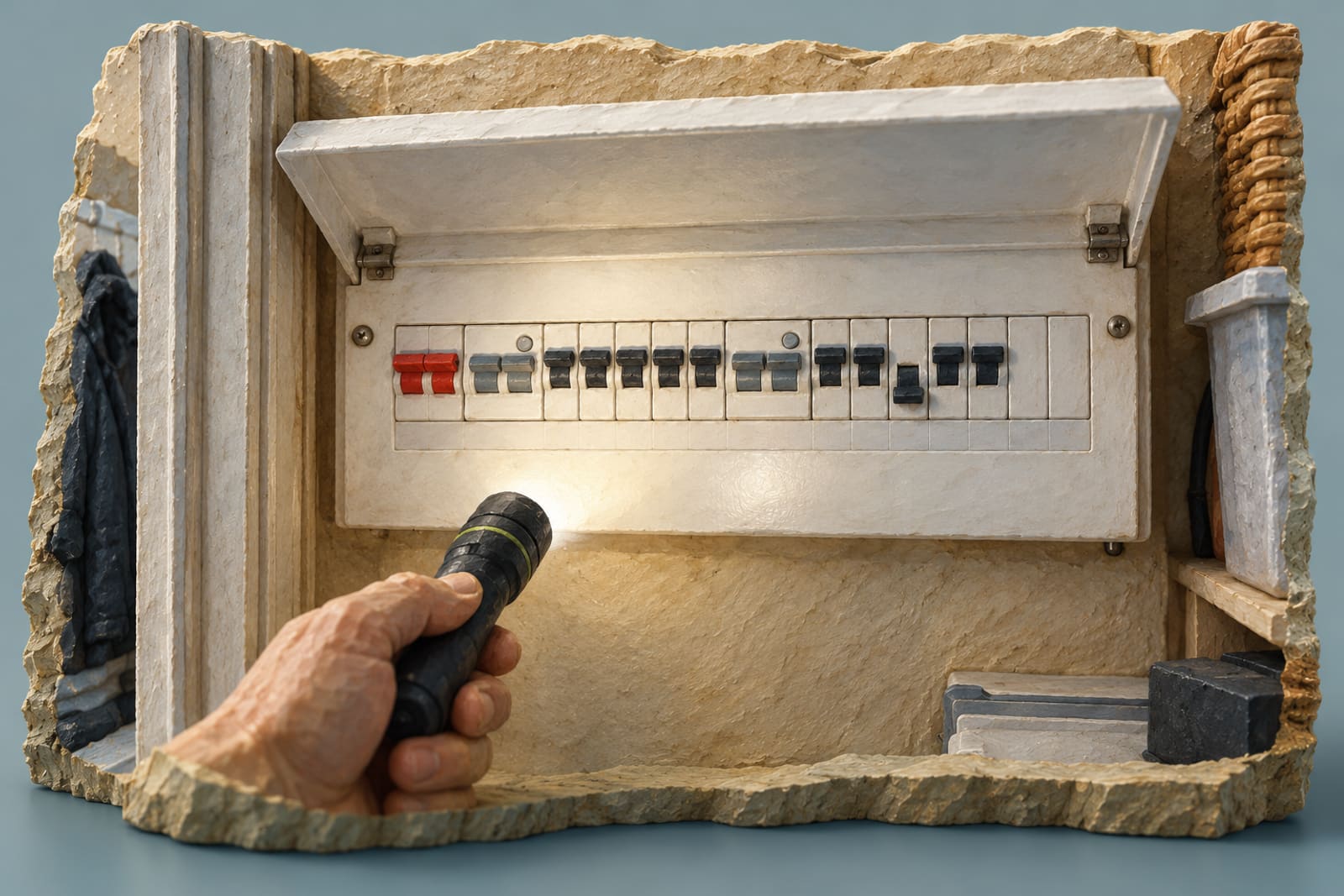
Check your trip switches

If your neighbours have lights, the fault is probably inside your home.

Leave the fridge shut

Kept shut, a full freezer stays frozen for up to 48 hours. Every opening cuts that down.

Call 105 Free from any UK phone. It reaches your network operator rather than your supplier. Their live map, found by postcode at powercut105.com, shows known cuts.
In Northern Ireland, call NIE Networks on 03457 643 643.

Power cuts affecting a whole street are the network's job to fix. Cuts affecting one house are usually yours.

Work out what kind of power cut this is

Three checks. They decide what you do next.

Is it just your home?

Look out of the front and back. Streetlights on, neighbours lit, your house dark: start at your consumer unit.

Reset one switch at a time

If a switch trips again immediately, unplug everything on that circuit and try once more. If it still trips, leave it off.

Get the restoration estimate

Call 105 or check your network operator's live map. The estimate is what everything below plans around.

A torch lighting an open consumer unit in a hallway cupboard: a red main switch, two RCDs and a row of circuit breakers, all up except one that has tripped down
One switch down while the rest are up means that circuit has tripped. Push it back up once. If it drops again, leave it off.

Wires down in the street? Keep well away, and keep others back. High-voltage electricity can jump gaps with no warning. Call 105, or 999 if anyone is in danger.

Six steps that keep the food cold and the house warm

You don't need to do all of this. Steps one to three cover a cut of a few hours. Four to six are for an evening that turns into a night, or a cut in cold weather.

Light the house properly

0–5 min

One torch per person beats one lamp per house. A head torch leaves both hands free for stairs, meters and kettles. Put a torch where you'd find it in the dark next time: by the bed rather than the shed.

  • Drop your phone to low power mode now, while you still have charge to ration.
  • Turn off anything that was on when the power went: hob rings, iron, oven, immersion heater.
  • Unplug the TV and computer, so the surge when the power returns can't damage them.
  • Leave one lamp switched on so you know the moment the supply is back.
Report it, then find out how long

5–15 min

Call 105 and give your postcode. You'll be told whether the cut is known, how many homes are affected, and when the power should be back. Write the estimate down somewhere everyone can see it.

Under 3 hours

Do nothing clever. Keep doors shut, stay off the fridge, wait it out.

Over 6 hours

Work through steps three to five, and plan an evening meal that needs no oven.

Landline dead? Digital landlines need mains power, so they stop in a power cut unless there's a battery back-up. Cordless handsets stop too. If you depend on your landline and have no reliable mobile signal, your provider must offer you a free back-up that lasts at least an hour. Ask for it before the next cut, and tell them if anyone uses a care alarm on the line. The phones are down covers the rest.

Protect the cold food

First hour

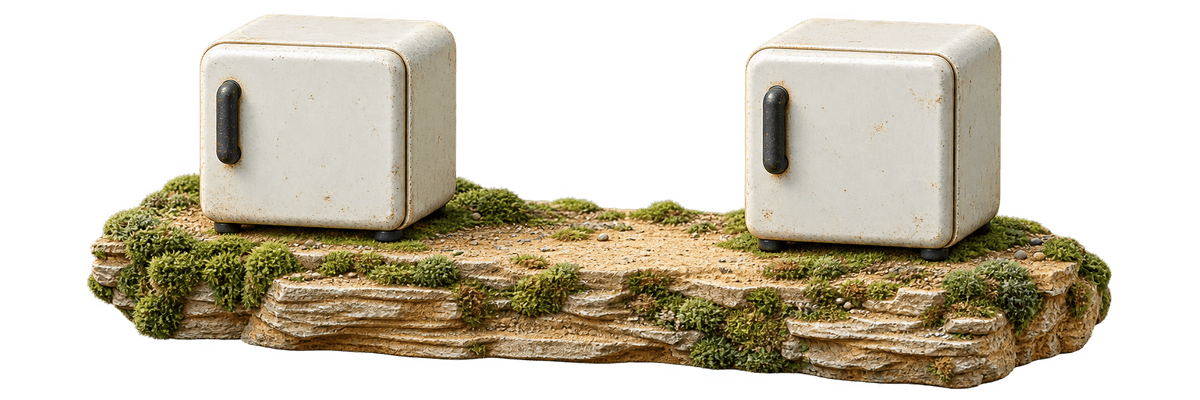
Kept shut, a fridge stays cold for up to 4 hours. A full freezer keeps food frozen for up to 48 hours, a half-full one for about 24. Every time a door opens, warm air gets in and that time shrinks. Decide now what tonight's meal is, take it out in one go, and don't go back.

How long food stays safe in a fridge or freezer that is kept shut, and what to do next
Kept shutStays safe forThen
Fridge Up to 4 hoursFood is fine below 8°C. Once the fridge reaches 8°C, eat chilled food within 4 hours or throw it out.
Full freezer Up to 48 hoursCook anything that has thawed but is still cold. Don't refreeze it raw.
Half-full freezer Up to 24 hoursFill the gaps with bottles of water or newspaper to slow the thaw.

A fridge thermometer shows you which side of 8°C you're on. If in doubt, throw it out.

A fridge and a freezer standing closed, with three marks below them, short to long, for the 4, 24 and 48 hour hold times
Fridge, half-full freezer and full freezer: up to 4, 24 and 48 hours, kept shut.

Keep the heat in one room

First 2 hours

Most central heating stops with the power even when the gas is still on, because the pump and controls are electric. Pick the smallest room with the fewest outside walls, shut the doors, and keep everyone in it.

  • Layers and a hat indoors do more than any heater you don't own.
  • Close curtains as soon as it's dark, and put a rolled towel against the door.
  • A gas hob that lights with a match will still boil a kettle for hot water bottles.

Never indoors. Camping stoves, barbecues, patio heaters and petrol generators produce carbon monoxide. Keep them out of the kitchen, the hallway, the garage and the porch, even with a window open. Your carbon monoxide alarm needs a working battery to cover you while the power is off.

Into the evening? The heating's off covers a cold night in one room, and I can't cook covers meals with the cooker off.

Check on the people nearby

As soon as it's safe

A knock on two doors takes five minutes. The households that struggle in a cut are usually the ones nobody checked: older neighbours, anyone on mains-powered medical equipment, families with a new baby, people who live alone.

Priority Services Register

Free, through your energy supplier or network operator. For anyone over state pension age, pregnant or with young children, disabled or with a long-term condition, or recovering from a hospital stay. You get priority help in an emergency and, where possible, notice of planned cuts.

Medical equipment

If someone depends on a mains-powered device, say so when you call 105. Don't wait to be asked. What to do next

Bring it back gently, then check what you're owed

When it's back

Bring the house back in stages rather than switching everything on at once. In Great Britain a long cut also earns a fixed payment from the network operator, and you don't need to claim it.

  • Reset the boiler, then the freezer, then everything else. Check the clocks and the alarm.
  • Plug the TV and computer back in last.
  • Photograph anything you throw out of the fridge, with the date.
  • Write down the one thing you wished you'd had. Buy it this month rather than next winter.
Fixed payments for a long power cut at home, and whether you need to claim them
Your power cutPaymentHow you get it
Over 12 hours, fewer than 5,000 homes off £100Paid automatically by the network operator.
Over 24 hours, 5,000 or more homes off £100Paid automatically. The total is capped at £400.
Each further 12 hours +£45Added to the first payment.
More than 4 cuts between April and March +£100You claim this one. Each cut must have lasted at least 3 hours.
Northern Ireland, over 24 hours £50Then £25 for each further 12 hours. Claim from NIE Networks within one month.

Payments in Great Britain are set by Ofgem, with separate rates for severe weather. In Northern Ireland they're NIE Networks' guarantees, which may not apply in severe weather.

Medical equipment in a power cut

A cut is hardest on anyone whose health depends on a plug: oxygen, a ventilator, a feeding pump, a hoist or an electric bed, or medicine that lives in the fridge. Most of what helps is done before the cut.

Plan it with the care team

Ask now what happens to each device in a cut, how long its battery lasts, and who you ring. Write the answers down, with the numbers.

Join the register once

In England, Scotland and Wales, one free sign-up at thepsr.co.uk reaches your electricity network, and is shared with your energy supplier, gas network and water company.

Say it when you call 105

Tell them someone at home depends on equipment, and how long its back-up lasts. If a life is at risk, call 999.

What to do in a power cut for common medical needs, and what to sort out beforehand
If someone usesIn the cutSort out beforehand
A home oxygen concentrator It stops. Switch to the back-up cylinder. The oxygen supplier's 24-hour helpline can help with the equipment or the cylinder.Practise connecting the back-up cylinder, and keep it where you can reach it. Charge any portable concentrator.
Other mains-powered equipment Switch to its battery or back-up, and note the time so you know how long is left.Ask the supplier how it behaves in a cut and how long its back-up lasts.
Insulin or other fridge medicine Keep the fridge shut. Insulin you're already using is fine at room temperature.Keep a spare of each insulin as well as the one in use. Ask the pharmacist about other fridge medicines.
A care alarm or health monitor It may stop if it runs on the landline or the mains.Ask the provider how it works in a cut, and ask your phone provider for a battery back-up.

Never use candles near oxygen: a battery torch or lantern only.

Medical equipment and the register: your questions

What is the Priority Services Register, and who can join?

A free list kept by energy suppliers and network operators of the households that need extra help. You can join if you've reached state pension age, are pregnant or have young children, have a disability or long-term condition, use medical equipment that needs a power supply, struggle with speaking or reading English, or need help for a while after an injury, a bereavement or losing a job.

Does being on the Priority Services Register get my power back first?

Don't count on it. What Ofgem lists is priority support in an emergency, advance notice of planned power cuts where possible, and a password scheme so you know a caller or visitor is genuine. That's why the plan with the care team, and the back-up for each device, still matter.

Do I need to join my water company's register as well?

Not if you sign up at thepsr.co.uk. It's run by the Energy Networks Association, and your details are shared with your energy supplier, gas network and water company, so you don't register with each one. If you join through a supplier instead, join again when you switch supplier. In Northern Ireland, ask NIE Networks about its Customer Care Register.

What happens to a home oxygen concentrator in a power cut?

It switches off. Everyone with a concentrator has a large back-up cylinder, which lasts about 10 to 20 hours depending on the flow rate. Connect to it, and call your oxygen supplier's 24-hour helpline if you're worried about the equipment. Everyone with an oxygen prescription should be on the Priority Services Register.

Is my insulin still OK if the fridge goes off?

Usually, for a short cut. Insulin you're using can be kept at room temperature for up to 28 days. Spare insulin should be kept below 25°C, ideally in the fridge, and never in the freezer. So keep the fridge shut, and check the leaflet: some insulins differ. For other fridge medicines, ask your pharmacist.

Ten minutes now, nothing to buy

Most of what helps in a power cut costs nothing. Do these on a calm evening.

  • Save 105 in your phone, and write it on paper next to the fuse box.
  • Join the Priority Services Register if anyone at home qualifies. The medical equipment section lists who does.
  • If you rely on your landline, ask your provider for a battery back-up.
  • Keep a little cash in the house. Card machines and cash machines stop with the power.
  • Keep the car at least half full. Petrol pumps need electricity too.
  • Find the manual release on an electric garage door or gate, and on a stairlift.
  • Got a baby? Keep a few cartons of ready-to-feed formula, which needs no boiling.

Planned rota cuts

In a national energy shortage, which is rare, homes are switched off in turns by block letter, A to U. Expect at least three hours off at a time, once or twice a day, with up to 48 hours' notice. Your letter is on your electricity bill, or at powercut105.com. Planned power cuts explained

Water on a pump

In a tall block of flats, or on a private supply with an electric pump, the water can stop with the power. Our no-water guide covers how much to keep.

What will it keep running?

A power bank keeps phones going. A power station can run a router, a fridge, a CPAP machine or a travel kettle. Pick one, add what you'd need each day, and see roughly how long a full charge lasts.

1 What have you got?
2 What would you power each day?
  • PhoneA full charge of a typical smartphone.2 charges
  • Tablet0 charges
  • USB lantern0 hours
  • Broadband routerNeeds a mains socket0 hours
  • Lamp (LED bulb)Needs a mains socket0 hours
  • LaptopNeeds a mains socket0 hours
  • CPAP machineNeeds a mains socket0 hours
  • Electric blanketNeeds a mains socket0 hours
  • Fridge-freezerNeeds a mains socket0 hours
  • Chest freezerNeeds a mains socket0 hours
  • Travel kettleNeeds a mains socket0 boils
  • Standard kettleNeeds a mains socket0 boils
  • MicrowaveNeeds a mains socket0 meals
  • Something elseNeeds a mains socket0 hours

A full charge lasts

About 2 days

Using about 30 Wh a day from roughly 63 Wh of usable charge.

  • Phone: 30 Wh a day

On its own, a full charge would charge a phone 4 times.

Rough figures from typical devices. Assumes you get 85% of the capacity on the box, and use spread across the day. Heaters use 1,000 to 3,000 W and will empty even a large power station within an hour.

Five things worth having in the cupboard

None of it is expensive, apart from the power station, which you only need if cuts are long or someone depends on mains power. A petrol generator is rarely worth it for a home: it can only ever run outdoors.

  • Head torch

    A head torch for each adult

    Leaves both hands free for stairs, the consumer unit and the kettle. One per person beats one lamp per house.

    • Runs on AA or AAA batteries, so it works when USB chargers are flat
    • A red-light mode that keeps night vision
    • At least 200 lumens
  • Lantern

    A battery lantern for the room you stay in

    Lights a whole room without a flame. The safe replacement for candles.

    • LED, battery-powered, and able to stand or hang
    • A dim setting that lasts all evening
    • Takes the same batteries as your torches
  • Power bank

    A 20,000 mAh power bank

    Keeps phones charged for a couple of days, so you can call 105, check the live map and reach family.

    • 20,000 mAh or more, with a USB-C port
    • Shows how much charge is left
    • Top it up every few months so it is full when you need it
  • Radio

    A wind-up or battery radio

    Local radio carries updates when the mobile network is busy or down.

    • Wind-up or solar charging, as well as batteries
    • FM and DAB
    • A built-in torch is a useful extra
  • Power station

    A portable power station, for longer cuts

    A large rechargeable battery with mains sockets. Safe indoors, unlike a petrol generator, so it can run a router, lamps or medical equipment.

    • At least 250 Wh, or 500 Wh to run a fridge-freezer
    • A LiFePO4 battery, which lasts many more charges
    • Mains output rated above what you want to plug in
    Rough price£150–£300 for 250 Wh Browse on Amazon : power station, opens in a new tab

The first hour, on one page

Nine lines, big enough to read by torchlight. Print it once and put it inside a kitchen cupboard door.

Power cut · first hour

Download PDF

What changes for your household

The same cut lands differently in a flat, with small children, when you care for someone, in the countryside or when you live alone.

If it's something else

See every situation guide

Get the monthly brief: one job before each season turns

One email a month: new guides as they're published, and one job to do before the season turns, from lagging the pipes in autumn to checking the torch batteries before the storms.

We'll only use your email to send the Prep Britain newsletter. Unsubscribe any time. How we handle it