



Skip to content
Prep Britain
Checking warnings…

Heating off? Keep one room warm and everyone in it safe

Gas boilers and heat pumps need electricity, so a winter power cut stops the heating even with the gas still on. A frozen pipe or an empty oil tank does the same. This page covers finding the cause, keeping one room warm, warming people safely, and knowing when cold becomes an emergency.

Reviewed 4 Oct 2026 9 min read Free to read

Do these three first · 15 minutes

Pick one room

The smallest, with the fewest outside walls. Shut the doors to every other room and draw the curtains.

Layer everyone up

Jumpers, socks, hats and a blanket each. Layers hold heat better than one thick coat.

Fill a flask

While the kettle or hob still works. Hot drinks now, hot water bottles later.

Power off? Call 105 Free, and it reaches your local network operator. In Northern Ireland, call NIE Networks on 03457 643 643. Smell gas? Call 0800 111 999, free, day and night.

One room, doors shut, curtains drawn, everyone in layers. That keeps a family warm through a long cold evening.

Why is the heating off?

Three causes cover most cold homes in winter. Each has a different fix, and two of them you can sort yourself.

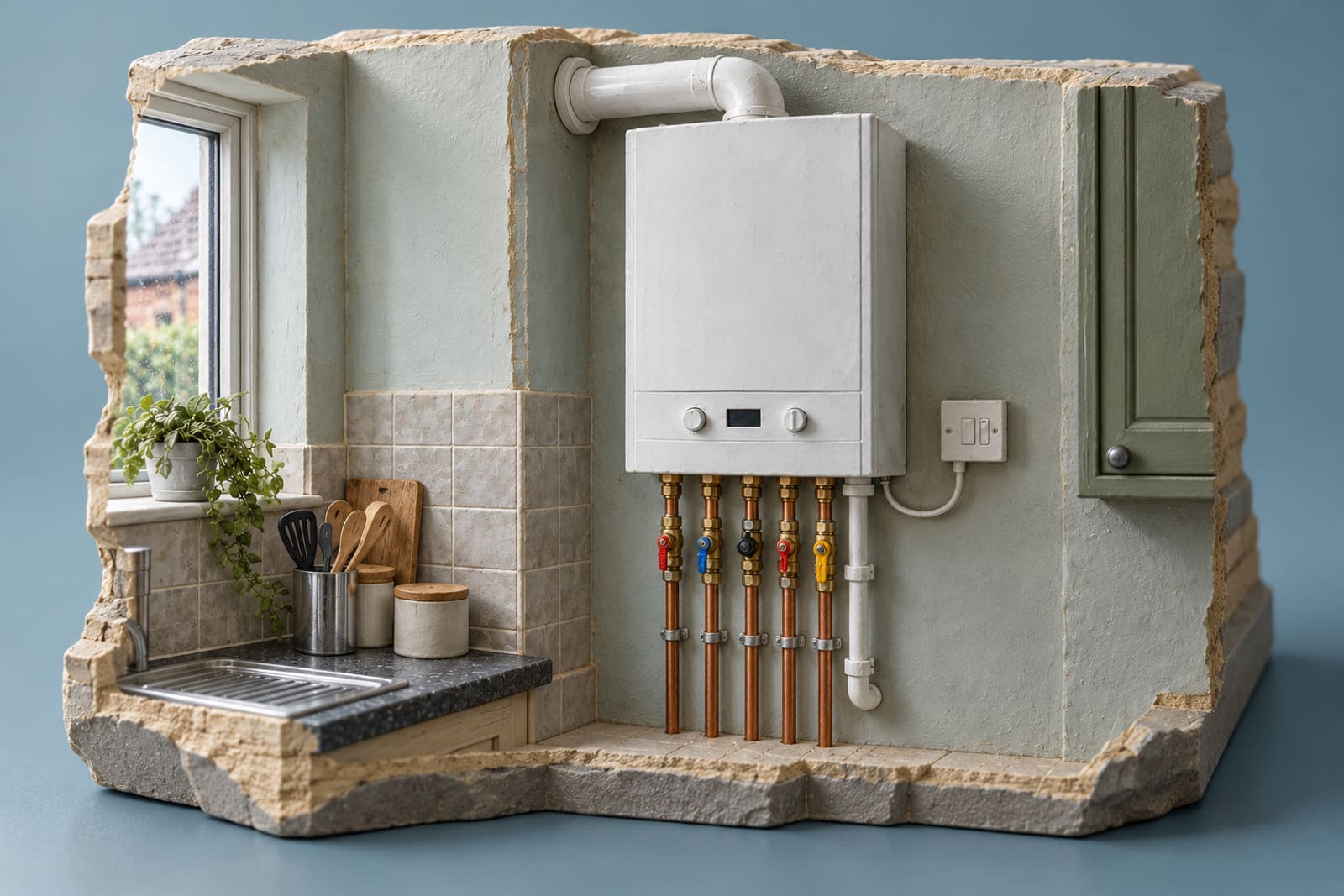
A white combi gas boiler on a kitchen wall with its display dark, copper pipes below it and a fused switch beside it

A power cut

Gas boilers and heat pumps won't work without power. The heating comes back with the electricity. Call 105 to report it and check the restore time, then follow the steps below.

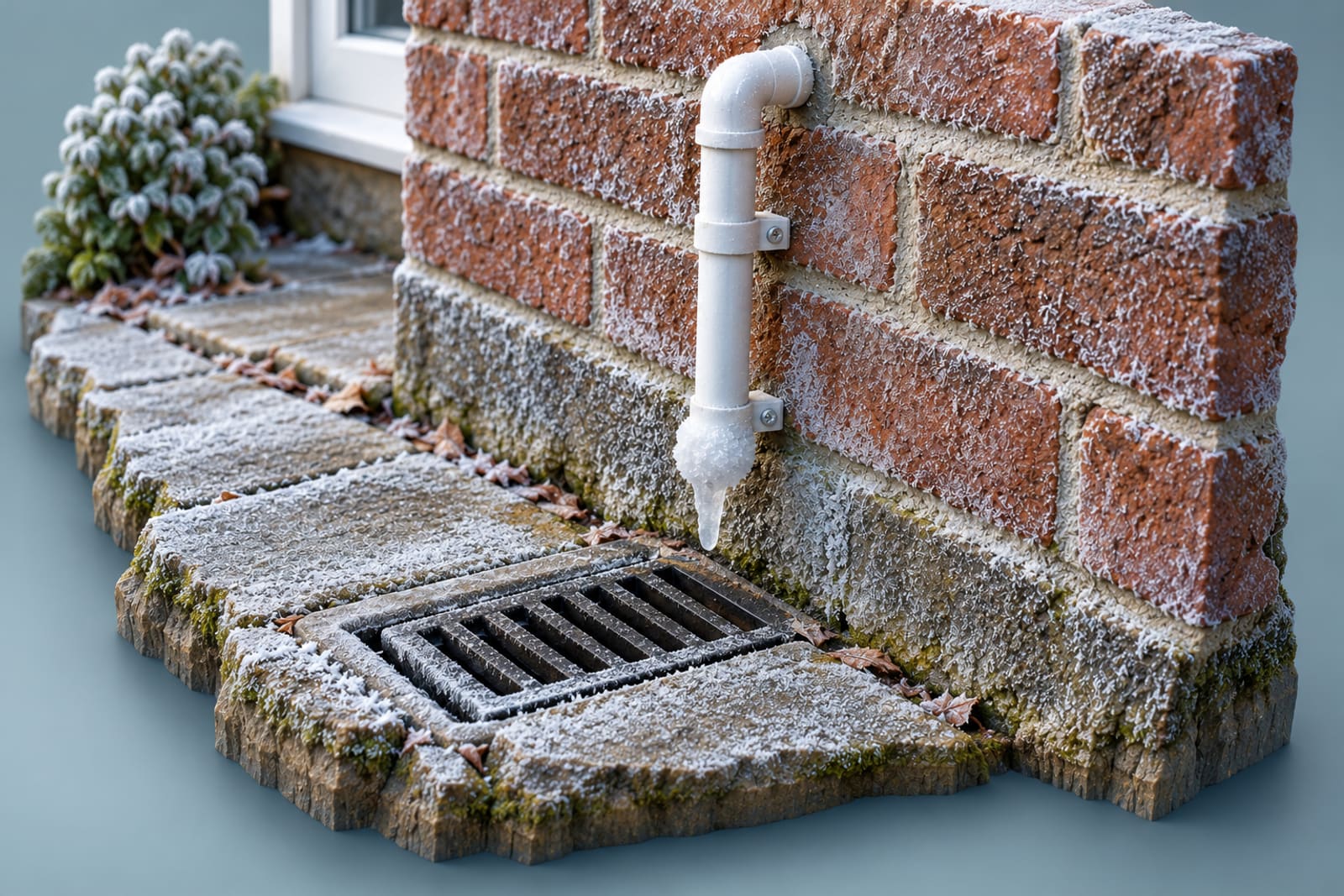
A white plastic condensate pipe on a frosty brick wall, its open end plugged with ice just above a drain grate

A frozen condensate pipe

If a gas boiler stops in cold weather, this is the likely cause. Pour lukewarm water over the white plastic pipe outside, never boiling water. Then press the boiler's reset button.

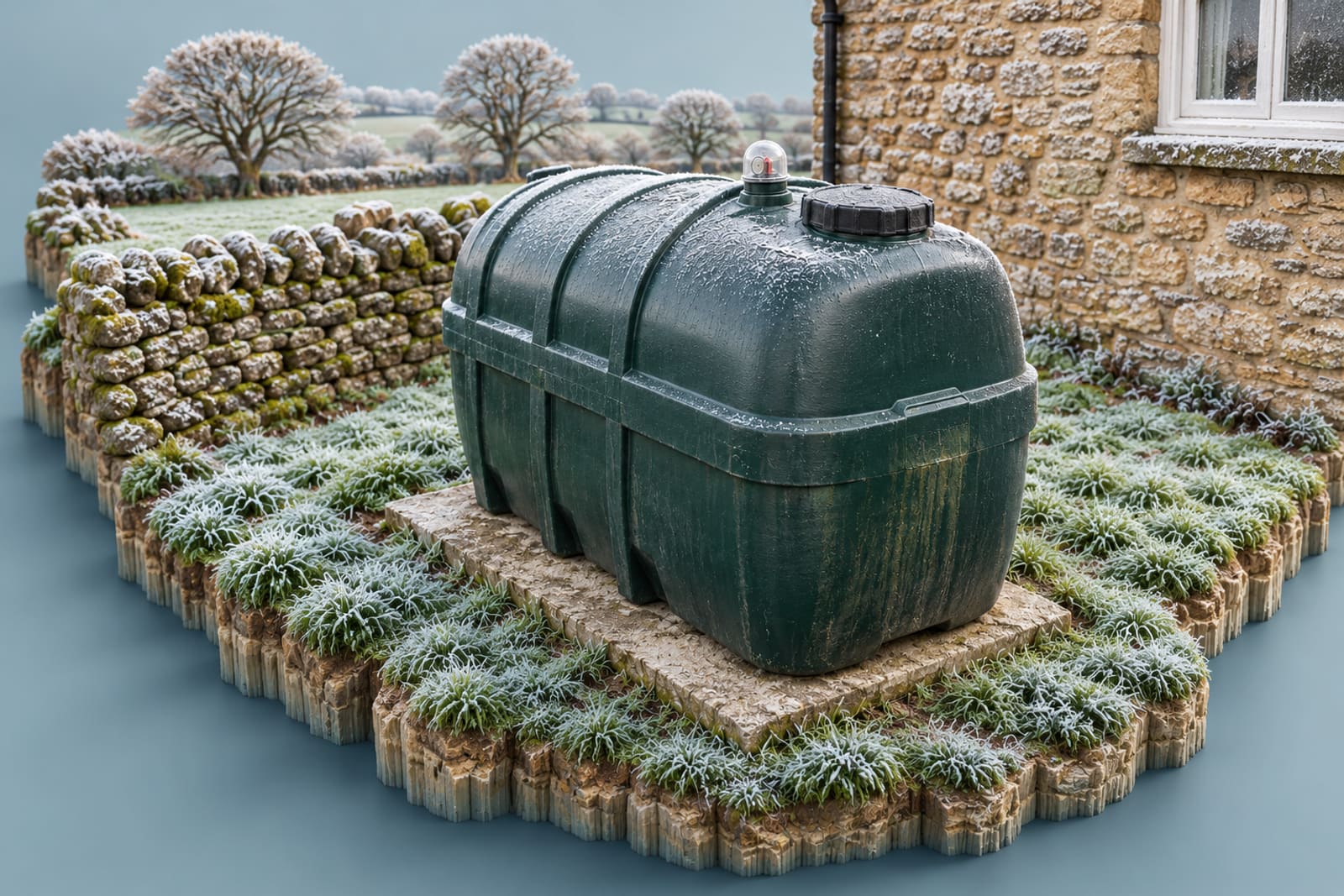
A green plastic heating oil tank on a concrete slab in frosty grass, beside a stone house and a dry-stone wall

Out of oil, or the gas is off

An empty oil or LPG tank needs a delivery, so order before the gauge reaches the bottom. If the gas is off across your area, an engineer will turn your meter back on. Don't do it yourself.

The water's off as well? Our no-water guide covers frozen pipes inside the house.

Six steps, from the first hour to the night

Steps one to three cover an evening without heating. Four and five are for a night that turns long. Six is for the people the cold hits hardest.

Keep the heat in one room

First 15 minutes

Keep the doors of unused rooms closed, and close the curtains to keep the heat in. Choose the smallest room with the fewest outside walls, and bring everyone into it.

  • Draw the curtains as soon as it gets dark, and roll a towel along the bottom of the door.
  • Bring mattresses or sleeping bags in, so everyone sleeps in the warm room too.
  • Body heat and a few lamps add up. Four people warm a small room in a way they never could a whole house.
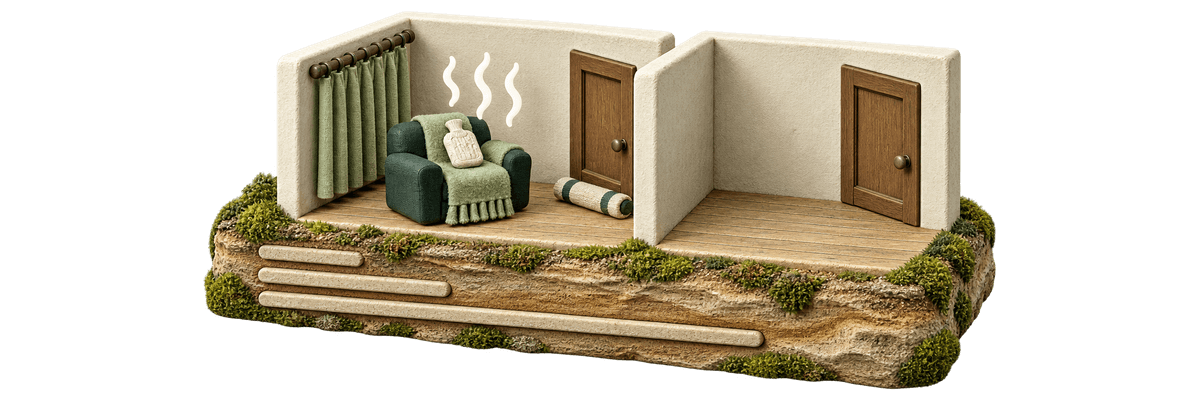
Two small rooms side by side: the left one has drawn curtains, a blanket-covered armchair with a hot water bottle, a rolled towel on the floor and wavy heat lines; the right one is empty with its door shut
Heat one room rather than the house. Curtains drawn, door shut, towel down, everyone in.

Layer up, and keep moving

First hour

Keep warm with blankets and layered clothing. Normally the NHS suggests at least 18°C in the rooms you use most. Without heating you won't reach that, so the aim is to keep people warm rather than the air.

  • Thin layers trap more warmth than one thick one. Add a hat and thick socks.
  • Wrap blankets round shoulders and over laps rather than leaving them on the bed.
  • Get up and move every hour, even just to make a drink.
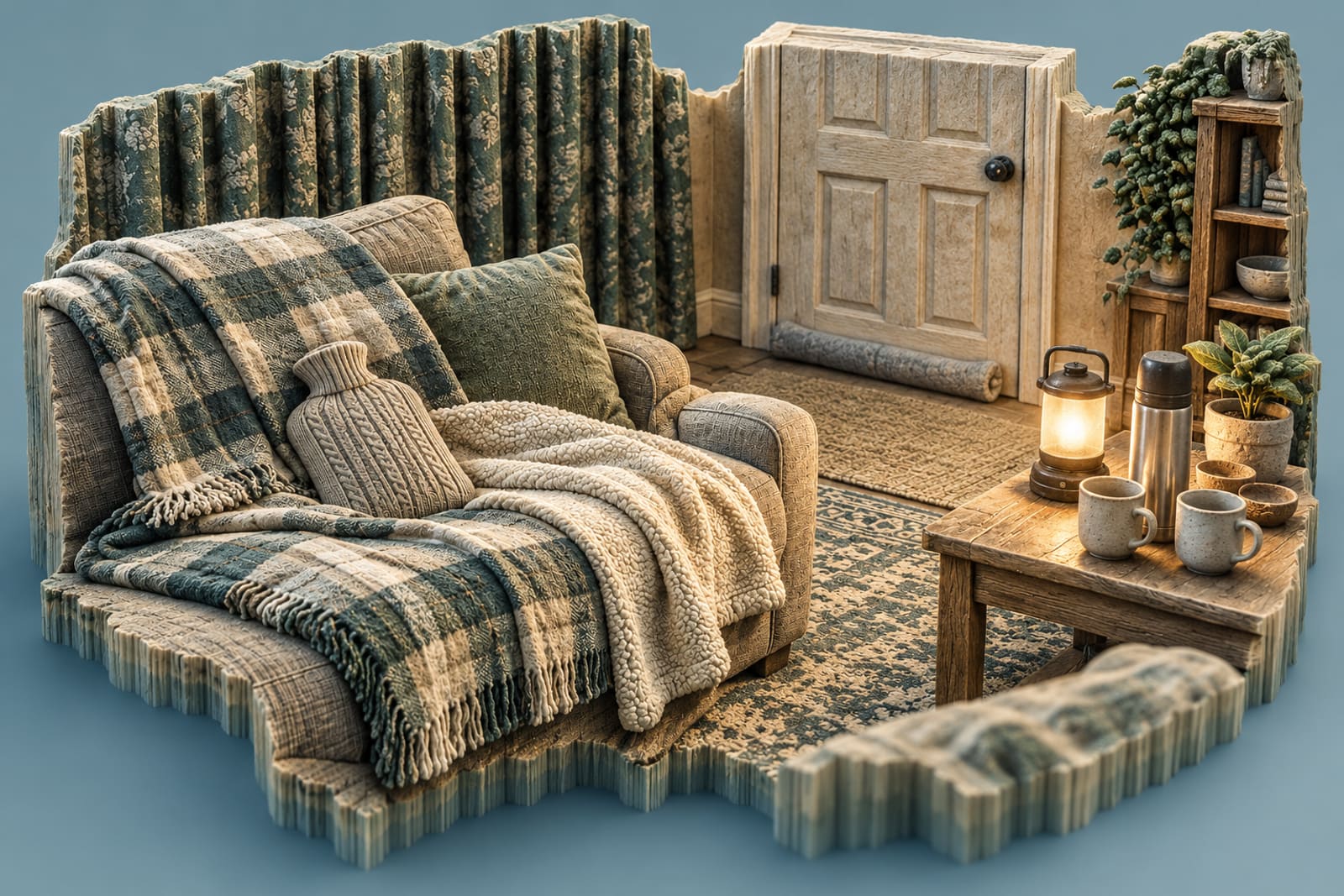
A small living room in the evening with heavy curtains drawn, a towel rolled against the closed door, blankets and a covered hot water bottle on the sofa, and a steel flask, mugs and a battery lantern on a side table
One warm room for the evening. Curtains drawn, the gap under the door blocked, and a battery lantern rather than candles.

Hot drinks and hot water bottles

While the kettle works

Never fill a hot water bottle with freshly boiled water. Let it cool for a few minutes first, or mix in some cold. Use a cover, and keep the bottle off bare skin. Don't sit or lie on it.

Check its age

The number in the flower mark on the bottle is the year it was made. Trading Standards advises replacing a bottle two to three years after first use.

No kettle?

A flask filled earlier, or a camping stove used outdoors, gives you hot water. Our can't-cook guide covers both.

Use an electric blanket safely

Overnight

An electric blanket draws far less power than a heater, so a portable power station can run one for hours. Unplug it before you get into bed, unless it has a thermostat made for safe all-night use. Never use a hot water bottle with it, and replace it when it's more than 10 years old.

Spread it out flat when it's on. Folding or bunching can make it overheat. Check the watts on its label against what your power station can supply.

Keep fuel-burning heat outdoors

Never

Gas and paraffin heaters, portable generators, barbecues and camping stoves can all give off carbon monoxide. Never use a barbecue or camping stove indoors. Poisoning happens when people bring barbecues into tents and other small spaces to keep warm.

  • Fit a carbon monoxide alarm in every room with an appliance that burns gas, oil, coal or wood.
  • Don't run a generator in the house, the garage or by an open window.
  • Don't use the gas oven or hob to heat the room.

Headache, dizziness or feeling sick? They can be signs of carbon monoxide poisoning. Stop using the appliance and go outside. Call 111, or 999 if someone finds it hard to breathe or loses consciousness.

Look after the people the cold hits hardest

Throughout

People aged 65 and over, babies and children under 5, and anyone with a long-term health condition or a disability are among those most at risk from the cold. Keep them in the warm room, and knock on the doors of older neighbours.

Babies

Keep the room between 16°C and 20°C. A baby should never sleep with a hot water bottle or electric blanket, or next to a heater. Feel the chest or the back of the neck: cool hands are normal.

Priority Services Register

Free, through your energy supplier and network operator, for older people, families with young children, and anyone disabled or with a long-term condition. You get priority help in an emergency.

Spotting hypothermia

Hypothermia is a body temperature below 35°C. It's a medical emergency. Older people living alone in a cold house are particularly at risk.

The signs

Shivering. Pale, cold, dry skin, with lips turning blue or grey. Slurred speech, slow breathing, tiredness or confusion. A baby may be cold to touch, floppy and unusually quiet.

What to do

Call 999 or go to A&E, but don't drive. While you wait, take off wet clothes, wrap them in a blanket with their head covered, and give a warm, non-alcoholic drink if they're fully awake. Stay with them.

What not to do

No hot bath, hot water bottle or heat lamp. Don't rub their arms, legs, hands or feet, and don't give alcohol.

From 1 November to 31 March, the UK Health Security Agency and the Met Office issue yellow, amber and red Cold-Health Alerts for England when the cold could affect health. An amber or red alert is the time to check on older relatives.

Three things that keep you warm with the heating off

None of them needs mains power. Together they keep a family comfortable through a cold night in one room.

  • Hot water bottle

    A hot water bottle with a cover, for each person

    Warms a bed or a lap for hours from one kettle or flask of water, with no power at all.

    • A fitted fabric cover
    • A new bottle: the flower mark shows the year it was made
    • Meets BS 1970
  • Blanket

    A thick wool or fleece blanket per person

    The cheapest heat you can buy. Wrapped up in one warm room, a family stays comfortable well into a cold evening.

    • Wool or heavy fleece
    • Big enough to wrap round your shoulders and legs
    • Machine washable
  • Carbon monoxide alarm

    A battery carbon monoxide alarm

    Carbon monoxide has no smell. A battery alarm keeps working in a power cut, when you are most likely to use a heater or stove.

    • Meets EN 50291
    • A sealed battery that lasts the life of the alarm
    • One for each room with a gas, oil, coal or wood appliance

When the heating's off, on one page

Nine lines, in order. Print it before the first frost and keep it with the torches.

Heating off · the first evening

Download PDF

If it's something else

See every situation guide

Get the monthly brief: one job before each season turns

One email a month: new guides as they're published, and one job to do before the season turns, from lagging the pipes in autumn to checking the torch batteries before the storms.

We'll only use your email to send the Prep Britain newsletter. Unsubscribe any time. How we handle it