



Skip to content
Prep Britain
Checking warnings…

The shops are empty: get through the first fortnight without panic buying

Gaps on the shelves are unsettling, and the urge is to fill a trolley. Most homes already have more meals in the cupboards than they think. This page covers what to check first, how to keep medicines and baby feeds going, what the dates on food really mean, and where to get help if money is the problem.

Reviewed 2 Oct 2026 9 min read Free to read

Do these three first · 15 minutes

Check what you already have

Open the cupboards and freezer and count the meals you could make. Most homes can manage several days.

Shop as you normally would

Buy a usual week rather than a month. Extra trolleys are what turn a short gap into empty shelves.

Order repeat prescriptions now

Up to 5 working days before you need them, while you still have some left.

Medicine short? Ask your pharmacist They can see national shortages and what's available instead. With other questions about a shortage, speak to your doctor or call NHS 111. If you can't afford food, Citizens Advice can refer you to a food bank.

One bag each, and one for the neighbour. Shelves refill fastest when nobody buys extra.

Work out what's actually short

Empty shelves rarely mean everything has gone. Three things matter much more than the rest, and each has its own answer.

Food

Check the smaller shops, the frozen aisle and the tinned version of whatever's missing. A gap in one aisle is rarely a gap in all of them.

Medicines

Pharmacies use different suppliers, so another pharmacy may have what yours hasn't. Talk to your pharmacist first, and early.

Baby formula

Ready-to-feed formula needs no boiled water. Whatever you use, never add extra water to make it go further.

Six steps to keep food, medicines and baby feeds going

Steps one to three are for today. If the gaps last more than a few days, work through four to six.

Start with what you already have

Today

Before you go out, open the cupboards, fridge and freezer and plan meals from them. Use the fridge first, then the freezer, then tins and dry food that keep for longest. Food that needs no cooking, such as tinned meat, fruit and vegetables, is the backbone of any store, with a tin opener.

  • Write the meals down. Seeing a week of dinners on paper takes the pressure off the shop.
  • Note the few things you genuinely need: milk, bread, fresh fruit.
  • Check the medicines cabinet while you are at it.
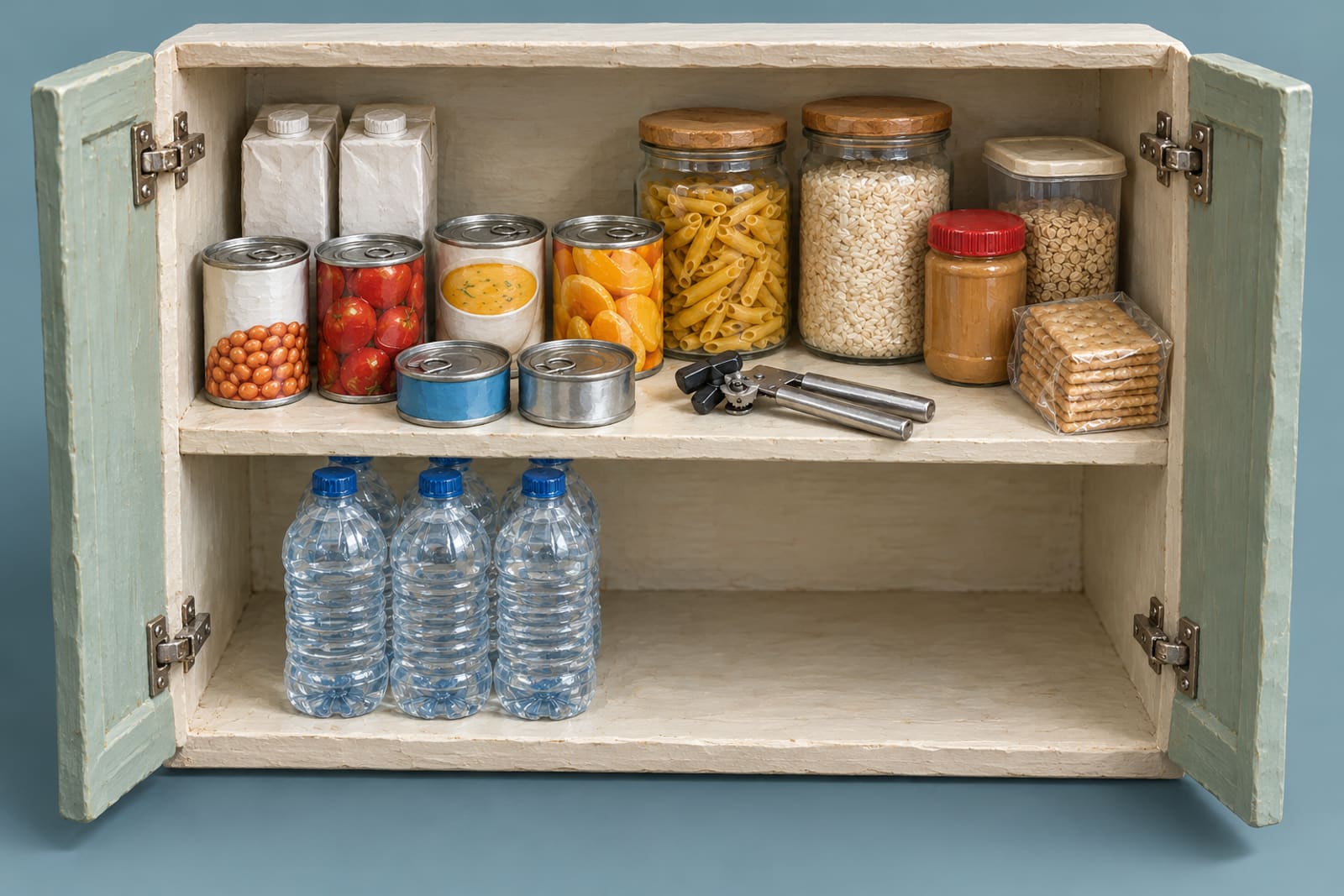
An open kitchen cupboard with a few of each everyday food: tins of beans, soup, tomatoes, tuna and fruit, a tin opener, jars of pasta and rice, oats, peanut butter, UHT milk and crackers, and bottled water on the shelf below
A few of each, rather than a stockpile. Most cupboards like this hold several days of meals already.

Shop as you normally would

Today

Buy your usual shop and nothing more. Shelves empty fastest when everyone buys a little extra at once, so a normal trolley is the quickest way to get them full again.

Try somewhere smaller

Corner shops, markets, butchers and farm shops often have stock the big shops don't.

Swap, don't chase

No fresh tomatoes? Tinned ones do the same job. Pick the meal, then the version that's on the shelf.

Keep medicines going

Today

Order repeat prescriptions up to 5 working days before you need them, through the NHS App, online, or your GP surgery. Order while you still have some left, and don't order more than you need until your next prescription.

If your medicine is short

You might be sent to another pharmacy, given a different form such as a tablet instead of a capsule, given a smaller amount to collect more often, or asked to get a new prescription.

If a swap isn't working

Go back to your doctor or talk to your pharmacist. Don't change how you take a medicine without asking first. My medicine's running short has more.

Keep enough of the medicines you need to last several days, as GOV.UK Prepare advises. The shortage leaflet we cite is written for England; the same pharmacist-first approach works everywhere in the UK.

Look after the hardest-to-swap needs

First few days

Most food has a substitute. A few things don't: baby formula, food for allergies and medical diets, and pet food. Check these first, and buy them before they run out rather than when they do.

Never water down baby formula. Adding extra water means too little powder, which may not give your baby enough nourishment. Ready-to-feed formula is a good standby, because it needs no boiled water. If you can't get your usual formula, ask your health visitor or pharmacist before switching.

Check on the people nearby

As soon as you can

Empty shelves are hardest on people who can't get to more than one shop: older neighbours, people who don't drive, anyone unwell or caring for someone. Knock on two doors and offer to pick something up while you're out.

Rebuild your store slowly

Once the shelves refill

When things settle, add one or two extra items with each shop rather than buying everything at once. Put new tins at the back and use the oldest first, so nothing goes out of date.

  • Keep a few days of food that needs no cooking, and a manual tin opener.
  • Write what ran out first on a list inside the cupboard door.
  • Our emergency kit checklist covers the rest of what is worth having.
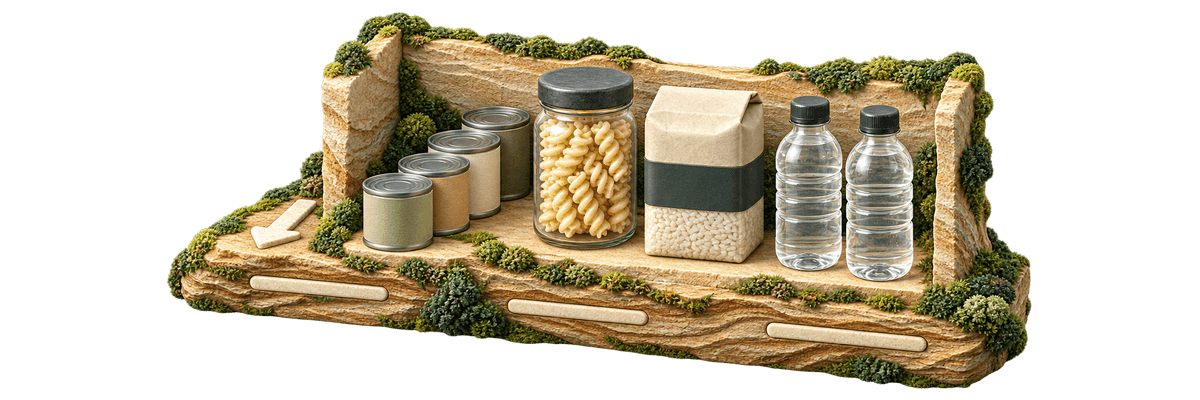
A cupboard shelf with a modest row of tins, a jar of pasta, a bag of rice and two bottles of water, and an arrow showing the oldest moving to the front
New at the back, oldest at the front. A small store that turns over is better than a big one that goes out of date.

What the dates and dents really mean

Plenty of good food gets thrown away during a shortage because of a date or a dent. The rules are simple.

Best before

Is about quality rather than safety. Past the date, use the sniff test: it may not taste as good, but it isn't unsafe for that reason alone.

Eggs

Are safe to eat for a couple of days after the best before date, as long as they're cooked well.

Dented tins

Are fine if the dent is shallow and there's no other sign of damage. Once a tin is open, move leftovers into a container rather than keeping them in the can.

A use-by date is different: it's about safety, on food that goes off quickly, such as meat and ready meals. Don't stretch those.

If you can't afford food

A shortage often comes with higher prices. If that leaves you short, help exists and it's fine to use it.

  • Your nearest Citizens Advice can refer you to a food bank, usually after a short appointment to talk through your situation.
  • Your GP, housing association or social worker can also refer you.
  • A food bank parcel usually holds enough food for 3 days, and may include toiletries too.
  • Tell the food bank about any allergies or dietary needs.

From Citizens Advice's guide to using a food bank, written for England. Citizens Advice has separate pages for Scotland, Wales and Northern Ireland.

Three things worth having in the cupboard

None of them is food. They make a small store easier to keep fresh and use.

  • Tin opener

    A sturdy manual tin opener

    Not every tin has a ring pull, and an electric opener is no use in a power cut. One that turns smoothly saves a lot of frustration.

    • A large turning key that is easy to grip
    • Stainless steel cutting wheel
    • A side-cutting type leaves no sharp edge on the lid
  • Storage jars

    Airtight jars for pasta, rice and oats

    Opened packets go stale or attract pests. Clear jars keep dry food fresh and show at a glance what is running low.

    • A seal on the lid, not just a push-fit
    • Clear sides so you can see the level
    • Sizes that fit your cupboard shelf
  • Can rack

    A rolling can rack for the cupboard

    New tins go in at the top and the oldest roll out at the bottom, so the store rotates itself.

    • Fits your cupboard depth
    • Takes standard 400g tins
    • Adjustable or stackable

When the shelves are empty, on one page

Nine lines, in order. Print it once and keep it inside a cupboard door.

Empty shops · the first fortnight

Download PDF

If it's something else

See every situation guide

Get the monthly brief: one job before each season turns

One email a month: new guides as they're published, and one job to do before the season turns, from lagging the pipes in autumn to checking the torch batteries before the storms.

We'll only use your email to send the Prep Britain newsletter. Unsubscribe any time. How we handle it