
Skip to content
Prep Britain
Checking warnings…

Living alone: what changes in an emergency

When you live alone, nobody at home will notice if something goes wrong, so the plan is about who will. This page covers agreeing a check-in with someone you trust, a way for help to get in, keeping a phone or an alarm working in a power cut, and what to do if you fall.

Reviewed 26 Oct 2026 7 min read Free to read

Do these three first · 15 minutes

Ask someone to check on you

A neighbour, friend or relative who will call or knock in a power cut, a storm or a cold snap.

Charge the phone by the bed

With a power bank beside it, so a power cut overnight leaves you a way to call.

Write the numbers on paper

Family, neighbours, your GP and 105. A flat phone can't show you its contacts.

Fallen and can't get up? Call 999 Also call if you may have hurt your head, back, neck or hip. Power cut? Call 105, or NIE Networks on 03457 643 643 in Northern Ireland.

Someone who checks, a way for help to get in, and a phone that still works. That's the plan for living alone.

What's different when you live alone

The emergencies are the same. What's missing is a second person to notice, to help, or to go for help.

What changes in an emergency when you live alone
WhatWhy it mattersWhat to do
Being noticed Nobody at home will see that something is wrongAgree a check-in with someone you trust
Getting in Help may arrive at a locked doorGive a spare key to someone you trust, or fit a key safe
Calling for help Digital landlines and many alarms stop in a power cutKeep a charged mobile within reach, and ask about battery back-up
The cold People aged 65 and over are among those most at riskHeat the rooms you use to at least 18°C if you can

Our guides, when you live alone

Each guide covers the whole situation. Here is what changes for you in each one.

Six steps, from the check-in to the bedside

Steps one to three are about other people, and take a phone call or two. Four to six are things to sort at home.

Agree a check-in

This week

Make a plan with a neighbour or someone else you trust to check on you in an emergency. Talk to them about what you might need, and how that changes in a power cut, a storm or a cold snap.

  • Agree how: a call, a text, or a knock on the door.
  • Agree when: in any power cut, storm or cold snap, and if you miss a call.
  • Offer the same in return. A check-in works best both ways.
Agree a way into your home

This week

Make arrangements with someone you trust to be able to get into your home in an emergency. A spare key with a neighbour, or a key safe by the door, means help doesn't wait at a locked door.

Give a key safe's code only to people who need it, and change it when someone stops needing it.

Join the Priority Services Register

This week

If you are over state pension age, disabled or have a long-term condition, you can join for free. It gives priority support in an emergency, and a password so you can tell a real caller from someone pretending to be from the energy company.

You can name a relative or friend as your nominee, so the supplier contacts them too. What the register gives you.

Set up the bedside

Tonight

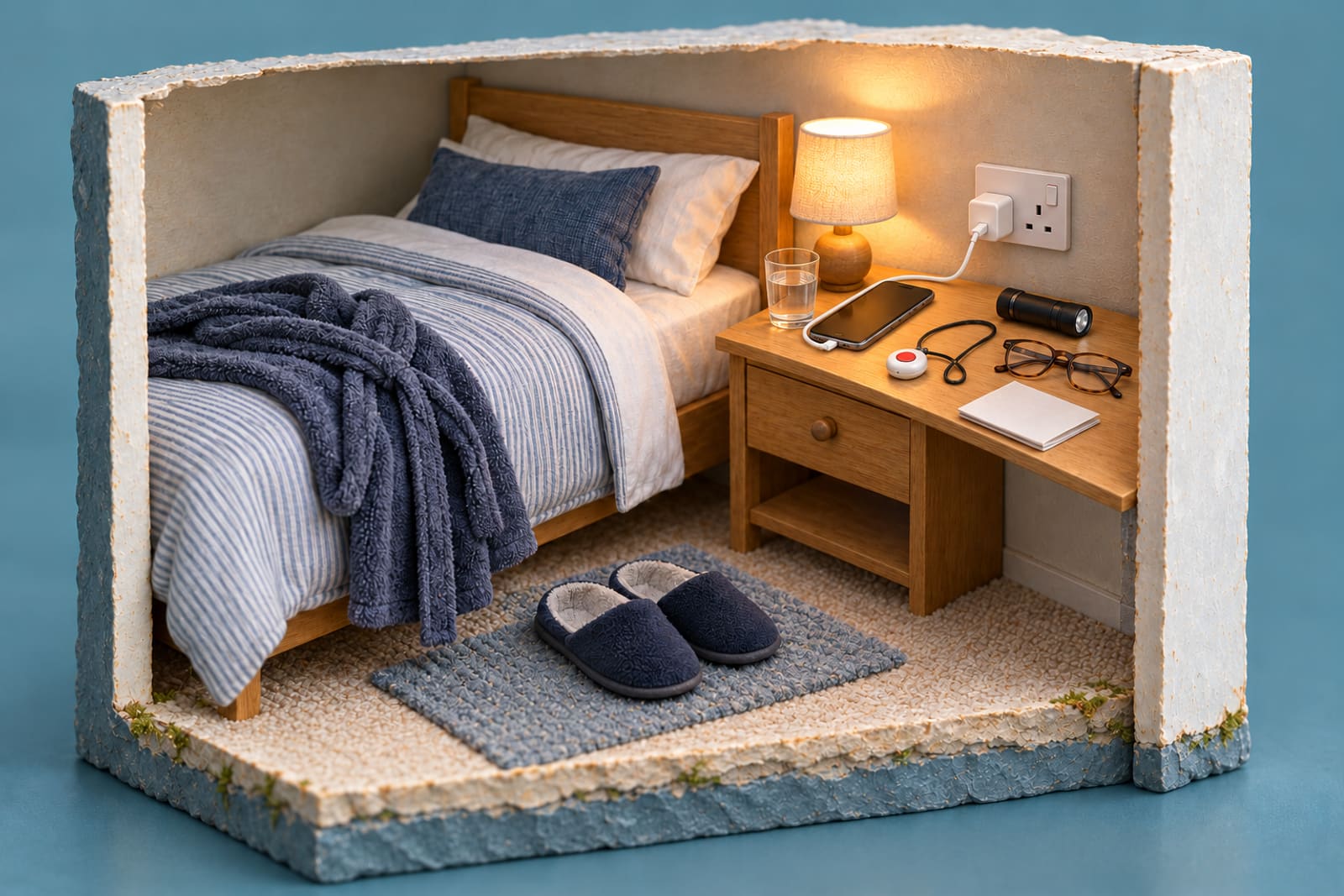
Keep the phone charging by the bed, with a power bank beside it. Add a torch, your glasses and a glass of water. If you wear a personal alarm, keep it on at night as well.

Personal alarm

Wear it, or carry a mobile phone with you from room to room.

Numbers on paper

Family, neighbours, your GP and 105, on a card by the phone.

A single bed with a dressing gown on it and slippers on the rug, and a bedside table holding a mobile phone charging from a UK wall socket, a personal alarm pendant with a red button on a cord, a small torch, reading glasses, a glass of water and a folded note, lit by a bedside lamp
Everything within reach of the bed: the phone on charge, the alarm pendant, a torch, glasses, water, and the numbers written down.

Check the alarm works in a power cut

This month

Digital landlines need mains electricity and won't work in a power cut without a battery back-up. If you depend on your landline and have no working mobile signal, your provider must offer a free back-up that lasts at least an hour.

Have a care or telecare alarm? Tell your landline provider and the alarm supplier before your line changes to digital.

Keep warm and stocked up

Before winter

Heat the rooms you use to at least 18°C if you can. Keep enough food in for a few days, in case you can't go out in snow or a storm, and enough of your medicines to last too.

  • A room thermometer in the room you sit in.
  • A few days of food that needs little cooking.
  • Repeat prescriptions ordered in good time.

What to do if you fall and you're on your own

Take your time. Most of what helps is staying calm, warm and moving while you wait.

Getting up

Don't get up too quickly. Roll onto your side, then push yourself onto your hands and knees. Find something stable to hold, such as a heavy chair, and stand up slowly. Sit down and rest.

If you can't get up

Use your phone or personal alarm if you can reach it. If not, shout, or bang on the wall or floor. Cover yourself with a coat, towel or blanket to keep warm.

While you wait

Keep gently moving your arms and legs, and change position about every 30 minutes.

Call 999

If you may have hurt your head, back, neck or hip, or you can't get up.

Three things for living alone

A torch that leaves your hands free, power for the phone, and a thermometer for the room you sit in.

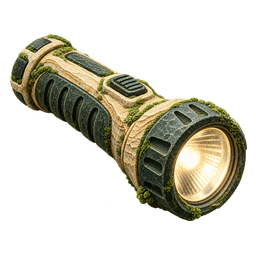
  • Head torch

    A head torch for each adult

    Leaves both hands free for stairs, the consumer unit and the kettle. One per person beats one lamp per house.

    • Runs on AA or AAA batteries, so it works when USB chargers are flat
    • A red-light mode that keeps night vision
    • At least 200 lumens
  • Power bank

    A 20,000 mAh power bank

    Keeps phones charged for a couple of days, so you can call 105, check the live map and reach family.

    • 20,000 mAh or more, with a USB-C port
    • Shows how much charge is left
    • Top it up every few months so it is full when you need it
  • Thermometer

    A room thermometer for the bedroom

    Tells you which room is coolest to sleep in, and when it is cooler outside than in, so you know when to open the windows.

    • A large display you can read from bed
    • An indoor and outdoor reading, if you can
    • Runs on AAA batteries

Living alone, on one page

Nine lines, plus space for the people who check on you. Keep it by the phone.

Living alone · this month

Download PDF

Other households

See every situation guide

Get the monthly brief: one job before each season turns

One email a month: new guides as they're published, and one job to do before the season turns, from lagging the pipes in autumn to checking the torch batteries before the storms.

We'll only use your email to send the Prep Britain newsletter. Unsubscribe any time. How we handle it