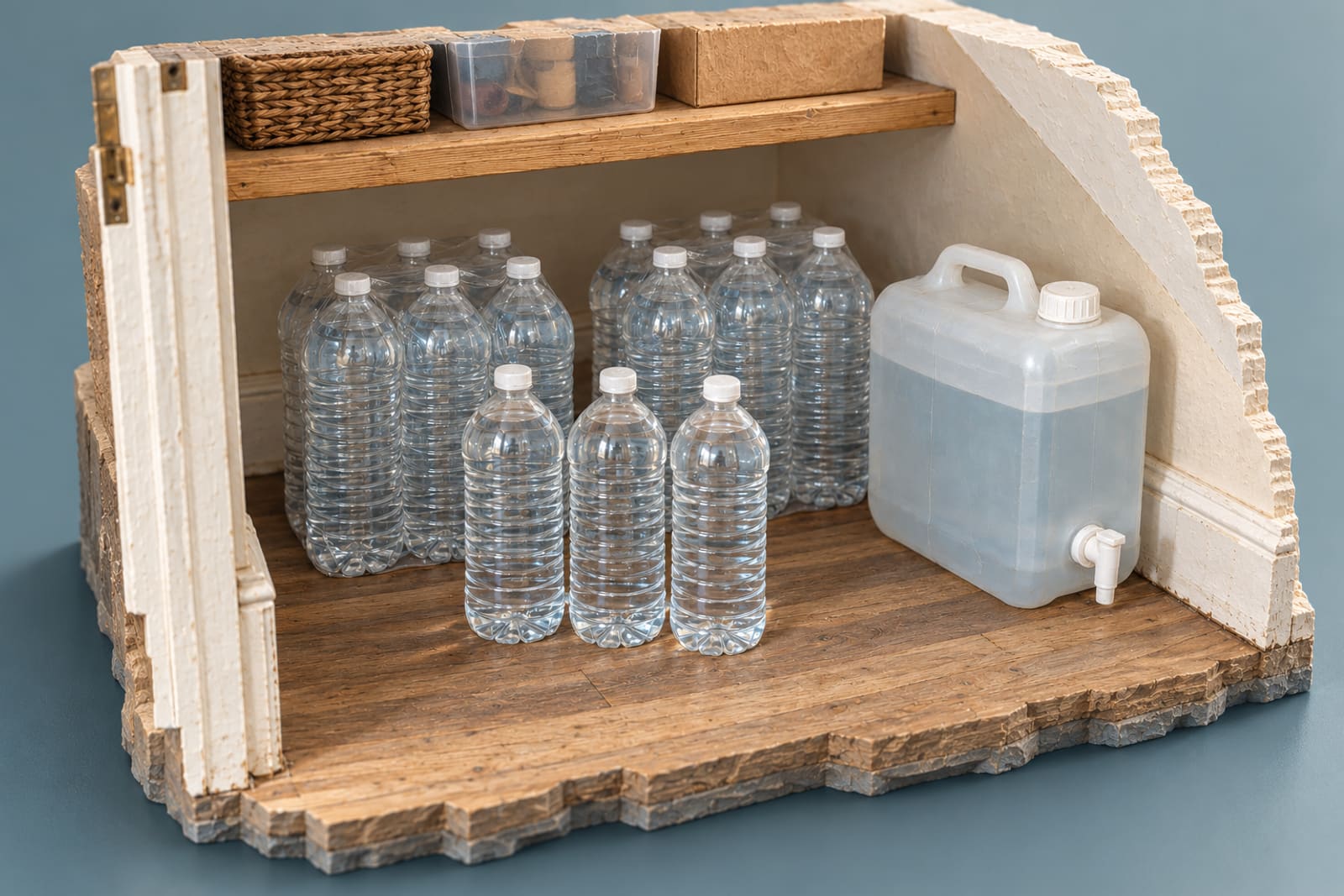
How much water should you store? 3 litres a person a day, for at least 3 days.
That's the minimum to drink. To cook and keep clean as well, plan on 10 litres a person a day. This page shows what that means for your household, how to store it so it stays drinkable, and how far it goes when the taps stop.
The minimum to drink. For one person for three days, that is 9 litres: about five 2-litre bottles.
2
10 litres to be comfortable
Covers simple cooking and washing as well as drinking. 30 litres a person for three days.
3
Buy sealed bottles
GOV.UK Prepare advises bottled water over filling your own containers. Use it by its date.
How much for three days
GOV.UK Prepare's figures, multiplied out for households of one to five. Pets, babies and medical needs come on top.
Water to store for three days by household size: the drinking minimum, the same in 2-litre bottles, and the amount for drinking, cooking and washing
Household
To drink (3 days)
In bottles
To drink, cook and wash (3 days)
1 person
9 litres
5 two-litre bottles
30 litres
2 people
18 litres
9 two-litre bottles
60 litres
3 people
27 litres
14 two-litre bottles
90 litres
4 people
36 litres
18 two-litre bottles
120 litres
5 people
45 litres
23 two-litre bottles
150 litres
Add more for
Making up baby formula, medical devices that need water, and pets.
And in these cases
Hot weather, pregnancy or breastfeeding, long physical work, and illness all raise how much people need to drink.
Why 3 litres when the NHS says 6 to 8 glasses? That NHS figure is fluid from all drinks on a normal day. The 3 litres to store adds a margin, and covers a little for brushing teeth and cooking.
Work out your household's water
Say who's at home, what the water is for and how long to plan for. It shows the litres, the bottles and how much they weigh.
Keep about18 litres
Keep about
18 litres
6 litres a day for 3 days. It weighs about 18 kg, so keep it low down and near where you'll use it.
Adults: 18 L
That's 9 two-litre bottles, or 2 six-packs from the supermarket. Sealed bottles keep until the date on the label.
Allow more in hot weather, and for anyone ill, pregnant or breastfeeding. Flushing is extra: one flush poured from a bucket takes 6 to 9 litres.
Sealed bottles, somewhere cool, oldest first
Bottled water is sealed in a food-grade bottle, so it stays safe for longer than tap water in your own containers. That's why GOV.UK Prepare recommends buying it.
Two six-packs is 24 litres: three days of drinking water for a household of two, with some to spare.
Where and how
Somewhere cool and dark: an understairs cupboard or the bottom of a wardrobe, out of the sun.
Away from cleaning products, paint and fuel.
Low down. Two six-packs of 2-litre bottles weigh about 24 kg.
Keeping it fresh
Check the date on each pack, and use the oldest first.
Drink from the store and replace it with the weekly shop, so it never goes out of date.
Put a reminder in your calendar twice a year, for example when the clocks change.
Filling your own containers instead? Use food-grade containers, never old milk or juice bottles. Wash them out, fill to the top, label them with the date, and empty and refill them every few months. This is our practical advice: the official guidance is to buy sealed bottled water.
Make the store go further
Drinking water comes first. Everything else can come from somewhere less precious.
Keep stored water for drinking, medicines, baby feeds and pets first, cooking second.
Squash, juice and other drinks from the cupboard count towards drinking.
Flush the toilet with a bucket of water poured into the bowl, rather than refilling the cistern.
Rainwater from a water butt is fine for flushing. Our no-water guide covers the rest: finding the fault, bottled water stations and what to do when the water comes back.
Two things worth having
For water you collect from a bowser or a bottled water station during a long outage.
Water container
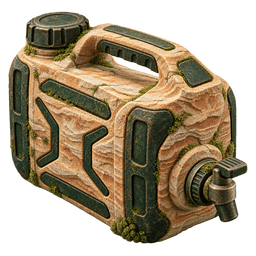
A 10-litre water container with a tap
For water you collect from a bowser in a long outage. It stands on the worktop and pours without lifting. For storing water ahead of time, buy sealed bottles instead.
Get the monthly brief: one job before each season turns
One email a month: new guides as they're published, and one job to do before the season turns, from lagging the pipes in autumn to checking the torch batteries before the storms.
We'll only use your email to send the Prep Britain newsletter. Unsubscribe any time. How we handle it