In July the government published its National Risk Register: 95 things that could go seriously wrong in the UK, from a winter storm to a cyber attack on the water supply. This page sets out what it says, which risks could reach your home, and why the same few preparations cover almost all of them.
Free, through your energy and water companies. Do it if anyone at home relies on power for medical equipment, or would struggle in a long cut.
2
Write the numbers down on paper
105 for a power cut, and the people you would call. A dead phone takes its contacts with it.
3
Check your flood risk
Put your postcode into the long-term flood risk check, then sign up for free flood and weather warnings.
These three come from the register's own list of five steps for households. The other two: test your smoke alarms once a month, and teach your children how and when to call 999.
Ninety-five risks reach your home as the same few problems: no power, no water, no heating and no signal. Cover those and you're ready for most of the list, whatever the news is about.
The government's list of what could go wrong
The National Risk Register is the public version of the government's classified National Security Risk Assessment. The Cabinet Office published the 2026 edition on 14 July. It runs to 223 pages and lists 95 risks, from storms and pandemics to cyber attacks and failures of the water supply.
Each risk is scored twice, on a scale of one to five. Likelihood is the chance of it happening at least once in the next five years, or the next two for attacks, because "malicious threats can change much more quickly". Impact is the harm it would do. Both scores describe a "reasonable worst case": the worst plausible version of the risk, once the far-fetched extremes are left out.
That matters when you read it. The storm in the register is a once-in-decades storm like October 1987, with gusts over 85 mph. A wet, windy week in November isn't on the list.
This edition adds new risks, mostly about computer systems. They include a cyber attack on the water supply, a failure like the CrowdStrike outage of July 2024, and attacks on data infrastructure and police systems. The risk of a cut in Russian gas to Europe has gone, because reliance on Russian gas imports has fallen sharply. Introducing the register, the Security Minister, Dame Angela Eagle, wrote that "the risks the UK faces are more volatile, varied and interconnected than any time in living memory."
The public campaign on getting ready at home is now due "later this autumn".
Where the risks that reach a home sit
The register plots every risk by how likely and how harmful its worst case is. These are the ones that would reach a household directly. Tap one to open its guide.
From the National Risk Register 2026. Each step up in likelihood is five times the one before. Attacks (the terrorist and cyber risks) are scored over two years rather than five. Flooding combines the register's three scenarios (rivers, the sea and surface water), which share a box.
Top right is where to look. The most likely catastrophic risks are a pandemic and a failure of the drinking water supply, each 5–25% likely in the next five years. Water moved up to catastrophic this year, after further work found "much more significant effects on essential services than previously anticipated".
Most of the list is weather and utilities. Snow, storms, floods, heat, power and water fill the middle of the matrix. They're also the risks you can do most about at home.
What the register expects to happen at home
Every risk comes with a scenario: who loses what, and for how long. These four are the ones most households would feel.
Water off for a city
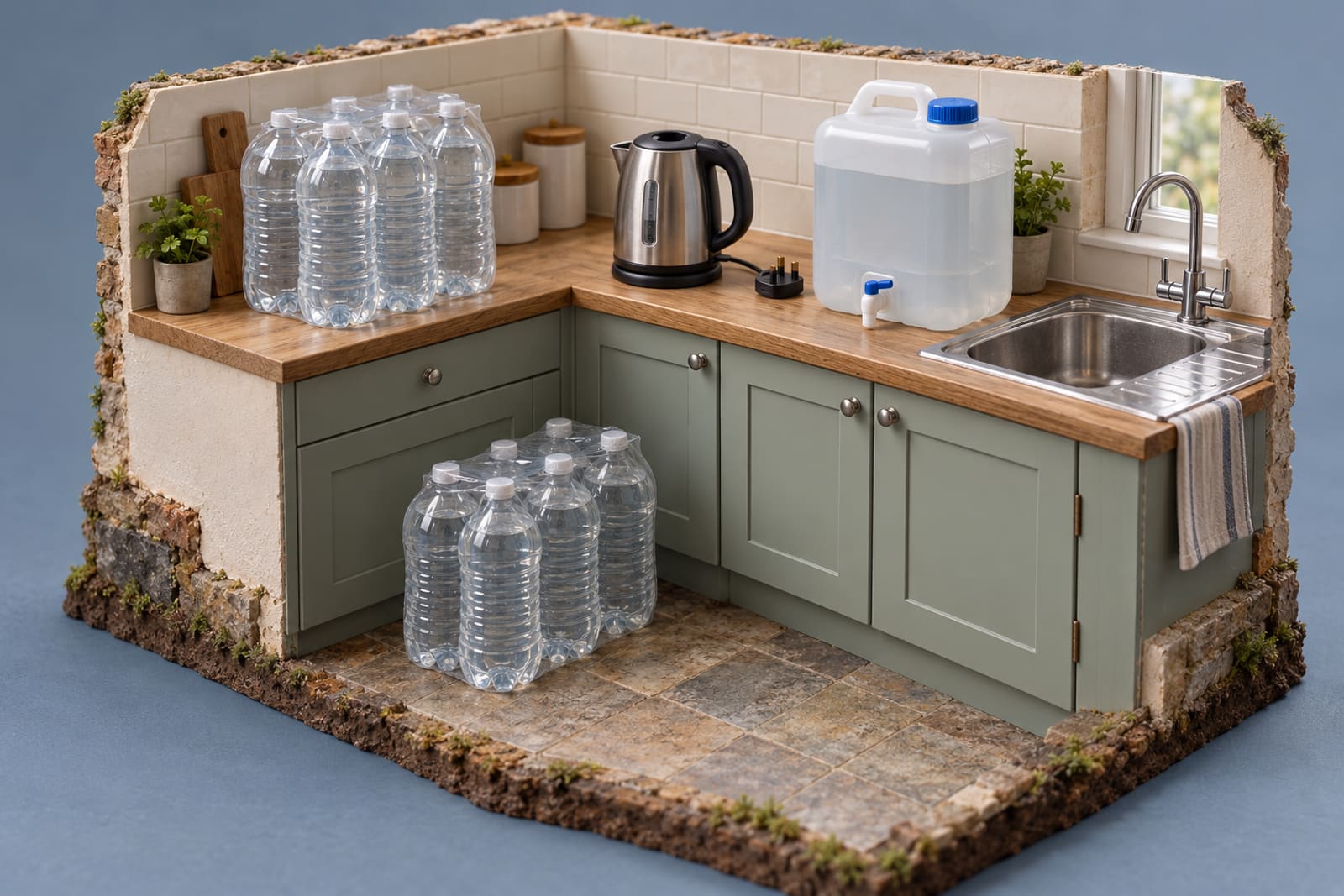
A failure that cuts piped water to "over one million people" in a large urban area, with repairs that "could take months". Tankers and bottled water couldn't cover that many people, so most would have to leave the area. Our No water from the tap guide covers the first days.
Power off for days
A regional failure leaves up to 3.5 million customers without power for a day, and 20,000 for up to a week. In a national outage, about 60% are back within two days and everyone by day five or six, with some planned cuts at peak times. No home's supply can be put first in a national outage, so plan to manage on your own for a while. Read The power's off.
A week of snow, or a big storm
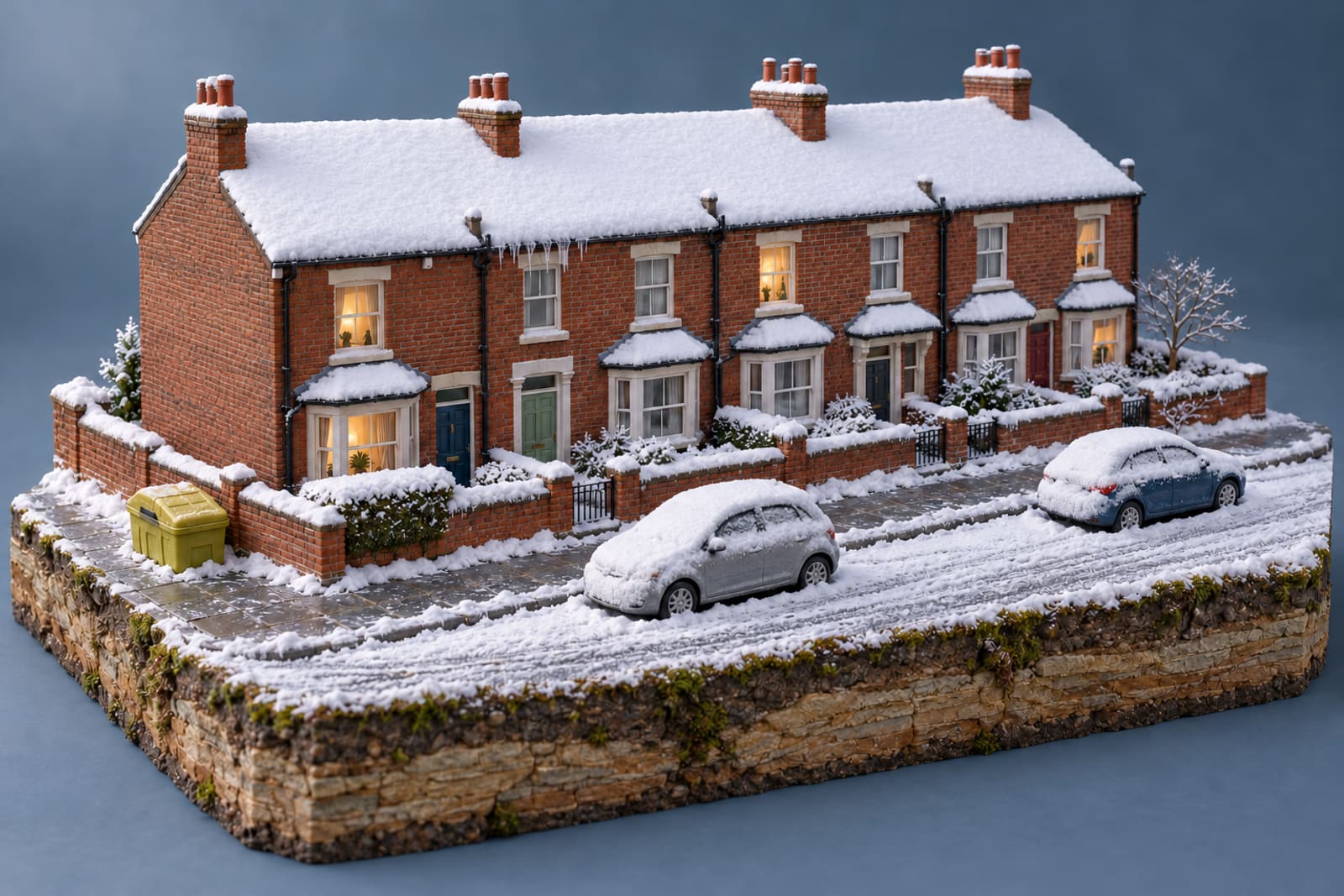
Snow lying for at least a week, with nights below minus 10°C. Or a storm with gusts over 85 mph, cutting power, phones and roads for one to four days, and more than five in remote rural areas. Read The heating's off and A storm is coming.
No signal, no card payments
A storm or flood can take out every landline and mobile in a region, with landlines down "for several days". A faulty software update could stop payments, phones and broadcasting at once. Read The phones are down, and keep some cash: How much cash to keep.
The rota cuts in the register. If gas ran short in a hard winter, power stations would be told to stop using gas before homes were cut off. The register's worst case is rolling power cuts for between 1 and 11 million customers, for more than two months. Gas has never run short in Great Britain. Planned power cuts explained shows how the rota works.
Where war fits in the register
The register says the UK is entering "a period of global competition and instability". In the 2026 foreword alone it lists the terrorism threat rising to severe, disruption to oil and gas from the Middle East, and the war between Russia and Ukraine.
It describes an attack on the UK mainland with missiles and cyber operations, but doesn't publish a score for it. A nuclear attack scenario is held "at a higher classification". The conflict risk it does score is a limited nuclear war between two other countries: 1–5% likely, and felt here mostly through the economy and the British nationals caught up in it.
What it says about attacks short of war matters more for a household. It warns that hostile states may use "large-scale cyber-attacks on power grids, the physical sabotage of undersea cables, energy pipelines and transportation, to disrupt essential services". At home, that would mean no power, no internet or no fuel, which are the same problems a storm causes.
That's why the government's advice doesn't change with the news. The register says the UK "prepares for the common consequences that many risks share, such as disruption to essential services and potential human health impacts, regardless of their cause."
The Defence Secretary, Wes Streeting, put the household version simply in an interview reported on 27 September: "It's having some cash at home, having a supply of bottled water indoors, having some tinned goods that you can access if your electric goes."
In an attack or a chemical leak. You may be asked to "go in, stay in and tune in": get inside, stay there, and follow local radio or official accounts. The register says that unless the building itself is at risk, going inside is often the safest thing to do. If the authorities tell you to leave, go straight away. You may also get an Emergency Alert on your phone.
Get ready for what the risks do, whatever causes them
A flood, a cyber attack and a hard frost each reach your home as a handful of problems. Each one has a guide.
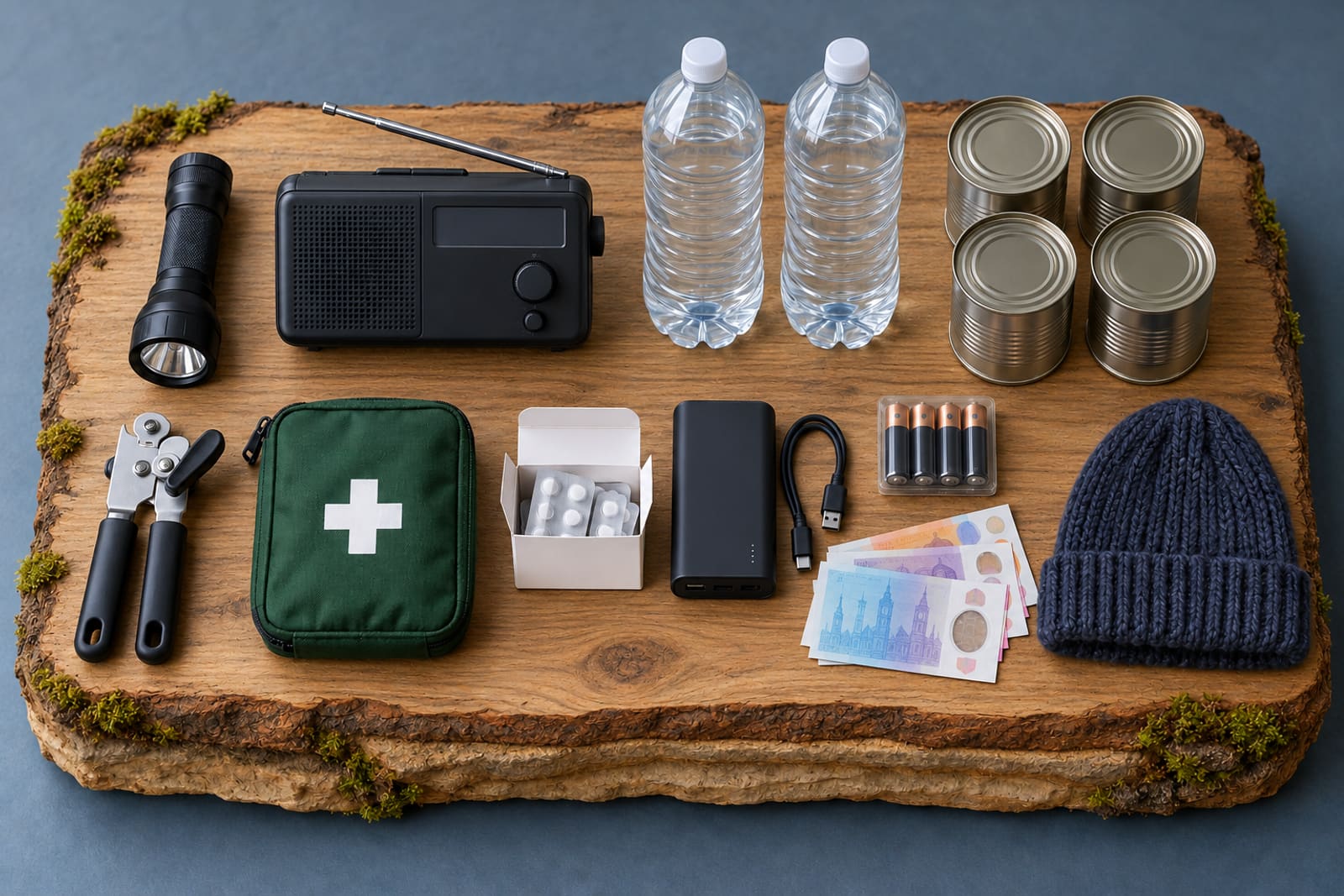
One shelf of kit covers almost every risk that reaches a home: light, a radio, water, food that needs no cooking, a first aid kit, medicines, cash and something warm.
Your area's own list
The national register sits above local ones. In England, 38 local resilience forums each publish a Community Risk Register for their area. Every one ranks flooding, water supply, power cuts, pandemics, terrorism and severe weather as high priorities, then adds its own:
Greater London High-rise residential safety, food supply integrity
Lincolnshire Coastal response to North Sea surges
West Yorkshire Wildfire prevention and drainage
Cumbria Resilient public telecoms and natural hazards
For water you collect from a bowser in a long outage. It stands on the worktop and pours without lifting. For storing water ahead of time, buy sealed bottles instead.
Get the monthly brief: one job before each season turns
One email a month: new guides as they're published, and one job to do before the season turns, from lagging the pipes in autumn to checking the torch batteries before the storms.
We'll only use your email to send the Prep Britain newsletter. Unsubscribe any time. How we handle it