




Skip to content
Prep Britain
Checking warnings…

El Niño and the UK winter

A stretch of the Pacific more than 3°C warmer than usual is tilting the odds towards a wet, stormy autumn here and cold snaps later in the winter. This page sets out what the forecasters and the government have said, what it could mean for your home and your shopping, and what to do month by month.

Reviewed 4 Oct 2026 10 min read Free to read

Three to do this week · 20 minutes

Sign up for flood warnings

Free, by phone, text or email. Add the places you care about as well as home: work, school, a parent.

Check your flood risk

Put your postcode into the long-term flood risk check. It takes two minutes. The Environment Agency says a third of people at risk don't know it.

Join the Priority Services Register

Do this if anyone at home relies on power for medical equipment, or would struggle in a long power cut.

Flood warnings by phone, text or email are free in England, Scotland and Wales. The risk check covers rivers, the sea, surface water and reservoirs. The register is free too.

El Niño changes the odds rather than the forecast. Get ready the same way whatever the weather does.

What El Niño is, and why this one is different

Halfway round the world from Britain, along the equator in the middle of the Pacific, there is a stretch of ocean the size of a continent. Every few years its surface warms up, and the warmth sits there for months. That's El Niño. The name is Spanish, from Peruvian fishermen who noticed the warm water arriving around Christmas.

Warm water that big moves the rain over the tropics, and the rain moves the winds that steer weather across the rest of the planet. By the time the effect reaches the North Atlantic it has been passed along so many times that it's faint. Faint, but real enough for the Met Office to build into its forecasts.

Usually the Pacific warms by a degree or two. This year the forecasts went past 3°C, which the Met Office's head of long-range forecasting called a signal he had never seen before. Its scientists expect 2026 to be remembered for "the largest El Niño in living memory and what is probably the largest such event since the 19th century". On 22 September they confirmed it had passed every previous event in the record, with its winter peak still to come.

  • A typical El Niño 1–2°C
  • "A really big event" 2°C
  • Forecast for this winter More than 3°C
How much warmer than usual the sea surface gets in the central Pacific, as of August.

Stronger out there doesn't mean worse here. The Met Office's chief meteorologist, Ian Lisk, says "El Niño is only one of several factors affecting the UK's weather and it does not determine exactly what conditions we will experience." A record El Niño could still bring us an ordinary winter.

What's been said since August

The forecasts, the government briefings and the coverage, in date order. Each link opens the original in a new tab.

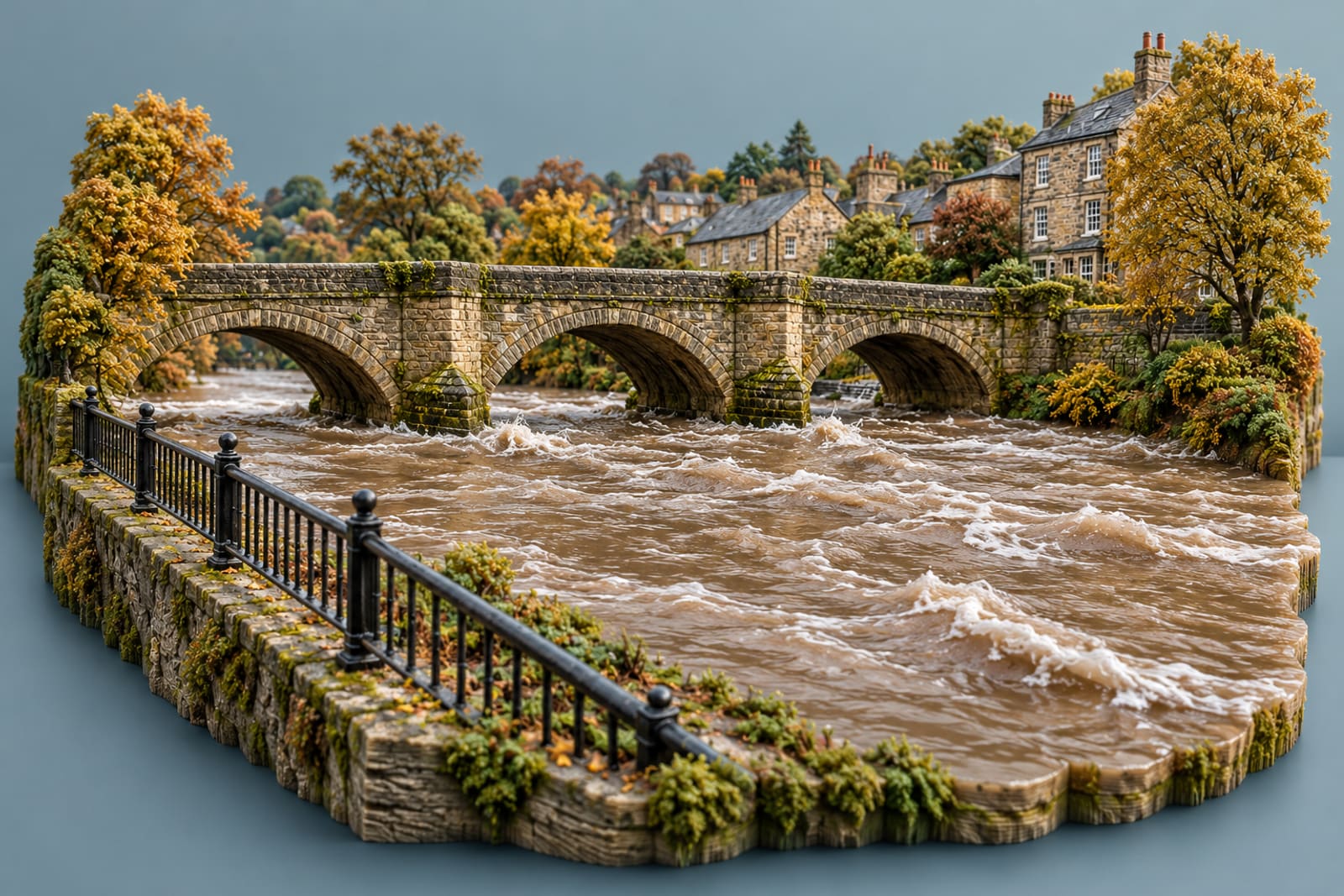
A swollen brown river running high under an old stone arched bridge, close to the top of its banks, with autumn trees along the side
A river up near the top of its banks. Rivers can keep rising for a day or two after the rain stops, as the water drains off the hills.
  1. · ITV News

    This year's 'super El Nino' will hit UK shopping bills, scientists warn (opens in a new tab)

    The first coverage to link this El Niño to UK food prices as well as the weather.

  2. · Met Office

    An 'unprecedented' El Niño and its implications for the weather forecast (opens in a new tab)

    Professor Adam Scaife: "I have never seen an El Niño signal this intense in our forecasts."

  3. · Nation.Cymru

    Warning over extreme weather and food prices as 'unprecedented' El Nino builds (opens in a new tab)

    Scientists raise the comparison with Storm Desmond, which flooded Cumbria in December 2015.

  4. · Royal Meteorological Society

    Storm names for 2026/27 announced (opens in a new tab)

    The new season starts. The first storm to be named will be Austen.

  5. · Met Office

    What does the latest long-range forecast tell us and what role could El Niño play this autumn? (opens in a new tab)

    A warm, wet autumn comes out one-and-a-half to two times as likely as usual.

  6. · Government Office for Science

    Impacts of El Niño on the UK (opens in a new tab)

    The government's own briefing: storms, flooding, food imports and the power grid.

  7. · LADbible

    'Strongest ever' El Niño could see five vital foods rise in price later this year, Government warns (opens in a new tab)

    Rice, wheat, grains, coffee and cocoa, and the countries they come from.

  8. · Met Office

    Record-Breaking El Niño Surpasses Previous Benchmarks (opens in a new tab)

    Now the strongest El Niño in the observational record, with its peak still to come.

  9. · LBC

    'Heightened potential' for wet, windy, stormy weather and flooding this autumn, Met Office warns (opens in a new tab)

    Chief forecaster Dr Will Lang calls it "a subtle shift in the odds". The Environment Agency says a third of people at risk of flooding don't know it.

  10. · SEPA

    Wetter autumn outlook puts Scotland's flood risk in focus (opens in a new tab)

    Scotland's flood agency asks people to register with Floodline for "the places that matter" to them, as well as home.

  11. · Cabinet Office

    Communities protected as government readies nation for winter weather (opens in a new tab)

    More than 600 flood defence projects in England, and a public campaign on getting ready at home later this autumn.

Rain first, then wind, then the cold

The forecasters describe a season in stages. None of them is certain, and each one has a guide on this site.

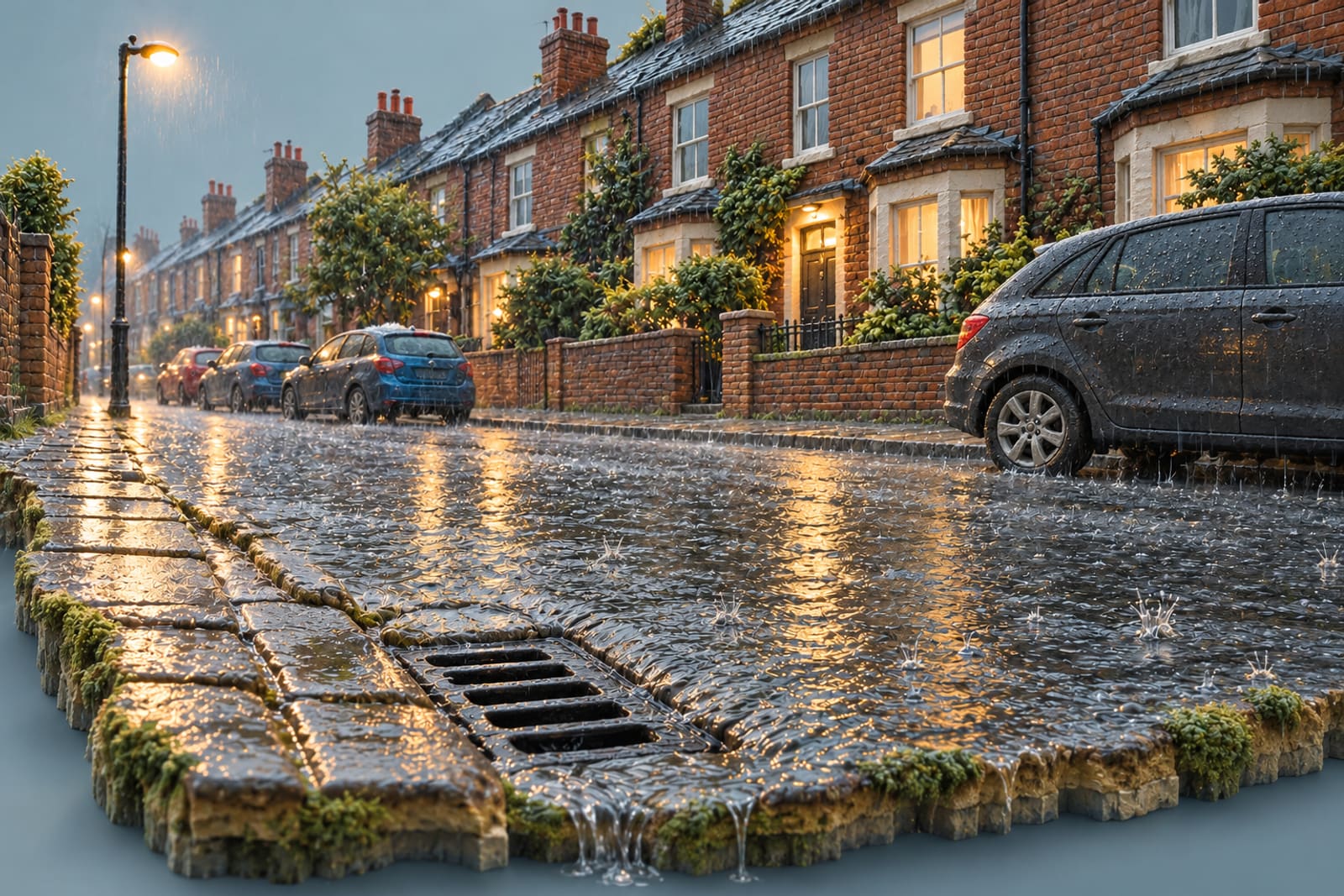
Heavy rain on a street of red-brick terraced houses at dusk, water running into a drain at the kerb and lit windows reflected in the puddles

A wet autumn

The Met Office puts the chance of a warm, wet autumn at "around one-and-a-half to two times higher than would normally be expected". The government's briefing lists an "increased risk of heavy rainfall and flooding". Our flooding guide covers the warnings.

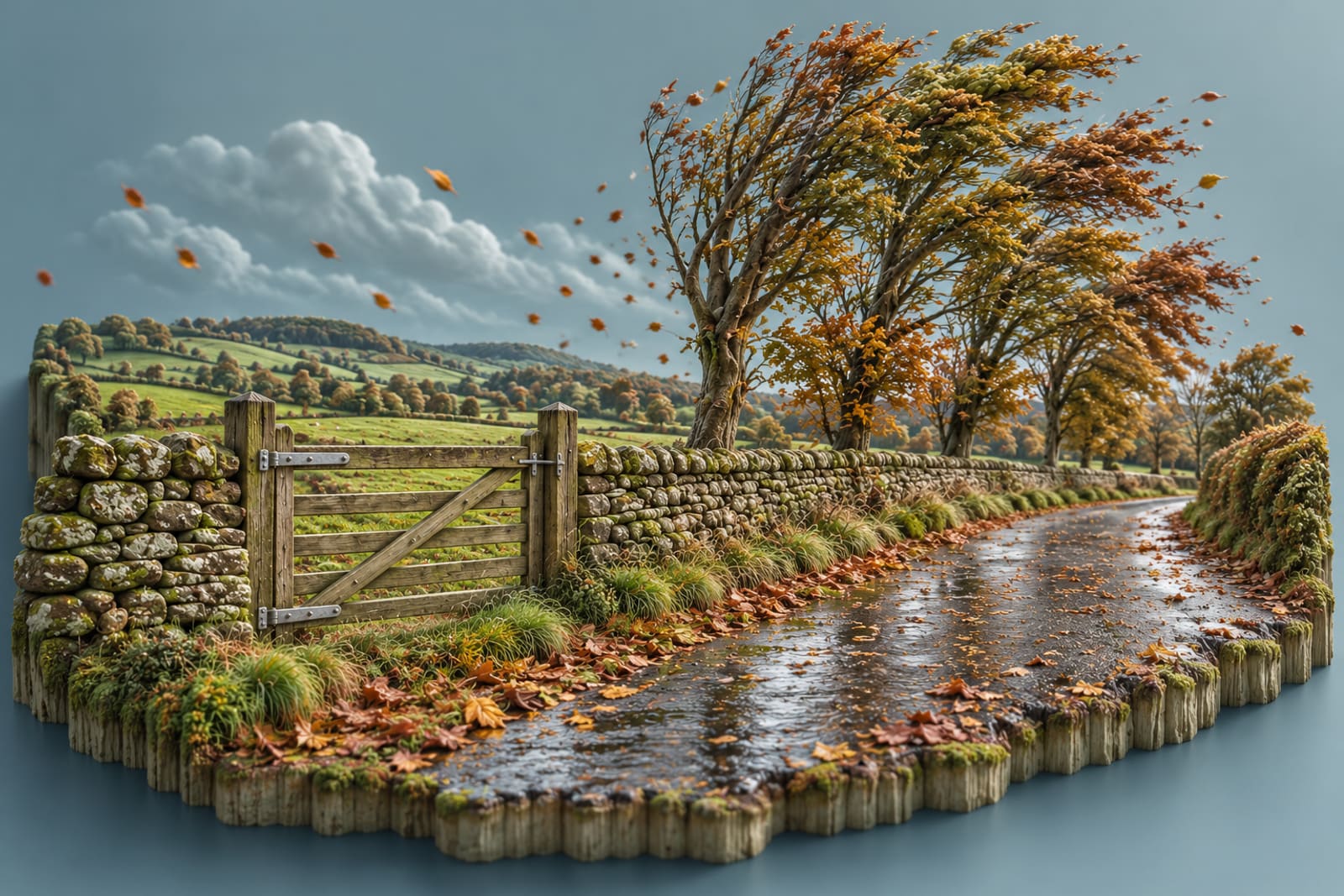
A row of tall trees bending in a gale beside a country lane, leaves streaming through the air above a dry-stone wall and a shut field gate

Storms into December

From October to December there's "a slightly increased chance" of the westerly winds and low pressure "associated with increased storminess". Our storm guide has the day before.

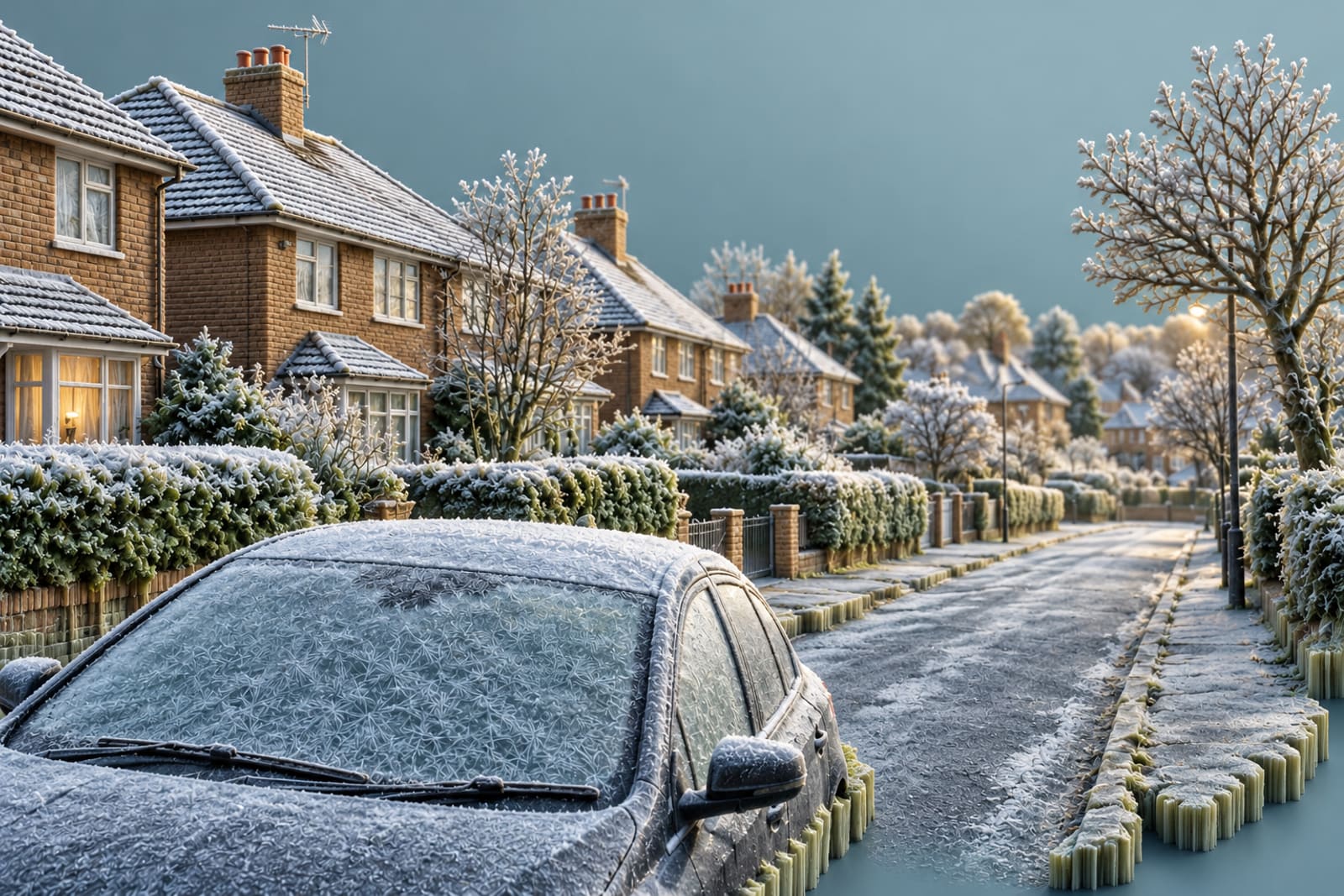
Hoar frost on hedges, rooftops and a parked car along a suburban street on a clear winter morning, with one lit window

Cold snaps later

"Later in the season, El Niño is associated with increased risk of cold snaps." A freeze after a wet spell means burst pipes and heavy demand on the power. Our power cut guide covers keeping one room warm.

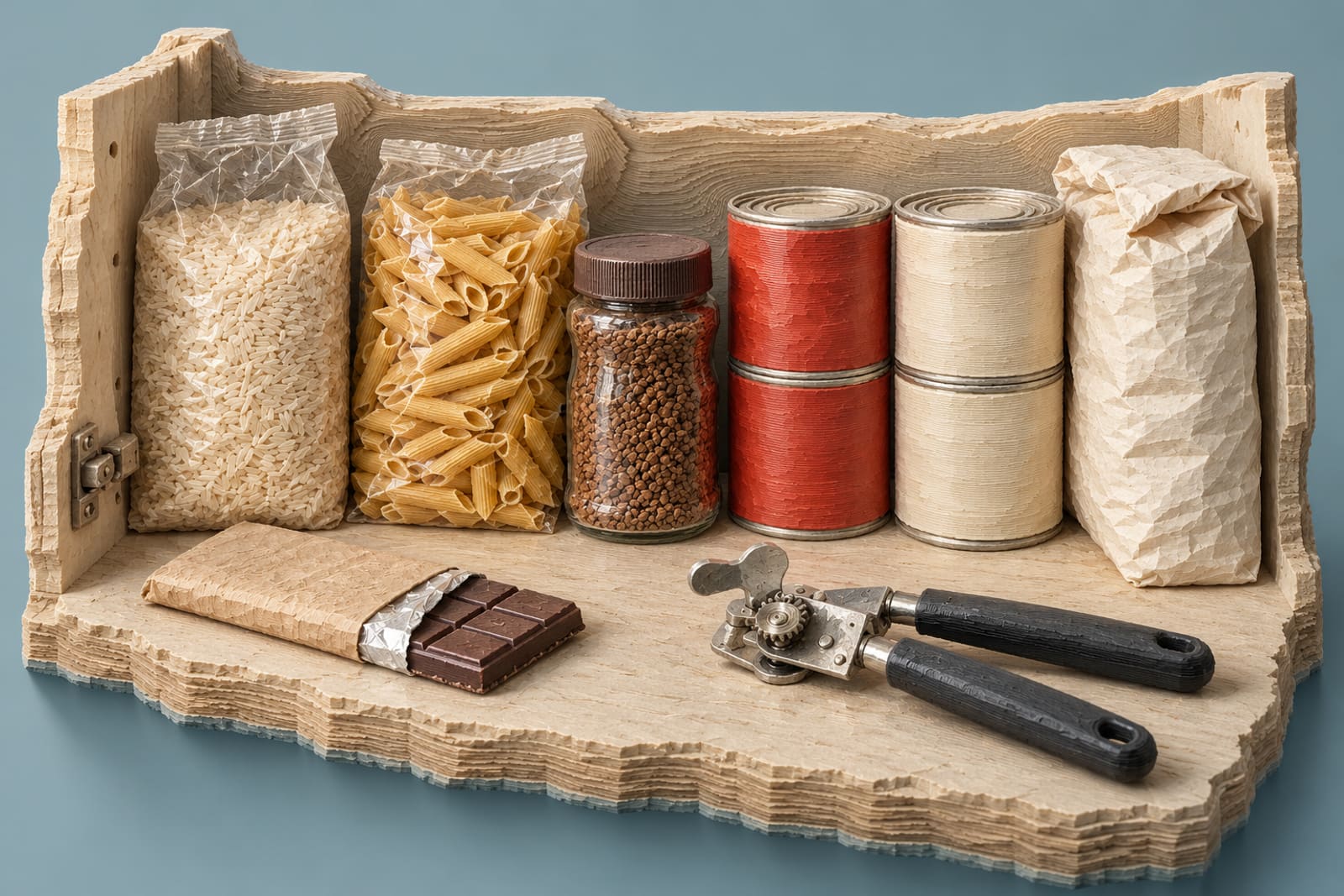
A kitchen cupboard shelf with bags of rice, pasta and flour, a jar of instant coffee, a bar of dark chocolate, stacked tins and a tin opener

Dearer rice, coffee and chocolate

The UK "could experience higher prices for products such as rice, and certain tropical commodities (for example: cocoa, coffee)". More on that further down.

The storms this season will be named, in order:

  • Austen
  • Boelo
  • Chloe
  • Dano
  • Evelyn
  • Finn
  • Gwendolyn
  • and on to Wende

Last winter's storms included Goretti and Chandra. The new list starts with Austen, announced on 1 September by the Royal Meteorological Society (opens in a new tab). When you hear the name Austen, open the storm guide.

Get ready a little at a time

Spread over the season, none of this costs much or takes long. Each month deals with the weather most likely to come next.

Get the warnings, and clear the water's path

October

Sign up for flood warnings for every place that matters to you. SEPA asks people in Scotland to think about "the places that matter" rather than only their home address. Then go outside on a dry afternoon and look at where the rain goes.

  • Scoop the leaves out of gutters and the grate at the foot of each downpipe.
  • Clear the drain grate in the road outside if it is blocked with leaves, or report it to the council.
  • Find your water stop tap, gas valve and fuse board, and label them.
  • Put birth certificates, passports and insurance papers in a watertight bag.
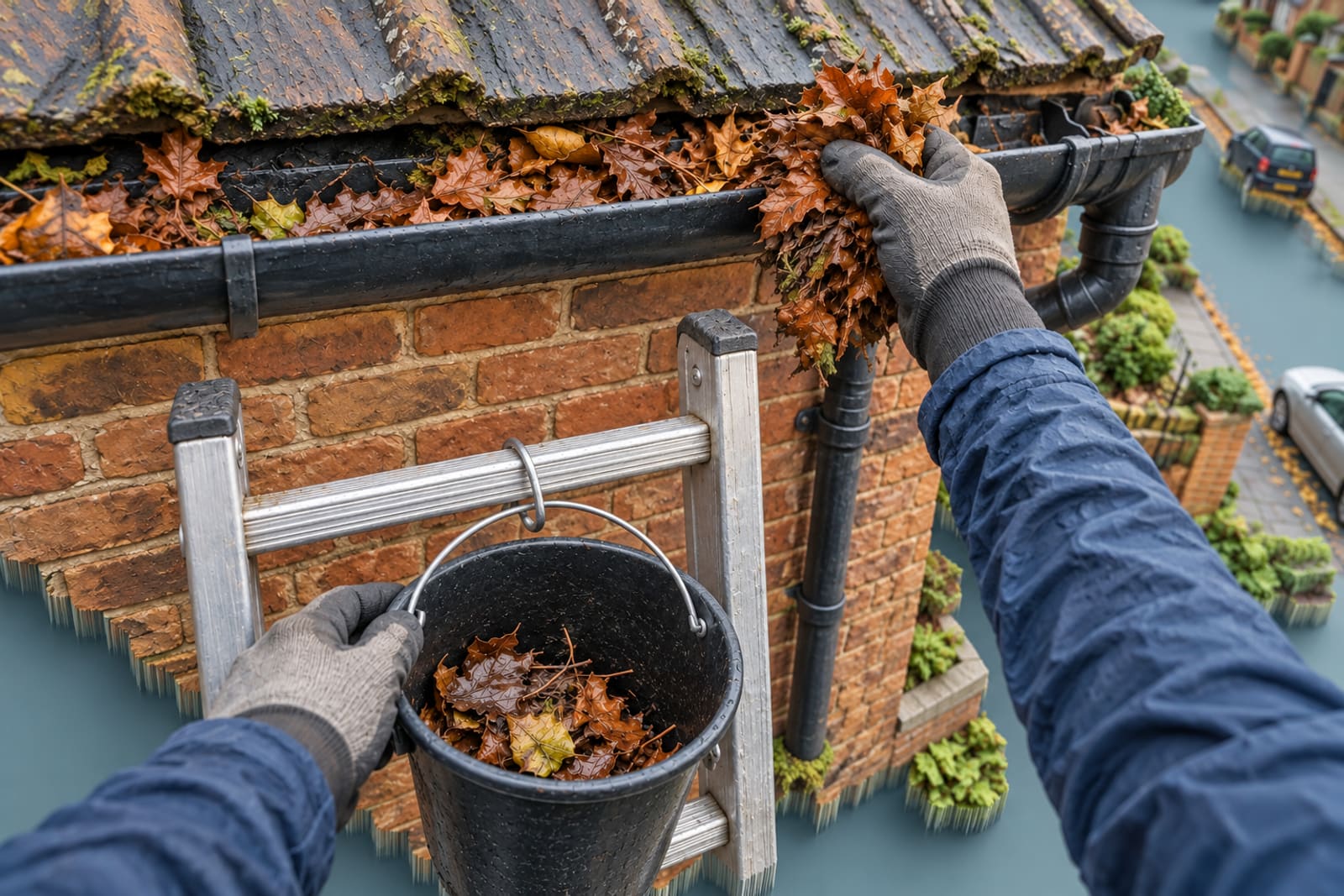
The view from the top of a ladder resting on brickwork below a black plastic gutter: one gloved hand lifts a clump of wet leaves out of the gutter, the other holds a bucket of leaves hooked on the ladder
A gutter full of leaves sends rain down the wall rather than the drain. Rest the ladder on the brickwork rather than the gutter, and have someone hold the bottom.

Pack for the night the power goes

November

Storms bring down power lines, so charge phones and power banks when a warning goes out. Keep a torch where you'd find it in the dark. Buy whatever's missing this month rather than the day an amber warning goes out.

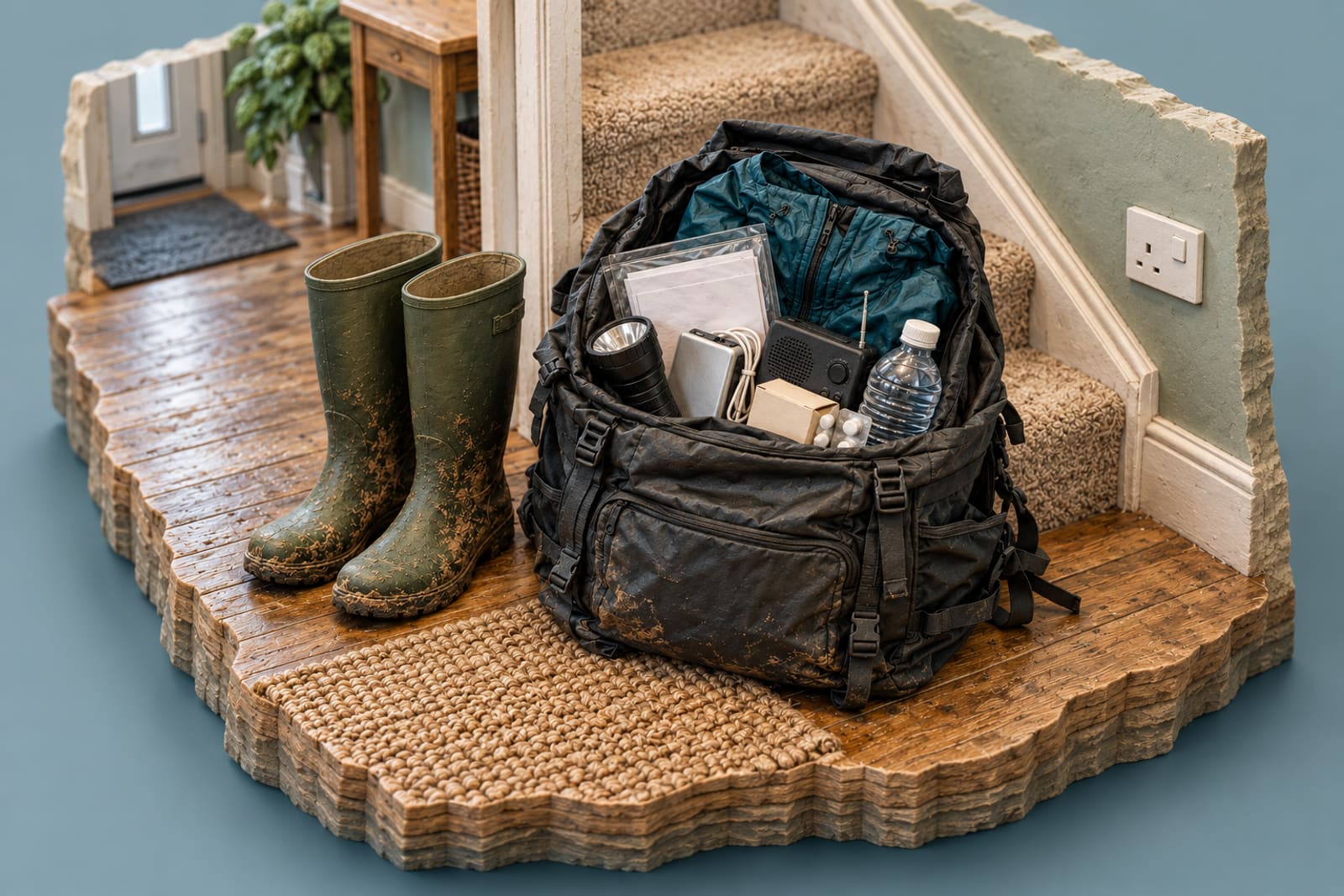
A grab bag by the stairs

Medicines, a first aid kit, documents, a torch, bottled water and warm waterproof clothes. If you're told to leave, it's ready.

A radio that needs no mains

Battery or wind-up, "to get updates during a power cut". Tune it to your local BBC station now.

A dark waterproof rucksack open at the foot of the stairs, holding a torch, a small radio, a power bank, a pouch of documents, a box of medicines, a bottle of water and a folded jacket, with wellies beside it
Packed once, kept by the stairs. In a flood, everything in it is already on its way up.

Keep an eye on the weather and the neighbours

December

Early winter is still inside the Met Office's window for wetter, stormier weather. When a warning goes out, follow the storm guide's day-before list, and knock on the doors of anyone nearby who'd struggle with a long power cut.

  • Strap down the bins and anything in the garden that could blow.
  • Park clear of trees and walls when a wind warning is out.
  • Put off journeys during amber and red warnings.
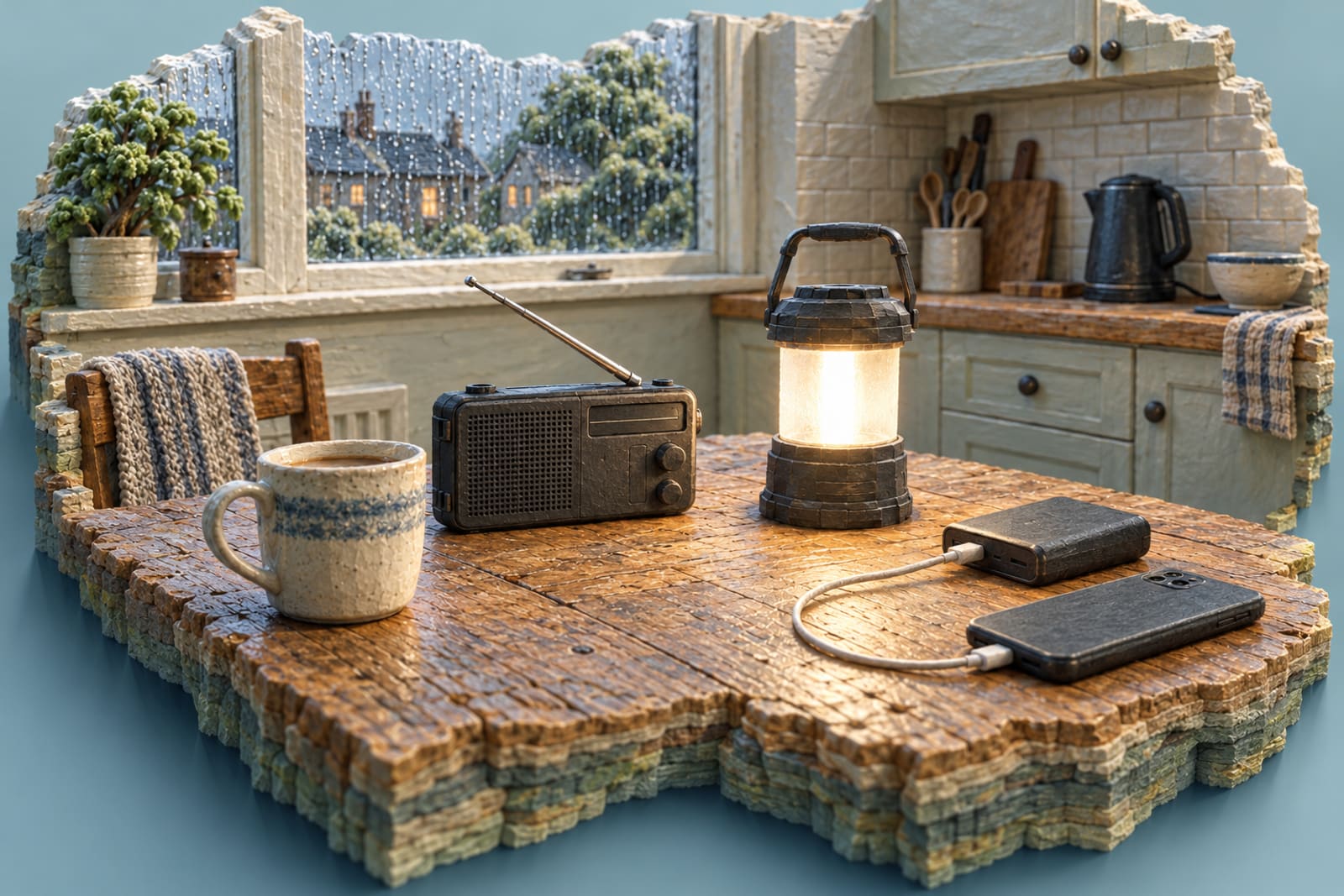
A small battery radio and a lit LED lantern on a kitchen table in the evening, beside a mug of tea and a phone charging face down from a power bank, with rain on the dark window
A lantern lights the room better than a torch. The phone charges from the power bank, and the radio keeps you up to date.

Get ready for the cold snap

January and February

Cold snaps are the late-season risk. Lag any pipes in the loft, garage or outside walls, and know where your stop tap is. If a pipe freezes, turn the water off at the stop tap and thaw it slowly. Never use a naked flame or a blowtorch.

One warm room

If the heating stops, pick one room, shut the doors and keep everyone in it. Our power cut guide has the rest.

Burst pipe?

Our no-water guide shows where stop taps usually hide.

Buy steadily, and buy what you eat

El Niño's effect on the shopping is slower and more certain than its effect on the weather.

Droughts and floods in the countries that grow rice, wheat, coffee and cocoa take months to reach a shelf in Swindon. The government's briefing points out that "around 50% of food in the UK is imported, including around 80% of fruit and vegetables".

None of that is a reason to fill the car. Buying a lot at once is what empties shelves. GOV.UK Prepare suggests building a kit up "over time" rather than all at once. An extra bag of rice or a jar of coffee each week, used in date order, softens the price rise. It also covers the week a storm shuts the road to the shop.

If you drink a lot of coffee or eat a lot of chocolate, a few weeks' worth bought now won't go off. That's about as far as it's worth going.

Our empty shops guide and Government advice explained cover the rest.

A kitchen cupboard shelf with bags of rice, pasta and flour, a jar of instant coffee, a bar of dark chocolate, stacked tins and a tin opener
One shelf, built up a week at a time. Put new packs at the back and use the oldest first.

Three things to have before the first named storm

For most homes, a wet, windy winter means a few dark evenings and the odd flood warning. These cover both.

  • Lantern

    A battery lantern for the room you stay in

    Lights a whole room without a flame. The safe replacement for candles.

    • LED, battery-powered, and able to stand or hang
    • A dim setting that lasts all evening
    • Takes the same batteries as your torches
  • Radio

    A wind-up or battery radio

    Local radio carries updates when the mobile network is busy or down.

    • Wind-up or solar charging, as well as batteries
    • FM and DAB
    • A built-in torch is a useful extra
  • Flood bags

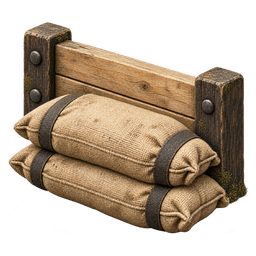
    Self-inflating flood bags

    They stay flat and light in a cupboard until you need them, then swell with water in a few minutes. Easier to store and carry than sand.

    • Swell on contact with water, no sand needed
    • Sold in packs of five or ten
    • Check how high they stack against your door
    Rough price£25–£50 for a pack Browse on Amazon : flood bags, opens in a new tab

If it's something else

See every situation guide

Get the monthly brief: one job before each season turns

One email a month: new guides as they're published, and one job to do before the season turns, from lagging the pipes in autumn to checking the torch batteries before the storms.

We'll only use your email to send the Prep Britain newsletter. Unsubscribe any time. How we handle it